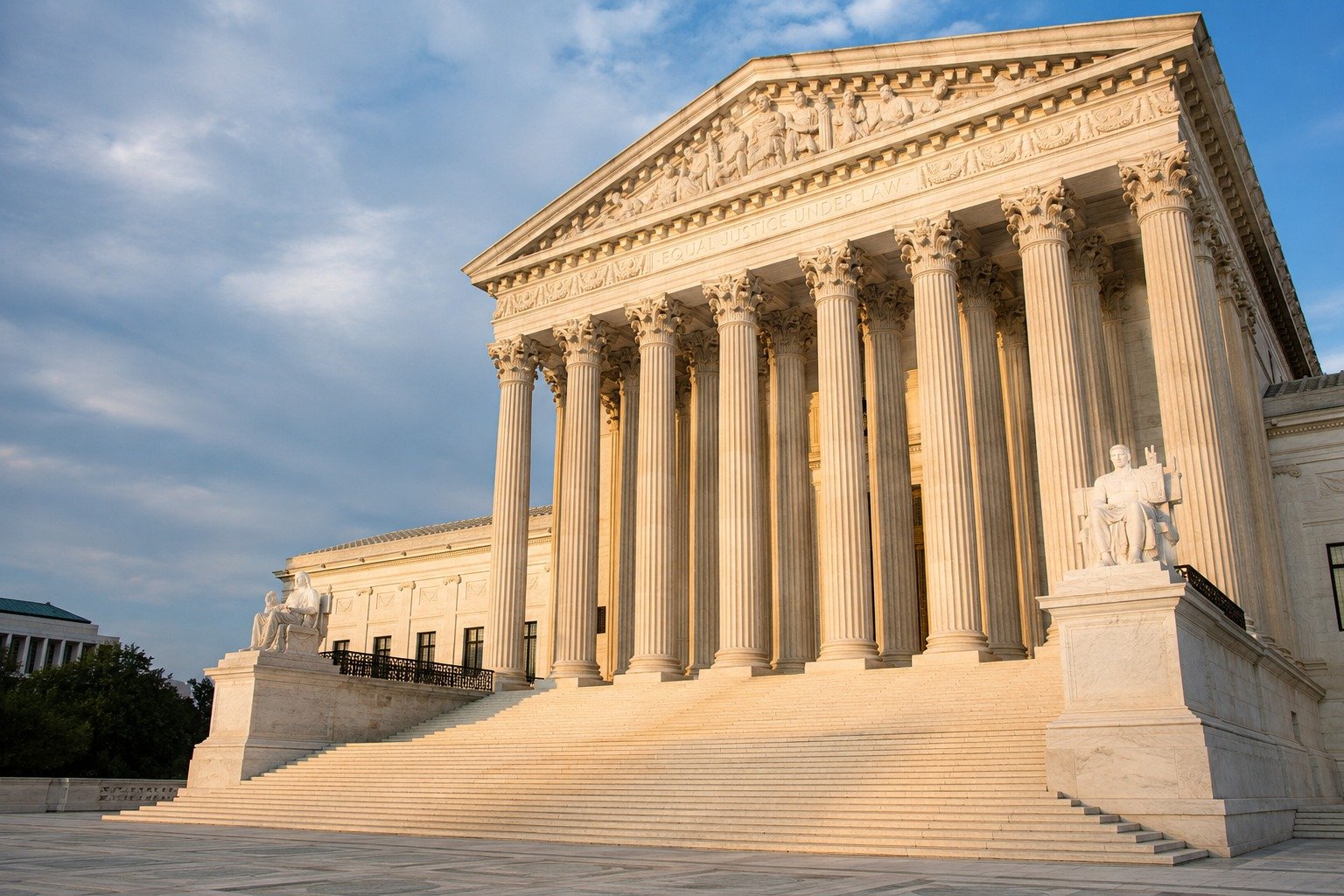
The Supreme Court has agreed to decide a question most Americans assume was answered centuries ago: how many jurors does it take to find someone guilty of a crime? On June 15, 2026, the justices granted certiorari in a case from Florida that challenges the state’s longstanding practice of convicting people in most criminal trials with juries of just six people instead of the traditional twelve.
The Court has not ruled on the merits. It has only agreed to hear the case, with oral arguments expected in the fall during the term that runs from October 2026 into the following summer. But the decision to take up the issue at all signals that a rule of criminal procedure that affects millions of Americans is now genuinely up for debate.
A Florida Chiropractor’s Challenge
The case is Hamed Kian v. Florida. Kian, a chiropractor, was convicted by a six-person jury of practicing with a suspended license. His appeal makes a constitutional argument that goes far beyond his own conviction: that the Sixth Amendment’s guarantee of a trial “by an impartial jury” was understood, when it was ratified in 1791, to mean a body of twelve. Shrink that number to six, his lawyers contend, and you gut a protection the founders deliberately wrote into the Bill of Rights.
Florida is unusual but not alone. State law there requires twelve jurors only in death-penalty cases; every other criminal trial, felonies included, can be decided by six. Five other states — Arizona, Connecticut, Indiana, Massachusetts, and Utah — also allow six-member juries in at least some trials. For defendants in those states, the size of the panel deciding their fate can be half of what it would be almost anywhere else.
Why the Number Matters
It would be easy to treat this as a technicality. It is not. The number of people in a jury room changes the math of justice in ways that researchers and judges have studied for decades. Fewer jurors means fewer perspectives weighing the evidence, less back-and-forth deliberation, and a greater chance that a single confident voice can sway the outcome before anyone pushes back.
Smaller juries are also less likely to reflect the full diversity of a community. A panel of twelve is simply more likely than a panel of six to include people of different backgrounds, neighborhoods, and life experiences — the very cross-section the jury system was designed to capture. When the panel shrinks, that representation tends to thin out, and the burden of that thinning often falls hardest on defendants who lack money, connections, or a high-priced legal team. Put bluntly, a six-person jury is an easier jury to convince.
A Fifty-Year-Old Precedent Back in Play
This is not the first time the Court has confronted the question. In 1970, in Williams v. Florida — another case from the same state — the justices ruled 7-1 that the number twelve was not constitutionally required, with Justice Thurgood Marshall as the lone dissenter. That decision has stood for more than half a century and is the legal foundation Florida relies on today.
But the current Court has shown a pronounced interest in revisiting old precedents through the lens of the Constitution’s original meaning. In 2020, in Ramos v. Louisiana, the justices looked to how the jury right was understood when the Sixth Amendment was adopted and concluded that it requires a unanimous verdict — overturning a practice some states had used for years. Kian’s lawyers are betting that the same originalist logic could undo the 1970 ruling on jury size. A precedent that seemed settled for fifty-five years may finally be back on the table.
What This Means for Americans
For anyone who could one day face a criminal charge — which is to say, anyone — the stakes are real. A ruling in Kian’s favor would force Florida and five other states to seat twelve jurors in every criminal trial, raising the bar prosecutors must clear to win a conviction. A ruling the other way would cement six-person juries as constitutionally sound and leave the practice firmly in place. Either way, the Court is about to weigh in on one of the oldest and most basic protections in American criminal law: the right to have your guilt judged by a jury of your peers — and how many of them it takes.
Stay informed on the stories that matter most. Follow Your Daily Updates on Facebook and bookmark yourdailyupdates.news for breaking news and analysis.