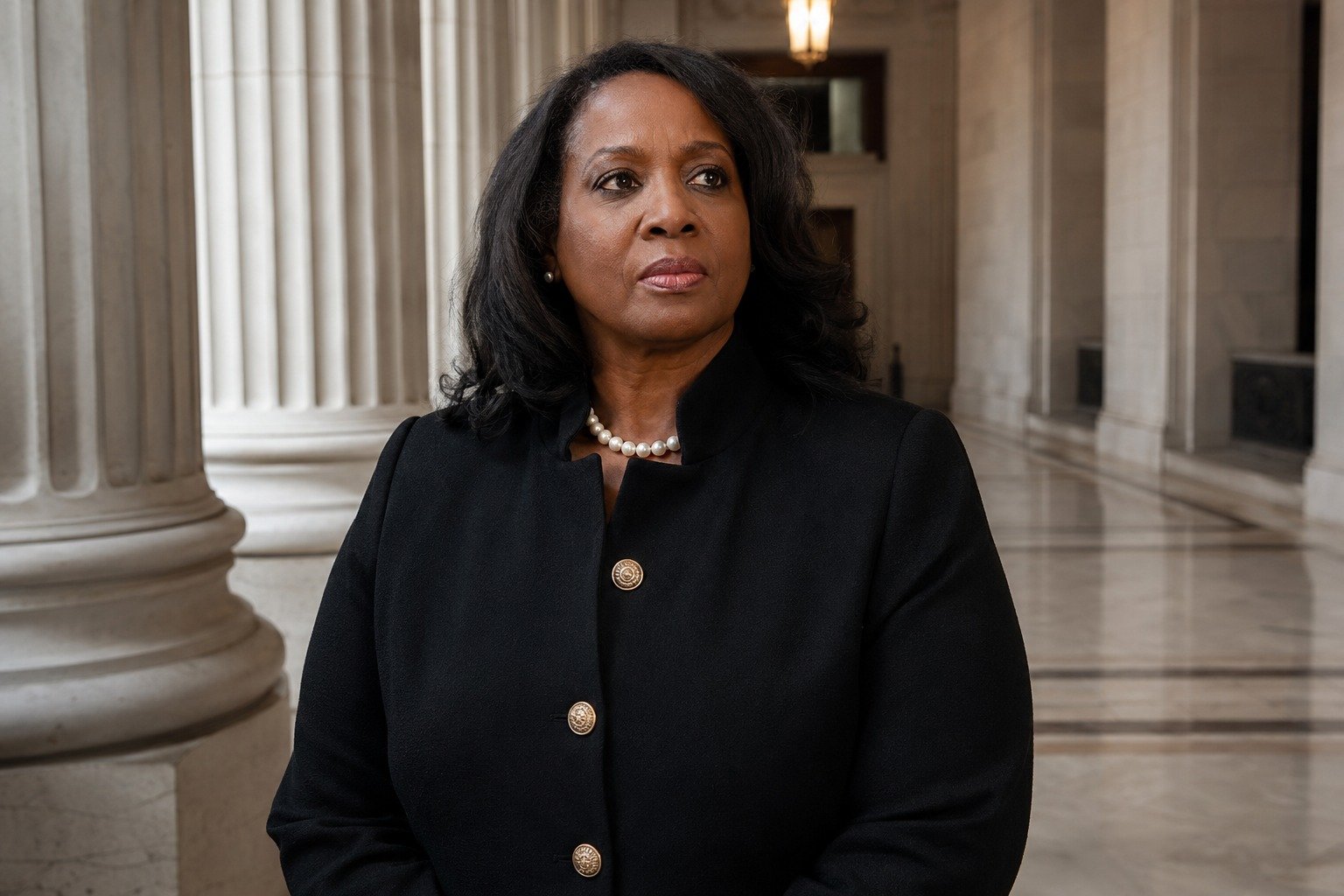
The Supreme Court has drawn a protective line around the Federal Reserve. In a narrow 5-4 ruling issued June 29, 2026, the justices blocked President Donald Trump’s attempt to fire Federal Reserve Governor Lisa Cook without cause, allowing her to remain in her seat while her legal challenge moves forward.
The decision keeps in place a lower-court injunction that had stopped Cook’s removal. It is, for now, a defeat for an administration that has spent months testing how far a president can go in reshaping the federal government’s independent agencies.
What the Court Decided
Chief Justice John Roberts wrote the majority opinion. He was joined by fellow conservative Justice Brett Kavanaugh and by the court’s three liberal members – Elena Kagan, Sonia Sotomayor, and Ketanji Brown Jackson. Roberts described the Federal Reserve as a “uniquely structured” institution and emphasized that Cook was entitled to notice and a genuine opportunity to respond before she could be removed.
In practical terms, the ruling says the president cannot simply oust a Fed governor on a whim. Under the Federal Reserve Act, governors can be removed only “for cause,” and the Court found that Cook had not been afforded the due process that standard requires. The justices declined the administration’s request to lift the injunction while the underlying case proceeds.
A Striking Contrast on the Same Day
What makes the decision so notable is what the very same court did just hours earlier. In a separate case, Trump v. Slaughter, the justices handed the president a major victory – expanding his power to fire officials at other independent agencies and overturning Humphrey’s Executor v. United States, a precedent that had stood for roughly 90 years.
That earlier decision concerned removal protections for members of the Federal Trade Commission. By striking down those protections, the Court broadly widened a president’s authority to remove the leaders of agencies long considered insulated from direct political control. Then, in the Cook case, the same majority deliberately carved out the Federal Reserve as an exception to that expansion.
The result is a single day in which the Court both enlarged presidential firing power across the federal government and shielded the nation’s central bank from it.
How the Fight Began
Trump moved against Cook in August 2025, citing unproven allegations of mortgage fraud – claims she has flatly denied. Had the removal stood, Cook would have become the first Federal Reserve governor forced out in the central bank’s 111-year history.
The Court’s ruling does not end the matter. The justices declined to let the firing take effect now, but a footnote in Roberts’ opinion left the door open to a future attempt – provided the administration follows proper procedure, including an explanation of the evidence, a chance for Cook to respond, and a deadline for that response.
What This Means for Americans
The Federal Reserve sets interest rates and steers the broader economy – decisions that touch mortgages, credit cards, savings, and jobs for ordinary households. The principle of an independent Fed, free from short-term political pressure, has long been treated as a stabilizing feature of the American financial system. This week, that independence received a protective wall that other federal agencies did not.
The open question is why the Federal Reserve should be treated differently from every other independent agency – and whether the protection it received will hold if the administration tries again with the process the Court spelled out.
Stay informed on the stories that matter most. Follow Your Daily Updates on Facebook and bookmark yourdailyupdates.news for breaking news and analysis.