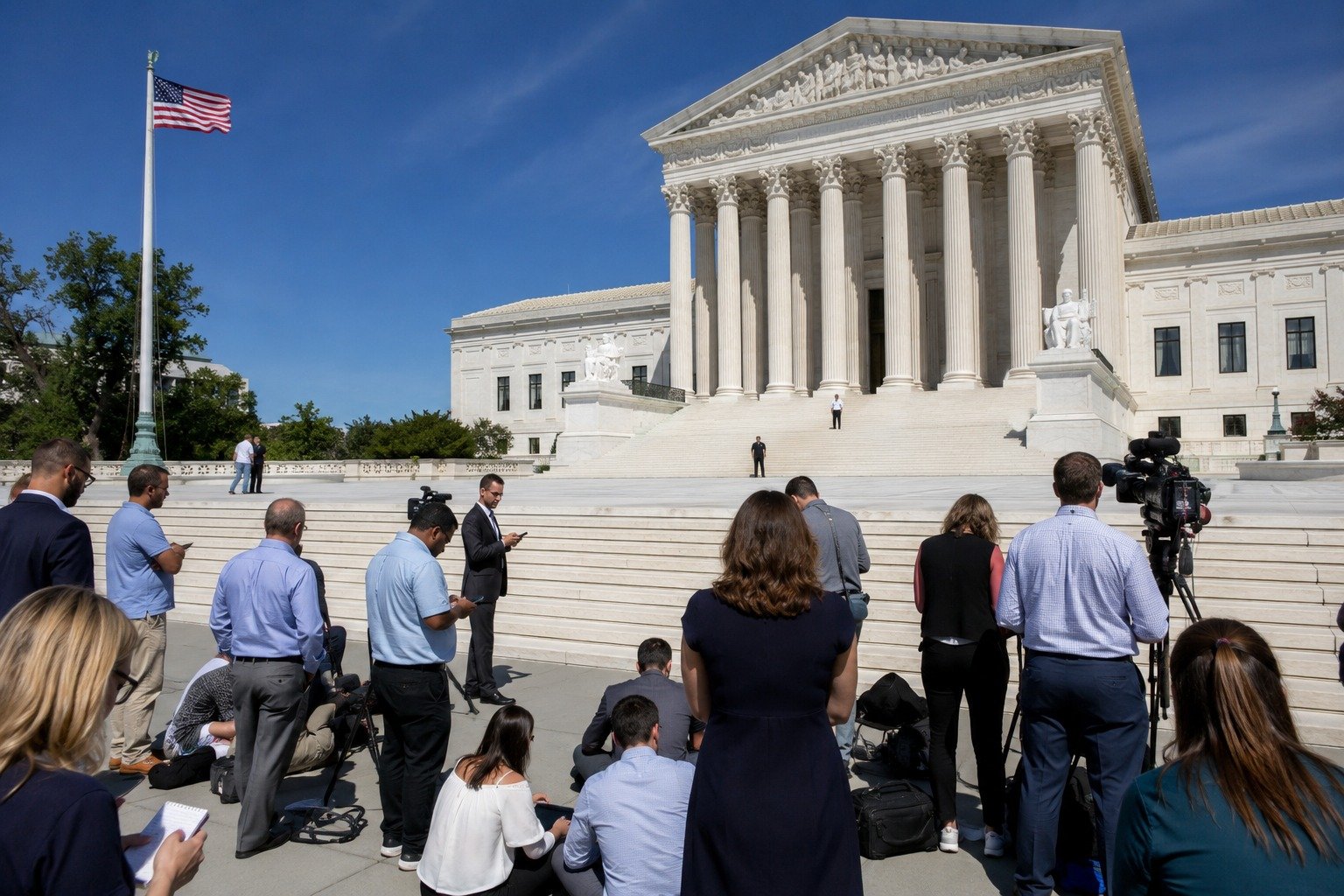
The Supreme Court has agreed to decide whether states and cities can ban AR-15-style assault weapons, taking up one of the most consequential Second Amendment cases in more than a decade. On June 30, the justices granted review in challenges to two laws: Connecticut’s assault-weapons ban and a Cook County, Illinois ordinance that covers the Chicago area. Both prohibit AR-15s and similar semiautomatic rifles.
It is important to be precise about what happened. The Court agreed to hear the cases. It has not ruled. Nothing has been struck down, and nothing has been upheld. Oral arguments are expected in the term that begins in October, with a decision likely sometime in the 2026-27 term.
Why These Two Laws
The Connecticut law is not an abstract policy experiment. It was strengthened directly in response to the 2012 Sandy Hook Elementary School shooting, one of the deadliest attacks on schoolchildren in American history. Lawmakers there expanded restrictions on the kind of military-style rifles that have appeared again and again in mass-casualty events.
The Cook County ordinance covers the greater Chicago area and similarly bars AR-15s and comparable semiautomatic rifles. It was challenged by two residents who say they want to own such firearms, joined by two national gun-rights organizations, the Firearms Policy Coalition and the Second Amendment Foundation. Those groups have spent years looking for the right vehicle to bring the assault-weapons question back before the justices.
What the Court Could Decide
The central question is whether the Second Amendment permits governments to prohibit an entire class of widely sold rifles. Supporters of the bans argue that these weapons are exactly the sort of dangerous, military-style arms that legislatures have long been allowed to regulate. Challengers counter that the rifles are among the most common firearms in the country and therefore cannot be banned outright.
The stakes are magnified by the Court’s composition. It holds a 6-3 conservative majority, and the signals from the bench are not encouraging for supporters of the bans. When the justices declined to take up a similar case last year, four members of the Court indicated they believe laws like these run afoul of the Second Amendment. It takes only four votes to grant review and five to win on the merits.
The Reach of a Ruling
If the Court ultimately sides with the challengers, the consequences would extend far beyond Connecticut and Illinois. Roughly a dozen states have assault-weapons bans on the books, along with a number of cities and counties. A broad ruling could unravel many of them at once, rewriting the rules for an entire category of firearm regulation across the country.
For the families and communities that fought for these laws, often in the wake of tragedy, the case represents the moment they long feared. The rules that dozens of communities passed to keep military-style rifles off their streets are now in the hands of nine justices rather than local voters and legislators.
What This Means for Americans
Whatever the outcome, the decision will shape the balance between public-safety authority and individual gun rights for a generation. Millions of Americans live in jurisdictions where these bans are currently in force, and the ruling will determine whether their state and local governments can keep them. It will also set the framework courts use to judge future firearm laws nationwide.
For now, the bans remain in effect, and no one should read the Court’s decision to hear the case as a decision on the merits. But the fight over whether communities can restrict AR-15-style weapons has officially reached the highest court in the land.
Stay informed on the stories that matter most. Follow Your Daily Updates on Facebook and bookmark yourdailyupdates.news for breaking news and analysis.