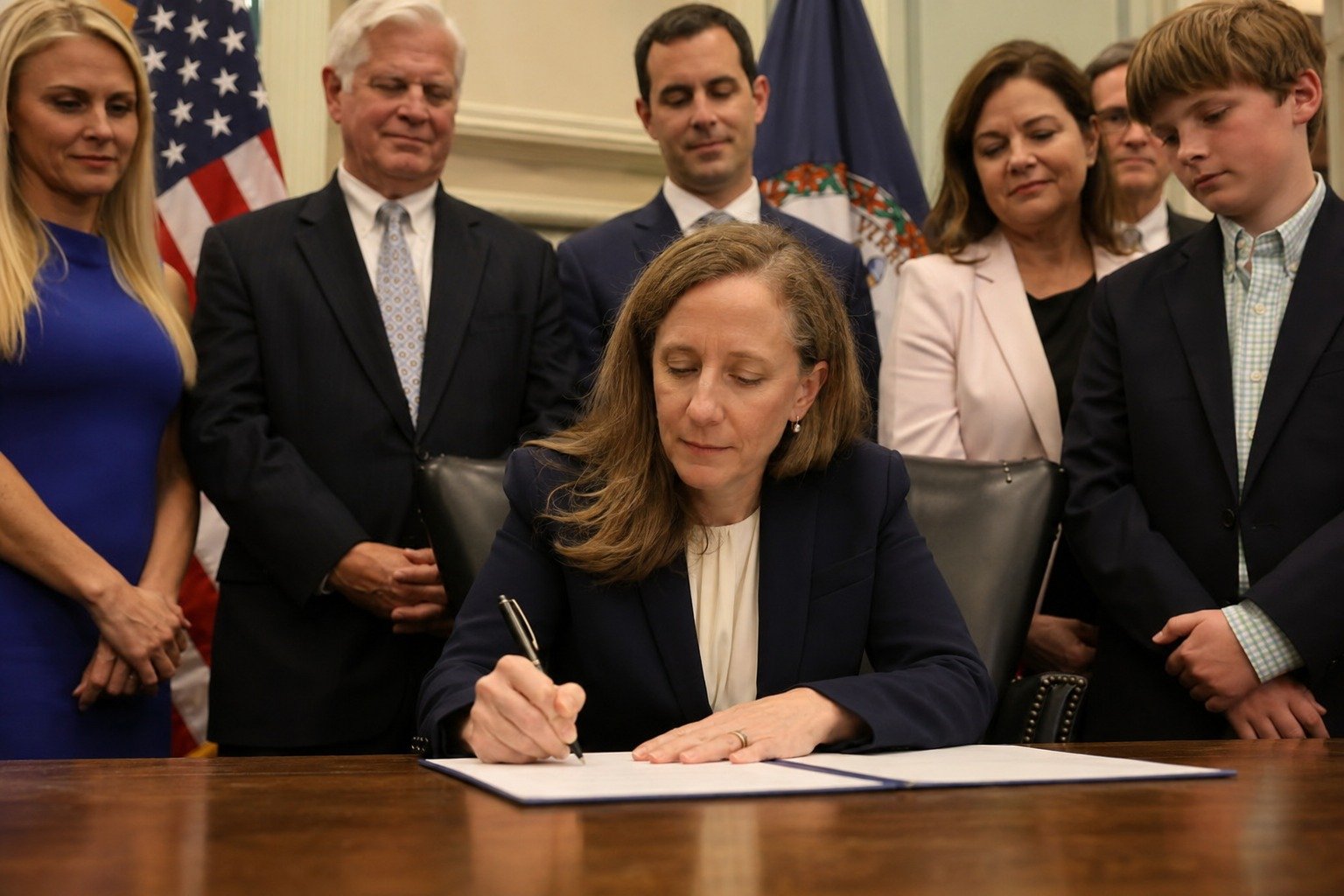
Virginia has a new gun law on the books, and it comes down to one simple rule: if you own a firearm and a child could get to it, you have to lock it up. Starting July 1, leaving a gun unsecured in a home where the owner knows a minor or a legally prohibited person is present is a crime in the Commonwealth.
Governor Abigail Spanberger signed House Bill 871 into law, formalizing a safe-storage requirement that gun-safety advocates have pushed for years. The measure makes it a criminal offense to store or leave a firearm in a way that allows access by someone the owner knows should not have it – a child, or a person barred by law from possessing a gun. The provisions take effect July 1, 2026.
What the law actually requires
The core of HB 871 is straightforward. Gun owners are not being told they cannot own firearms, and they are not being told where they can carry. They are being told that when a child or a prohibited person is in the home and they know it, the weapon has to be stored so it cannot be readily accessed – locked in a safe, secured with a trigger lock, or otherwise kept out of reach. Owners who ignore that responsibility can now face criminal charges.
Supporters describe it as one of the most direct, common-sense steps a state can take to protect children. The reasoning is grounded in a grim reality: unsecured guns in the home are a leading factor in child firearm deaths and injuries. Those tragedies span accidental shootings by curious children who find a loaded weapon, and teen suicides carried out with a gun that was left within reach. Requiring responsible storage is aimed squarely at closing that gap.
A long road to the governor’s desk
The signing was not a single dramatic moment. Spanberger first signed the measure with amendments back in April 2026, working through the legislative details. She then marked it with a ceremonial signing in Richmond on June 16, 2026, surrounded by supporters and advocates who had campaigned for the change. With the calendar now turning to July, the law moves from paper to practice.
For families across Virginia, the practical message is simple. If there are children in the house – yours, a relative’s, a visiting friend’s – the expectation is now a legal one, not just a suggestion from a safety pamphlet. Lock it up.
The partisan divide
Here is the detail that has drawn the sharpest attention: every single Republican in the legislature voted against the bill. Not some. Not most. All of them. A measure framed by its supporters as a child-safety law – locking up guns so kids cannot reach them – drew unanimous opposition from the GOP.
Supporters call that opposition hard to defend, arguing that basic accountability for gun owners should not be a partisan fight. Opponents frame it differently, casting the requirement as government overreach into how law-abiding citizens keep their own property in their own homes. They argue that responsible storage is already something most owners practice, and that criminalizing the exception invites overreach.
That tension – protecting children versus limiting government’s reach into the home – is the debate that will follow this law well past its effective date. What is not in dispute is what the statute now says. As of July 1, Virginia gun owners who knowingly leave a firearm where a child or a prohibited person can get to it are breaking the law.
Where you land on it likely depends on where you already stand. But the safe-storage requirement is now the law of the Commonwealth, and the accountability it creates is real.