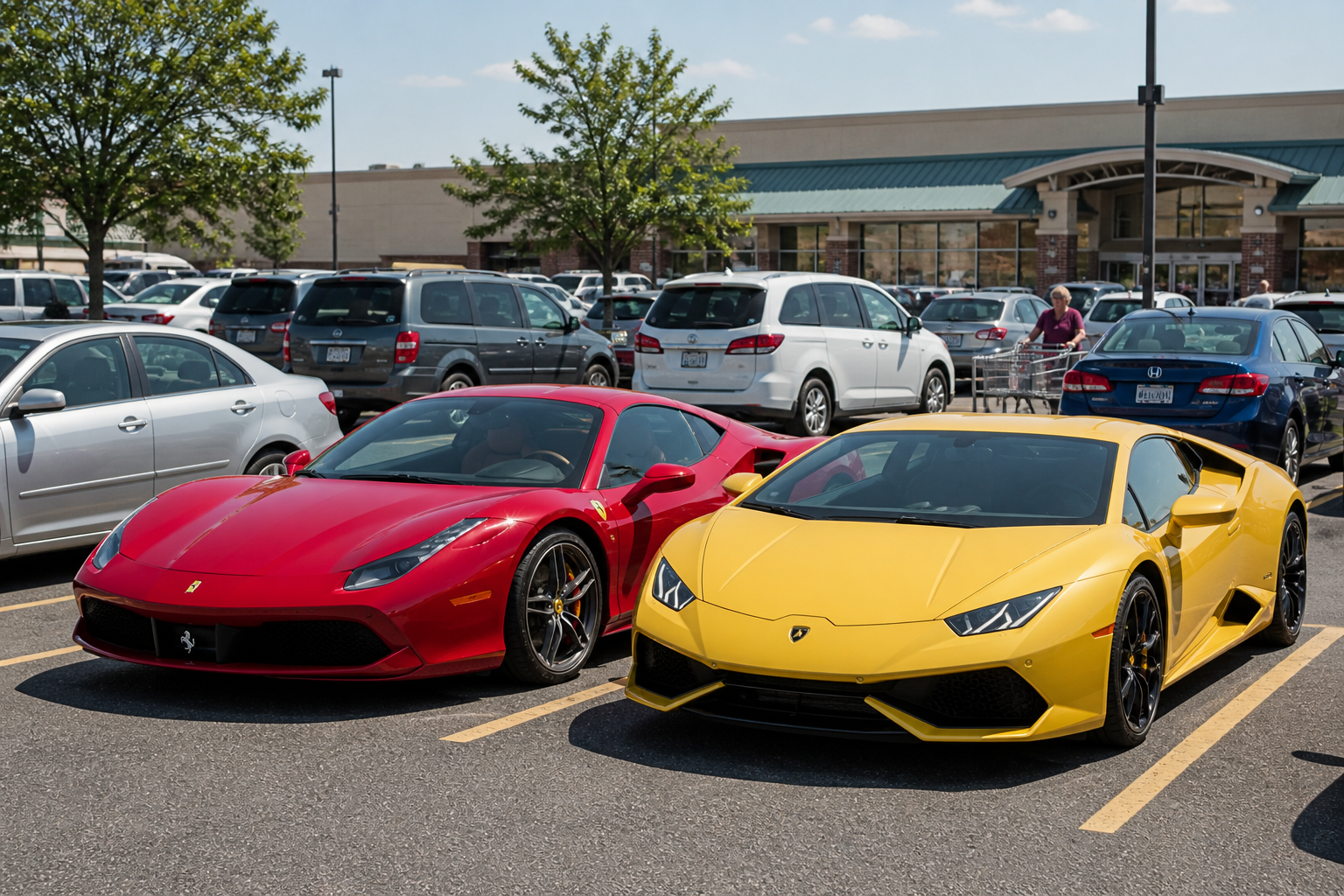
Agriculture Secretary Brooke Rollins dropped a bombshell this week that has Washington — and the rest of the country — demanding answers. According to data compiled by the Foundation for Government Accountability, 14,000 SNAP recipients in a single unnamed state were found to own luxury vehicles. And we’re not talking about a slightly nice car. We’re talking about 3 Bentleys, 3 Ferraris, and 11 Lamborghinis — parked in the driveways of households receiving federal food assistance.
The state has not been publicly identified. But the vehicle list goes far deeper than the headlines suggest. The full breakdown includes 59 Maseratis, 141 Porsches, 244 Alfa Romeos, 306 Land Rovers, and 2,098 Teslas. The most common luxury vehicle on the list wasn’t a supercar at all — it was Lexus, with 3,636 registered owners on SNAP rolls. BMW came in second at 1,914. The combined Bentley, Ferrari, and Lamborghini total made up less than 0.1 percent of the flagged cases, but those are the numbers that lit the internet on fire.
Rollins called it “gaming the system.” And on the surface, it looks like exactly that. But the story is more complicated than it first appears — and that complexity is exactly what the debate is now centering on.
Here’s the legal reality: in many states, one vehicle per household is completely exempt from the asset calculations used to determine SNAP eligibility. That means owning a Lamborghini doesn’t automatically disqualify you. If it’s your only car and your income and other assets fall below the threshold, you can still legally qualify for food stamp benefits. Critics of Rollins’ framing are quick to point this out — arguing that calling it fraud is premature when the underlying rules may have allowed these cases entirely. The dataset itself hasn’t been independently audited, and no fraud charges have been filed based on this data.
Rollins and the USDA aren’t backing down. The administration has been using this data as ammunition for its push to tighten SNAP eligibility rules under the One Big Beautiful Bill Act — legislation that would impose stricter asset tests, close vehicle exemption loopholes, and expand work requirements. The numbers, whatever their legal status, are politically powerful.
And the numbers are already producing results. Rollins also revealed this week that 4.3 million Americans have been removed from SNAP rolls since President Trump took office. That figure reflects a combination of stricter enforcement, new work requirements, and expanded data-sharing between states and federal agencies to identify recipients who may no longer qualify.
That data-sharing requirement is the other flashpoint in this story. More than a dozen Democratic-led states have filed suit against the USDA, arguing that the data collection efforts violate recipients’ privacy rights and go beyond what the law allows. The lawsuits are ongoing, and the courts haven’t yet ruled on whether the program can continue at its current scale.
So where does that leave us? On one side, you have an administration presenting evidence that thousands of food assistance recipients own vehicles most working Americans will never be able to afford. On the other, you have legal experts and state officials arguing the current rules make this possible — even legal — and that changing those rules requires Congress, not executive action.
The unnamed state remains unnamed. No recipient has been publicly charged with fraud. And the central question — whether this represents a broken system being gamed, or a system working exactly as lawmakers designed it — doesn’t have a clean answer yet. What it does have is 14,000 luxury car owners on food stamps and a federal government that wants everyone to know about it.