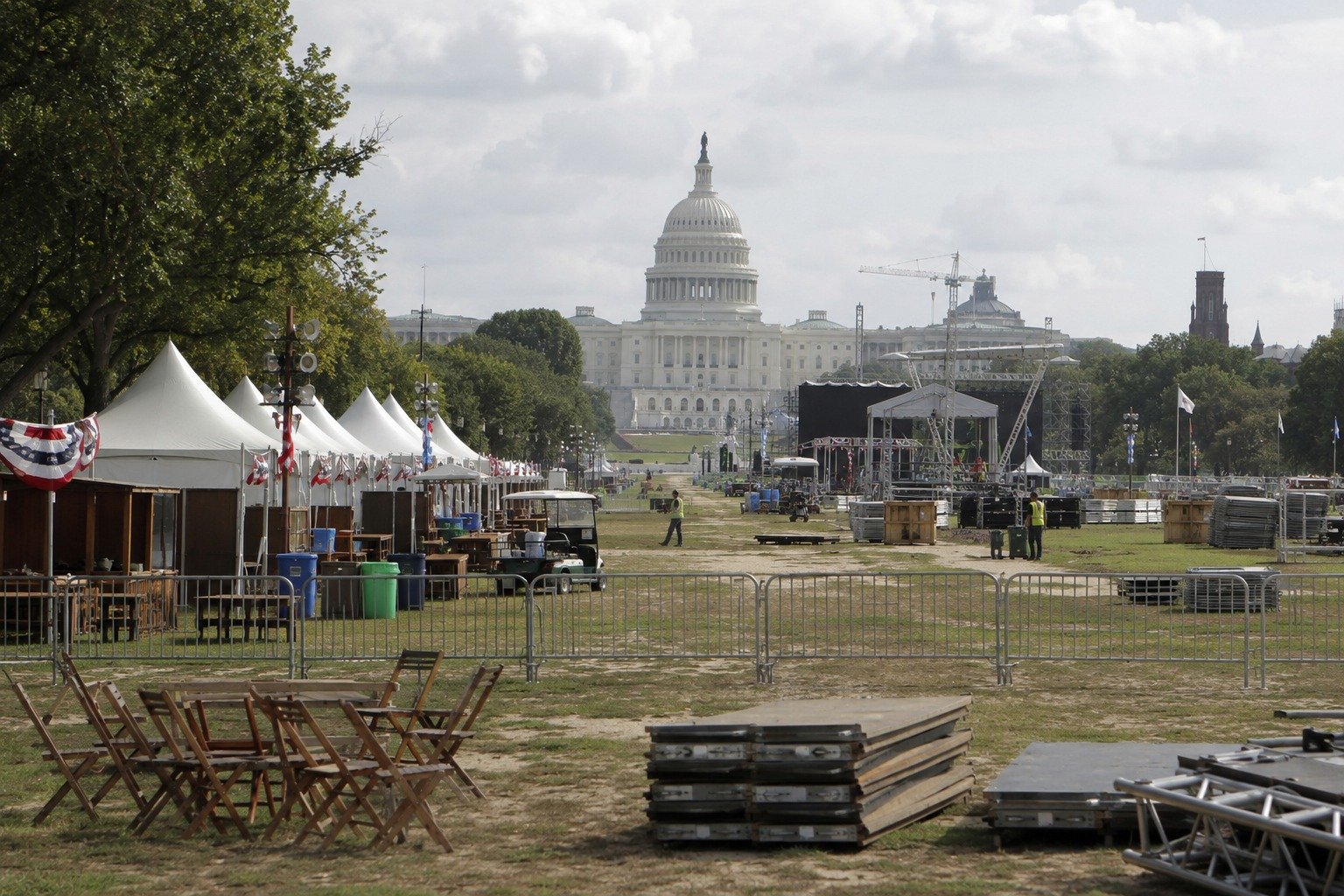
At least six states have told the Trump administration they will not send official delegations to the “Great American State Fair,” the 16-day event set to open on the National Mall on June 25 as part of the country’s 250th-anniversary celebrations. Connecticut, Illinois, Maine, Massachusetts, North Carolina, and Oregon have all bowed out, pointing to steep costs, a rushed timeline, and a growing sense that the festival has become more about politics than patriotism.
Importantly, the states are declining to participate officially – they are not shutting the fair down. Organizers say the event is still on track and that every state and territory will be represented in some form. But the wave of refusals, paired with several musical acts pulling out, has put a spotlight on how the milestone is being funded and who is running it.
Two Competing “250” Efforts
The semiquincentennial – the nation’s 250th birthday – has been planned for years. The bipartisan congressional commission charged with coordinating the commemoration is known as America 250. But the state fair is not its project. Instead, the fair is organized by a separate group called Freedom 250, an organization created by the Trump administration late last year.
That distinction matters. The Interior Department has steered at least $68 million to Freedom 250 to stage the fair and related programming. For governors weighing whether to commit staff, money, and resources, the question is no longer simply “do we celebrate America’s birthday?” It is “do we sign onto an event built and branded by one administration, using public money funneled through a newly created group?”
Why States Are Saying No
The reasons cited by the states declining to send delegations are remarkably consistent. The first is cost. Building out and staffing a multi-week presence on the National Mall is expensive, and several states say the price tag is hard to justify on a compressed schedule.
The second is time. With the opening just weeks away, officials in some states say there simply was not enough runway to plan a meaningful delegation responsibly. The third – and most politically charged – is the concern that the fair has been politicized. When a celebration meant to unite the country is organized by an administration-created entity, some state leaders have decided they would rather keep their distance than appear to endorse it.
Maine became one of the latest to decline, joining Connecticut, Illinois, Massachusetts, North Carolina, and Oregon. Maryland, Pennsylvania, and Washington remain undecided with the clock running down, leaving the door open for the list to grow before the gates open.
Organizers Push Back
Organizers insist the event is not in trouble. They say all 50 states and the U.S. territories will still be represented at the fair, even without official delegations, through alternative partnerships and programming. In their telling, a governor’s office opting out does not mean a state disappears from the celebration – it means the representation comes from somewhere else.
Still, the optics of multiple states publicly declining – and performers walking away – cut against the image of a unifying national party. The fair runs June 25 through July 10, a stretch that places it squarely around Independence Day, the symbolic heart of the 250th-anniversary moment.
What This Means for Americans
For taxpayers, the dispute is really about money and trust. A 250th birthday is supposed to belong to everyone, regardless of party. When tens of millions in public funds flow through an administration-created organization to stage the marquee event, governors are entitled to ask whether their own residents’ dollars should be added on top – and whether the celebration still feels like a shared one. The states stepping back are betting that voters would rather see that money questioned than spent without scrutiny.
Stay informed on the stories that matter most. Follow Your Daily Updates on Facebook and bookmark yourdailyupdates.news for breaking news and analysis.