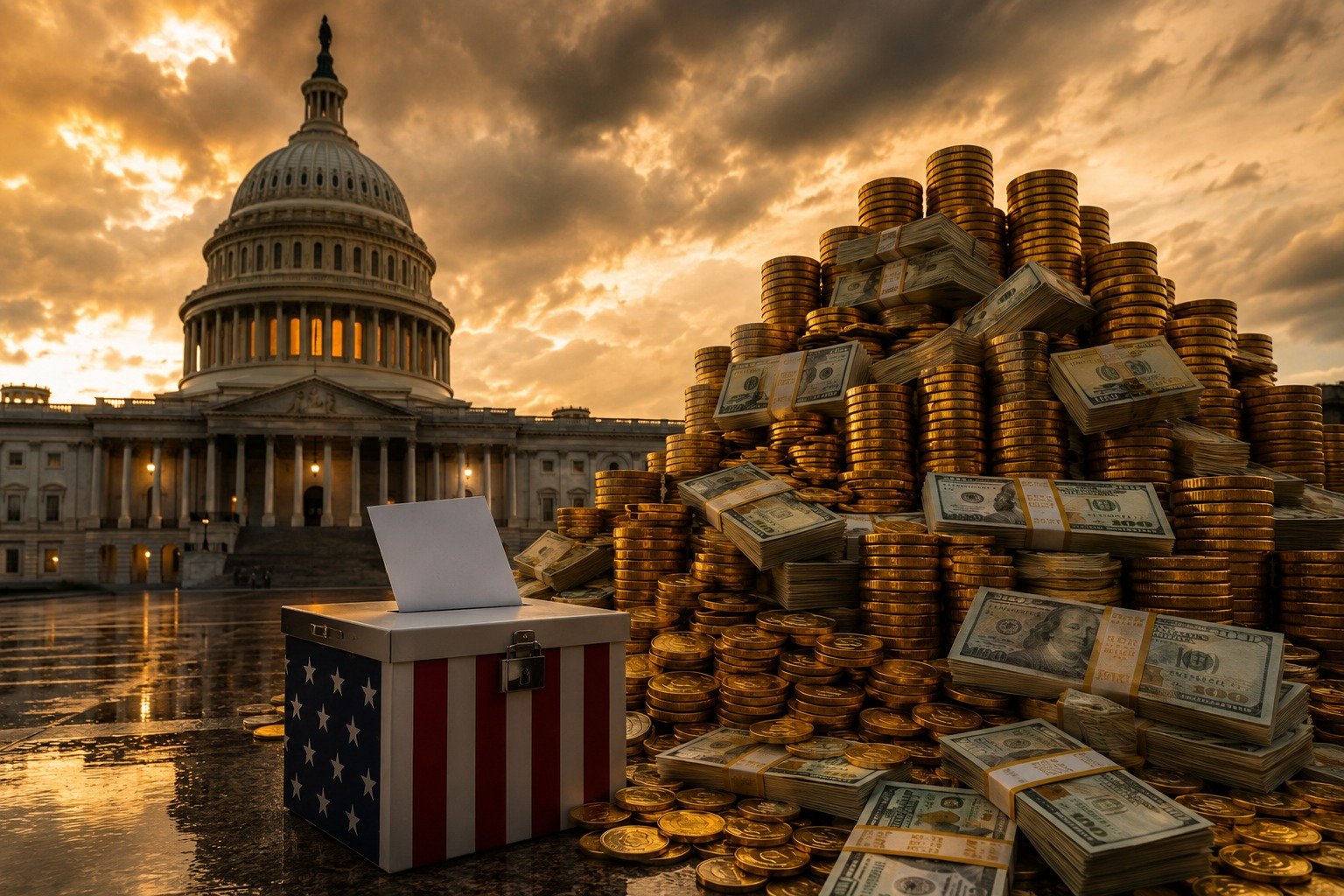
In Canada, corporations have been banned from donating to federal political campaigns since 2007. France prohibited corporate political contributions in 1995. Germany, Australia, New Zealand, Japan, and more than three dozen other democracies have enacted laws that cap, restrict, or outright ban the kind of unlimited billionaire spending that has become central to American elections. These countries made a deliberate decision: elections belong to voters, not wallets.
How America Got Here
The United States went in the opposite direction. In 2010, the Supreme Court’s Citizens United v. FEC decision ruled that corporations and outside groups have First Amendment rights to spend unlimited money on political campaigns. The ruling opened the door to super PACs — outside organizations that can accept and spend unlimited amounts from any source, disclosed or otherwise. In the years since, outside spending in U.S. elections has exploded from hundreds of millions to tens of billions of dollars per cycle.
The practical effect has been a concentration of political influence in a very small number of extremely wealthy hands. A handful of mega-donors now routinely outspend entire state party operations. The top 100 individual donors in a typical presidential cycle account for more than a third of all outside spending — meaning a few hundred people have an outsized influence over the outcome of elections that are supposed to reflect the will of 160 million voters.
The Record Was Broken in 2024
The 2024 presidential election set a new benchmark. Elon Musk contributed more than $100 million to support Donald Trump’s campaign — the single largest individual political donation in American history. Musk’s involvement didn’t stop at writing checks; he took an active role in campaign strategy, canvassing operations, and post-election policy. His name was mentioned in the same breath as cabinet picks and policy decisions before inauguration day. Critics called it the clearest example yet that billionaire money doesn’t just influence elections — it can buy a seat at the governing table.
On the other side of the aisle, major Democratic donors have engaged in similar large-scale giving for years. The debate over billionaire political spending is genuinely bipartisan in its origins — and increasingly bipartisan in the frustration it generates. Polling consistently shows that large majorities of Americans across party lines believe wealthy donors have too much influence over the political process, even when those donors support their preferred candidates.
The Debate Over a Fix
Critics of the current system argue that overturning Citizens United is the only real solution — either through a future Supreme Court decision or a constitutional amendment. Proponents of reform point to countries like Canada and France as evidence that strong campaign finance limits are compatible with free and open democracy. Opponents argue that restricting how someone spends their own money is an unconstitutional violation of free speech, and that transparency and disclosure requirements are a better remedy than outright bans.
What It Means for Voters
For ordinary Americans, the practical question is straightforward: in a democracy, should one person’s billion-dollar fortune count more than millions of individual votes? More than 40 nations have already answered that question with laws and limits. Whether the United States eventually follows is a debate that will define American politics for the next generation — and one that voters across the political spectrum are watching closely.
Stay informed on the stories that matter most. Follow Your Daily Updates on Facebook and bookmark yourdailyupdates.news for breaking news and analysis.