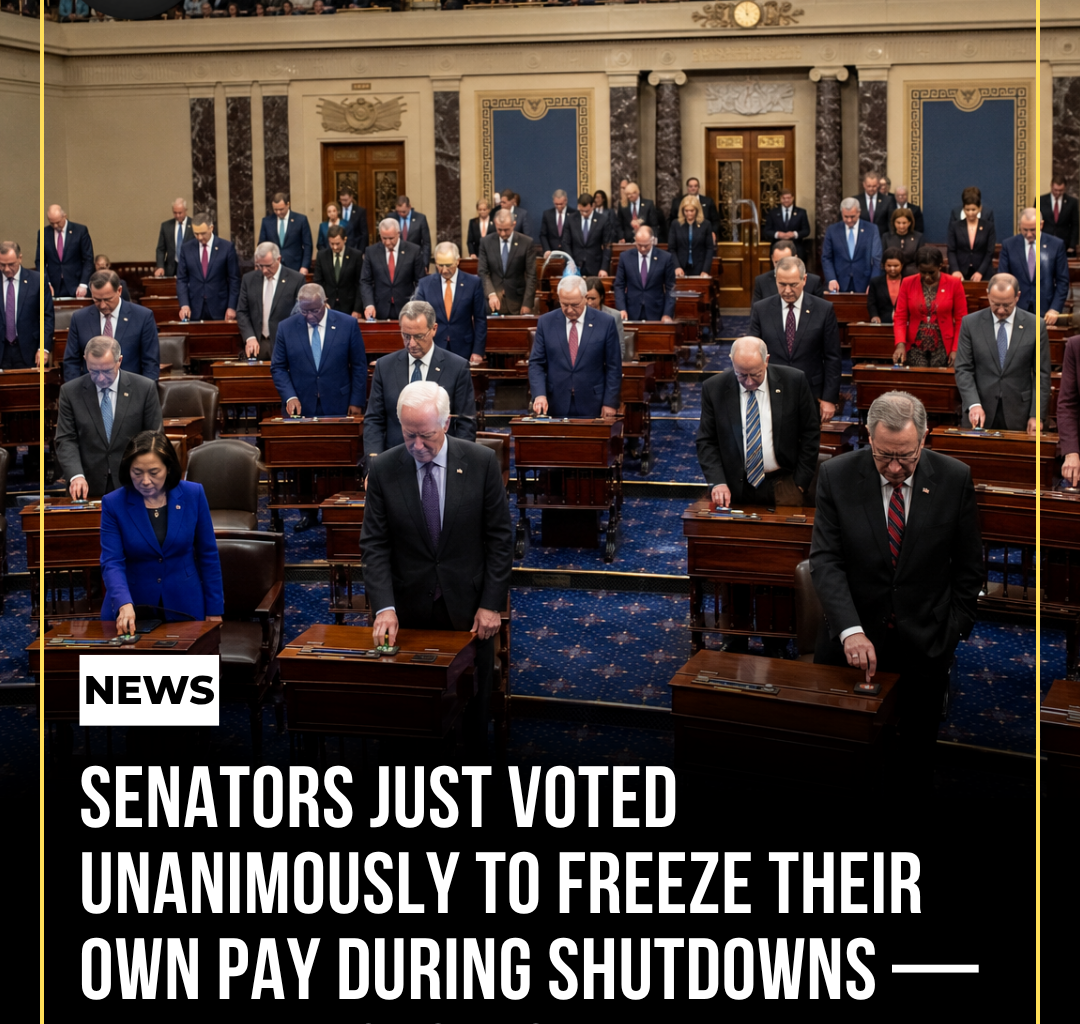
The U.S. Senate made history this week with a rare unanimous vote — agreeing to withhold their own salaries whenever a government shutdown is in effect. Every senator, Republican and Democrat alike, voted in favor of the resolution, which would direct the Secretary of the Senate to freeze all senatorial paychecks the moment a shutdown begins and hold them until the government fully reopens.
The Backstory: 670,000 Workers, Zero Consequences for Congress
The vote comes on the heels of a bruising 43-day shutdown last year — one of the longest in recent memory — that left roughly 670,000 federal workers furloughed or forced to work without pay. Throughout that ordeal, members of Congress continued drawing their full salaries. The public backlash was immediate and intense, and calls for legislators to share the financial pain they impose on the government workforce grew louder by the week.
Congress has long faced criticism for treating government shutdowns as negotiating tools while bearing none of the personal financial cost. Federal workers — from TSA agents to air traffic controllers to national park rangers — have repeatedly been left in limbo, often unsure whether back pay would ever arrive. Senators voting to put their own paychecks on the line is a direct response to that double standard.
What the Resolution Actually Does
Under the resolution, the Secretary of the Senate would be required to withhold pay from all senators for the full duration of any lapse in appropriations affecting one or more federal agencies. The paychecks would be held — not canceled — and released once full government funding is restored. The measure creates a direct financial stake for senators in any future shutdown standoff.
There is a critical catch, however: the House of Representatives is not covered. The measure applies solely to the Senate, meaning House members could still collect their full $174,000 annual salary during any future government funding lapse. Critics from both sides of the aisle have already begun calling the resolution a half-measure — accountability on one side of the Capitol while the other remains untouched.
There is also a built-in delay. The pay-freeze rule would not take effect until after the November general election, meaning no sitting senator faces any personal financial consequence under the current Congress. That detail has drawn pointed criticism from government accountability advocates who argue it undercuts the urgency lawmakers are claiming to feel about the shutdown problem.
Reactions: Bipartisan Win or Political Theater?
Supporters of the resolution point to the 100-0 vote as genuinely meaningful — a unanimous bipartisan vote in today’s polarized Senate is virtually unheard of. Proponents argue that when lawmakers have real money on the line, they will be far more motivated to pass spending bills on time and avoid the brinkmanship that has repeatedly pushed the government to the edge of shutdown.
But critics are already pointing to the House carve-out as evidence that the resolution is more symbolic than substantive. Without the House on board, there is no guarantee that the full legislative machinery faces equal accountability pressure. Given that most recent shutdowns have been driven by standoffs between the two chambers, the absence of House participation limits the measure’s real-world impact — and raises questions about whether the Senate would have passed it so easily if it applied immediately rather than after the election.
What This Means for Americans
For the hundreds of thousands of federal workers who spent weeks without a paycheck during last year’s shutdown — and the millions of Americans who depend on government services — the Senate vote is a step in the right direction, but only a step. The real test will come if and when the House takes up a companion measure and extends the same accountability standard to all of Congress. Until then, one chamber faces financial consequences for shutdowns. The other one doesn’t.
Stay informed on the stories that matter most. Follow Your Daily Updates on Facebook and bookmark yourdailyupdates.news for breaking news and analysis.