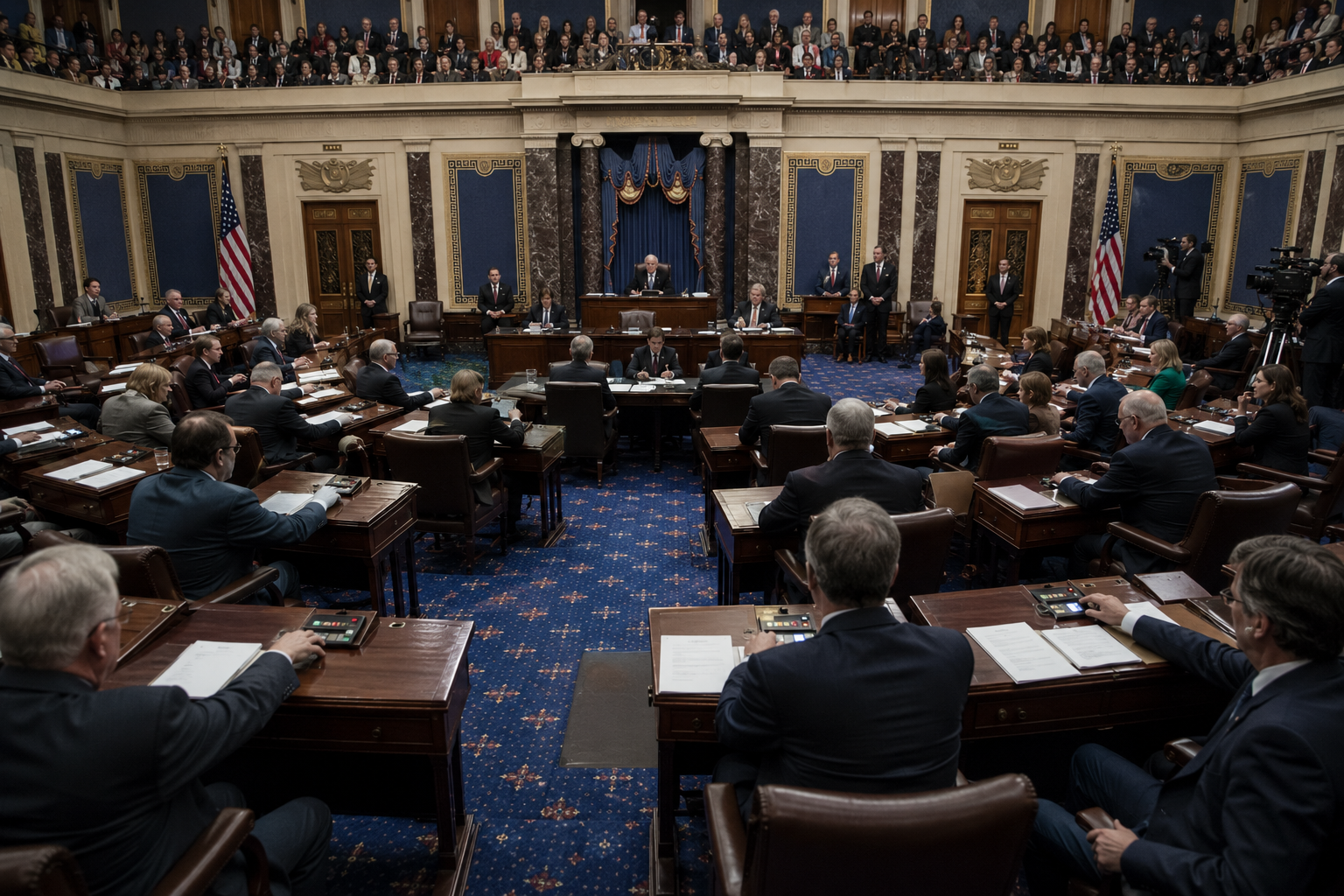
For the first time in the current Congress, the United States Senate voted to advance a War Powers Resolution demanding that President Donald Trump halt US military operations against Iran. The final tally was 50–47, and it represents the first successful procedural advance of such a measure out of seven attempts. Four Republican senators crossed party lines to make it happen.
The Vote That Nearly Didn’t Happen
The War Powers Resolution, originally enacted in 1973 in the wake of Vietnam, gives Congress the authority to limit the president’s ability to deploy US forces without a formal declaration of war. Under its provisions, Congress can pass a resolution requiring the executive branch to withdraw troops or end military action within 60 days if no authorization has been granted.
The four Republicans who voted with Democrats to advance the resolution were Rand Paul of Kentucky, Susan Collins of Maine, Lisa Murkowski of Alaska, and Bill Cassidy of Louisiana. Of the four, Cassidy’s vote has drawn the most attention. Days before the Senate vote, Cassidy lost his Louisiana Republican primary to a Trump-backed challenger — effectively ending his Senate career at the close of this term. His decision to cross Trump anyway has been described by observers as a final act of political independence.
What the Resolution Would Actually Do
If the War Powers Resolution passes both chambers of Congress and survives a presidential veto, it would legally require the Trump administration to cease US military operations against Iran within 60 days unless Congress provides explicit authorization. It is a direct constitutional check on executive war-making power — one that has been debated and litigated in American politics since it was first invoked against Richard Nixon five decades ago.
The resolution targets what lawmakers describe as an escalation of US military engagement with Iran that was not formally authorized by Congress. Supporters argue that under Article I of the Constitution, only Congress has the power to declare war — and that ongoing military operations against Iran require a formal authorization that has never been granted.
The Political Reality: Long Road Ahead
Despite the historic procedural vote, the resolution faces enormous obstacles. It must first pass a full Senate vote, then clear the Republican-controlled House — where Speaker Mike Johnson has shown little appetite for limiting presidential war powers — and then survive a presidential veto. Overriding a veto requires a two-thirds majority in both chambers, a threshold that appears politically out of reach given current Republican majorities.
The White House has not formally commented on the Senate vote, but the Trump administration has consistently rejected congressional attempts to limit executive authority in foreign policy matters. Previous War Powers challenges were blocked before reaching this stage.
Why This Moment Is Different
The significance of Tuesday’s vote is less about what it will accomplish in the short term and more about what it signals. Seven previous attempts to advance this resolution were blocked. The fact that four Republicans broke ranks — including one who just lost a primary — indicates growing unease within the party over the administration’s military posture toward Iran.
For everyday Americans, the underlying question is fundamental: who decides when the United States goes to war? The Constitution gives that power to Congress. The War Powers Act of 1973 was designed to enforce it. And Tuesday’s Senate vote — however unlikely it is to become law — is the clearest signal yet that some Republicans believe that line has been crossed.
Stay informed on the stories that matter most. Follow Your Daily Updates on Facebook and bookmark yourdailyupdates.news for breaking news and analysis.