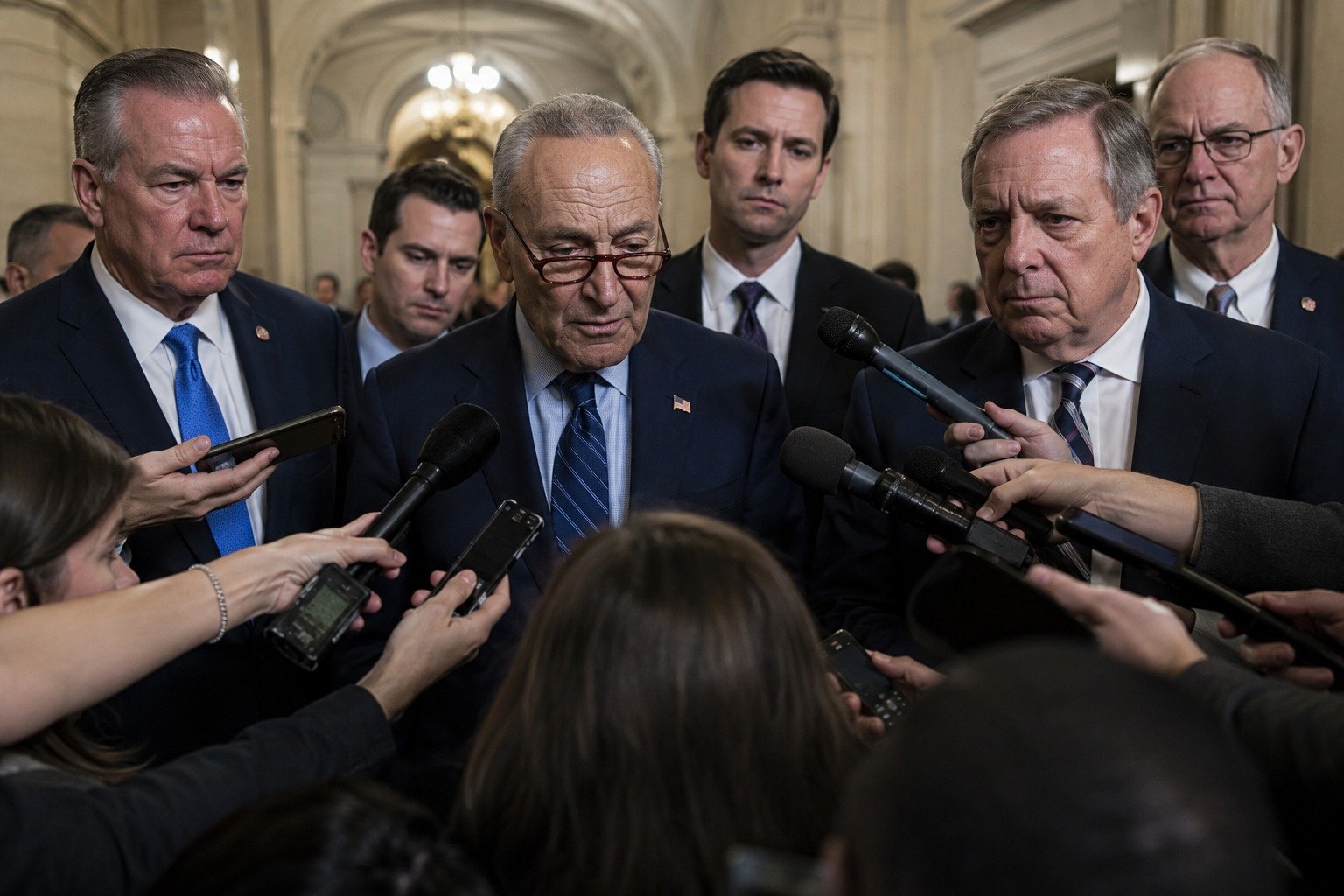
It is not Democrats leading the charge this time. Several of President Donald Trump’s own Senate Republicans have come out swinging against his newly unveiled Iran framework, with one senior member of the party branding it a “tremendous foreign policy blunder.” For a coalition that has spent years marching in near-lockstep behind the president, the open dissent is striking.
That blunt assessment came from Sen. Bill Cassidy of Louisiana, and he is far from alone. A cluster of Republican senators has voiced unease with the terms of the agreement, turning what the White House hoped would be a diplomatic milestone into a flashpoint inside the GOP itself.
A $300 Billion Sticking Point
At the center of the backlash is a proposed $300 billion reconstruction fund for Iran tucked inside the framework. Sen. Roger Wicker of Mississippi, a leading voice on national security, has objected sharply to the figure, a staggering sum that has stunned even the most hawkish corners of his own party. The idea of directing that much money toward Tehran’s rebuilding has become a rallying point for critics who argue the deal gives away too much for too little in return.
Others have piled on with their own complaints. Sen. Thom Tillis of North Carolina called the framework “inadequate.” Sen. Ted Cruz of Texas said the agreement reflected “bad advice.” Sen. Tom Cotton of Arkansas, among the chamber’s most consistent Iran hawks, has voiced concerns of his own. Taken together, the criticism amounts to a rare public fracture within the president’s Senate ranks.
A Framework, Not a Treaty
It is important to be precise about what is actually on the table. The agreement is a 14-point memorandum of understanding, a diplomatic framework, not a ratified treaty. That distinction matters: a memorandum lays out shared intentions and principles, but it does not carry the binding legal force of a treaty approved by the Senate. In other words, what senators are reacting to is the substance and direction of the deal’s terms, not a finished, enacted commitment.
Even so, the terms alone were enough to spark the revolt. The objections, compiled in a release circulated by Senate leadership, go even further than individual quotes suggest, with the broader agreement characterized as one of the worst foreign policy blunders in decades. That is the kind of language usually reserved for the opposing party, yet here it is coming from Republicans describing a deal struck by a Republican president.
Cracks in the Coalition
What makes this moment notable is not simply that lawmakers disagree on policy. Disagreements over the contours of any major international agreement are common. What stands out is that the pushback is coming from inside the president’s own coalition, and that the senators are airing it openly rather than behind closed doors.
For years, Trump has commanded remarkable discipline from Senate Republicans, who have largely deferred to him on questions of foreign policy and national security. Watching members of that same bloc reach for words like “blunder” and “inadequate” in public suggests something inside the coalition is shifting, at least on this issue.
The open question now is whether this represents a genuine, lasting fracture or simply a passing flare-up that fades once the political pressure eases. Framework agreements often evolve, and the administration may yet revise its terms in response to the criticism. But for the moment, the spectacle of Trump’s own party publicly rebuking one of his signature diplomatic efforts is a reminder that even the most unified coalitions have their limits.
As the debate plays out, the central tension is clear: a White House eager to claim a foreign policy win, and a faction of its own senators warning that the price may be far too high.