The Senate Acts — 43 Days Too Late for 800,000 Workers
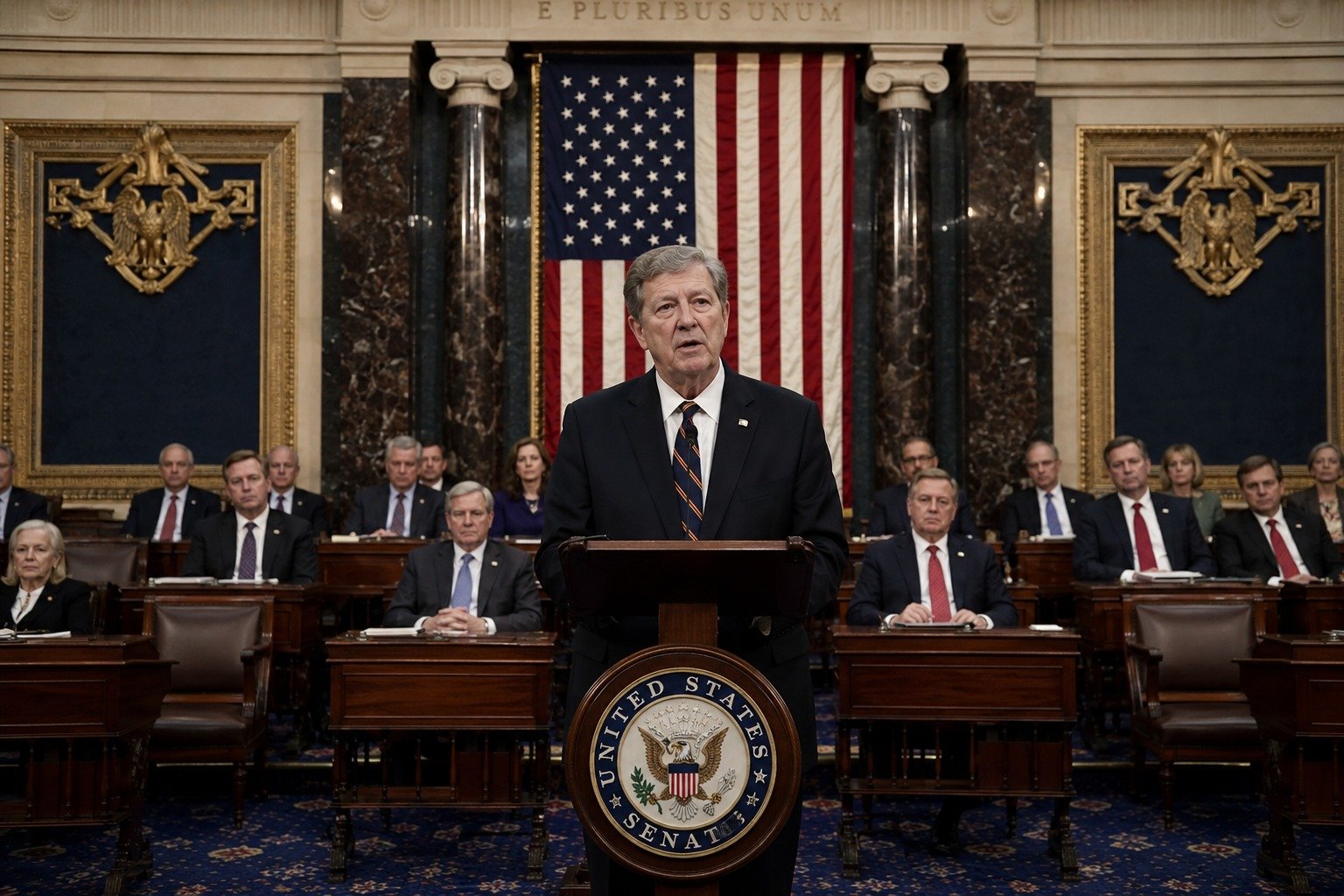
The U.S. Senate voted 99-0 to freeze congressional pay during future government shutdowns, passing a resolution that holds lawmakers’ salaries in escrow for the duration of any shutdown they fail to prevent. The measure, championed by Louisiana Senator John Kennedy, takes effect after the November 2026 elections — marking the first time in American history that Congress has formally tied its own paycheck to the consequences of its legislative failures.
What Happened During the Shutdown
The backdrop for this legislation is the 2025 government shutdown — the longest in American history at 43 days. When Congress failed to pass a funding bill, approximately 800,000 federal workers were sent home or forced to work without pay. Essential personnel at the TSA, Border Patrol, and federal prisons reported to their posts with no guarantee of when a paycheck would arrive. Many relied on food banks, payday lenders, and personal savings just to cover rent and groceries.
Throughout all 43 days, every single senator and representative collected their full government salary without interruption. The 27th Amendment to the Constitution prevents congressional pay from being altered mid-term, which made an outright pay cut impossible. Kennedy’s resolution worked around that constraint by placing the funds in escrow — lawmakers would still receive their pay after the shutdown ended, but not a day before it did. His original, more aggressive proposal would have eliminated the back pay entirely, but constitutional limits ruled that version out.
Kennedy’s Push — and the Road to a 99-0 Vote
Kennedy introduced the legislation in the immediate wake of the shutdown, framing it in direct terms: the people responsible for keeping the government funded should face the same financial pressure as the workers who suffer when they fail to do their job. He put forward two versions — the escrow model and the full elimination model — knowing the latter was constitutionally problematic but determined to put maximum pressure on colleagues to act.
The Senate Rules Committee unanimously advanced the proposal in December 2025, an early signal of genuine bipartisan appetite for the measure. On the Senate floor in early 2026, Democrats briefly blocked the resolution from advancing — some cited procedural concerns, others argued it was more symbolic than substantive since it wouldn’t apply to the same Congress that caused the shutdown. But negotiations broke the impasse, and the final vote came back 99-0. One senator did not vote; every other senator voted yes.
Supporters and Critics React
Kennedy called the result a long-overdue correction. “The American people deserve a Congress that feels what they feel,” he said following the vote. “If 800,000 federal workers can be told to show up without a paycheck, then so can the 535 people whose job it was to prevent that from happening.” Supporters across both parties hailed the resolution as a rare genuine example of congressional self-accountability.
Critics, however, note that the measure does not take effect until after the 2026 elections — meaning the very members who presided over the historic 43-day shutdown will never personally face the escrow provision. Some advocacy groups are already pushing to move the effective date up and to expand coverage to congressional staff, who also suffered through the 2025 shutdown without similar pay protections. Whether either amendment gains traction remains to be seen.
What This Means for Americans
If Congress fails to fund the government after November 2026, every senator’s paycheck goes into a lockbox. At $174,000 a year, that is roughly $14,500 per month in escrow for every month the shutdown continues. The measure will not fix every dysfunction in Washington. But for the first time in American history, the people who cause government shutdowns will feel the same financial squeeze as the people forced to live through them. The era of Congress coasting through a shutdown on a full salary while the rest of the government grinds to a halt is officially over.
Stay informed on the stories that matter most. Follow Your Daily Updates on Facebook and bookmark yourdailyupdates.news for breaking news and analysis.