For the first time in history, a majority of Senate Democrats voted to block U.S. arms sales to Israel. The measures did not pass. But the vote count marked a turning point that few in Washington saw coming this fast.
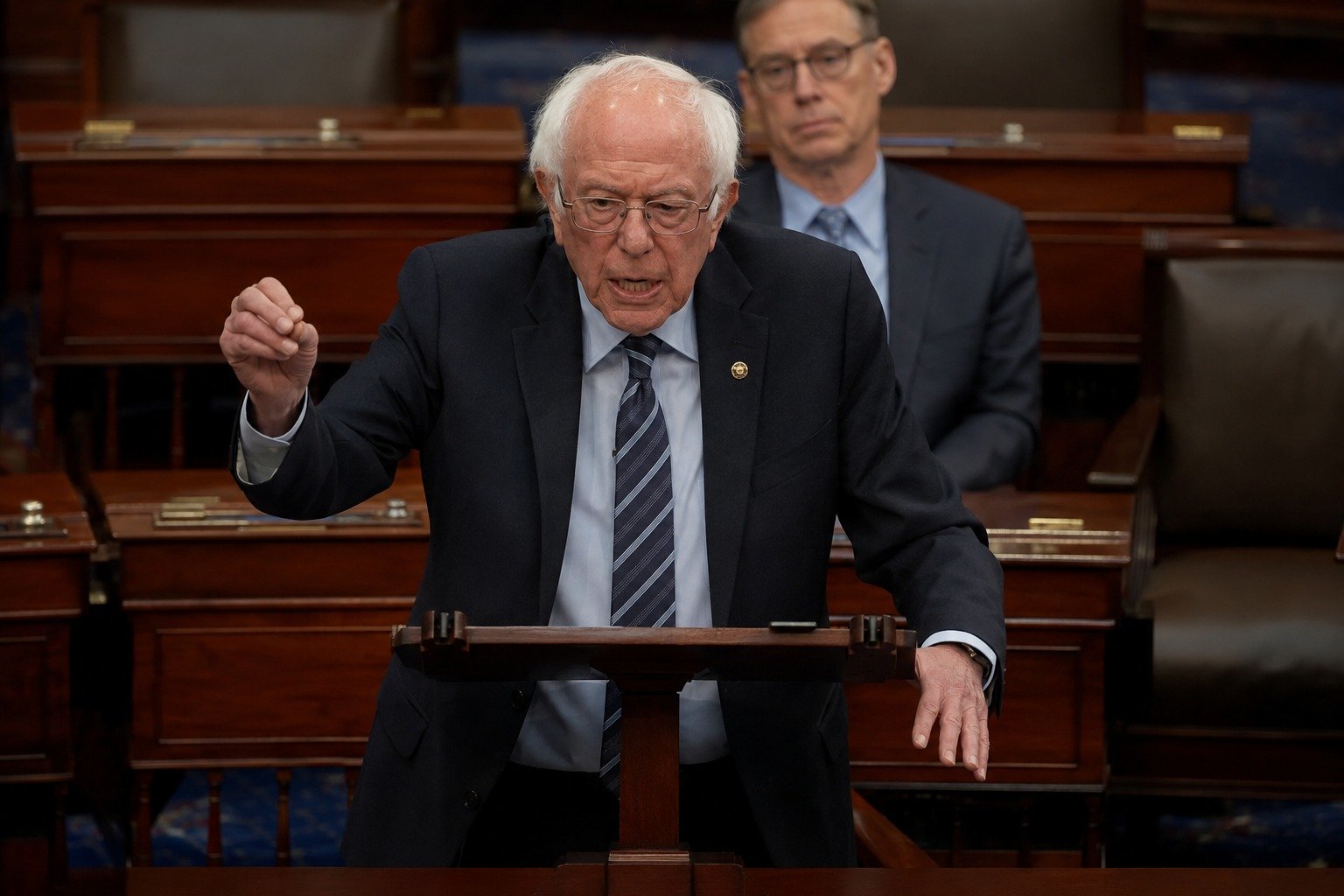
On April 15, 2026, Senator Bernie Sanders forced the Senate to go on the record on two joint resolutions of disapproval. Together, they sought to halt roughly $446.8 million in weapons sales to Israel. Both failed. But the way Democrats broke is the story that is still echoing through the Capitol.
What Sanders Forced to a Vote
The two resolutions targeted distinct pieces of a broader arms package. The first aimed to block $295 million in Caterpillar D9 bulldozers — heavy equipment that Sanders argues has been used to demolish homes in Gaza, the West Bank, and Lebanon. The second targeted $151.8 million for roughly 12,000 1,000-pound bombs.
Under the Arms Export Control Act, any senator can force a floor vote on a joint resolution of disapproval to try to stop a foreign weapons sale. It is one of the few tools Congress has to assert itself on arms transfers, which are otherwise driven almost entirely by the executive branch. Sanders has used it repeatedly. For years, those efforts were crushed by lopsided margins.
The Votes Failed — But the Margins Shifted
Both resolutions went down. The Senate rejected the motions on the two measures by votes of 40-59 and 36-63. Every Republican voted to keep the sales moving forward, and that unified bloc was more than enough to defeat the resolutions. The weapons sales were not blocked.
Here is what changed. Forty of the 47 Senate Democrats voted in favor of the resolution to block the $295 million bulldozer sale. That is a clear majority of the Democratic caucus voting to cut off a specific arms transfer to Israel — something that had never happened before in the Senate. Less than a year earlier, in July 2025, only 27 Democrats had backed a comparable effort. The jump from 27 to 40 in under a year is why some observers are calling the moment historic.
A Crack in a Long-Standing Consensus
For decades, support for arms sales to Israel was one of the safest bipartisan positions in American politics. The April vote showed that consensus splintering inside one of the two major parties. A majority of Senate Democrats — including members who had long been reliable backers of these transfers — signaled they were no longer willing to approve them without conditions.
The seven Democrats who broke with the majority and sided with Republicans kept the resolutions from advancing. Their votes, combined with the unanimous Republican opposition, sealed the outcome. The math meant the measures were always going to fall short. Sanders knew that going in.
That was, in many ways, the point. Forcing the vote put every senator on the record. There is now a roll call showing exactly who was willing to halt these specific sales and who was not — a document that advocates on both sides will be citing for years.
What This Means for Americans
Arms sales are paid for and approved in the public’s name, yet they rarely get a public vote. By forcing one, Sanders gave voters a rare, concrete record of where their elected senators actually stand on a question that has divided the country. Whatever your view on the policy, the accountability cuts in every direction: the names are now on paper, and constituents can hold their senators to them.
The resolutions are dead for now, and the sales are proceeding. But a majority of one party in the U.S. Senate just voted to cut off weapons to a close ally — a line that, once crossed, reshapes the debate going forward.
Stay informed on the stories that matter most. Follow Your Daily Updates on Facebook and bookmark yourdailyupdates.news for breaking news and analysis.