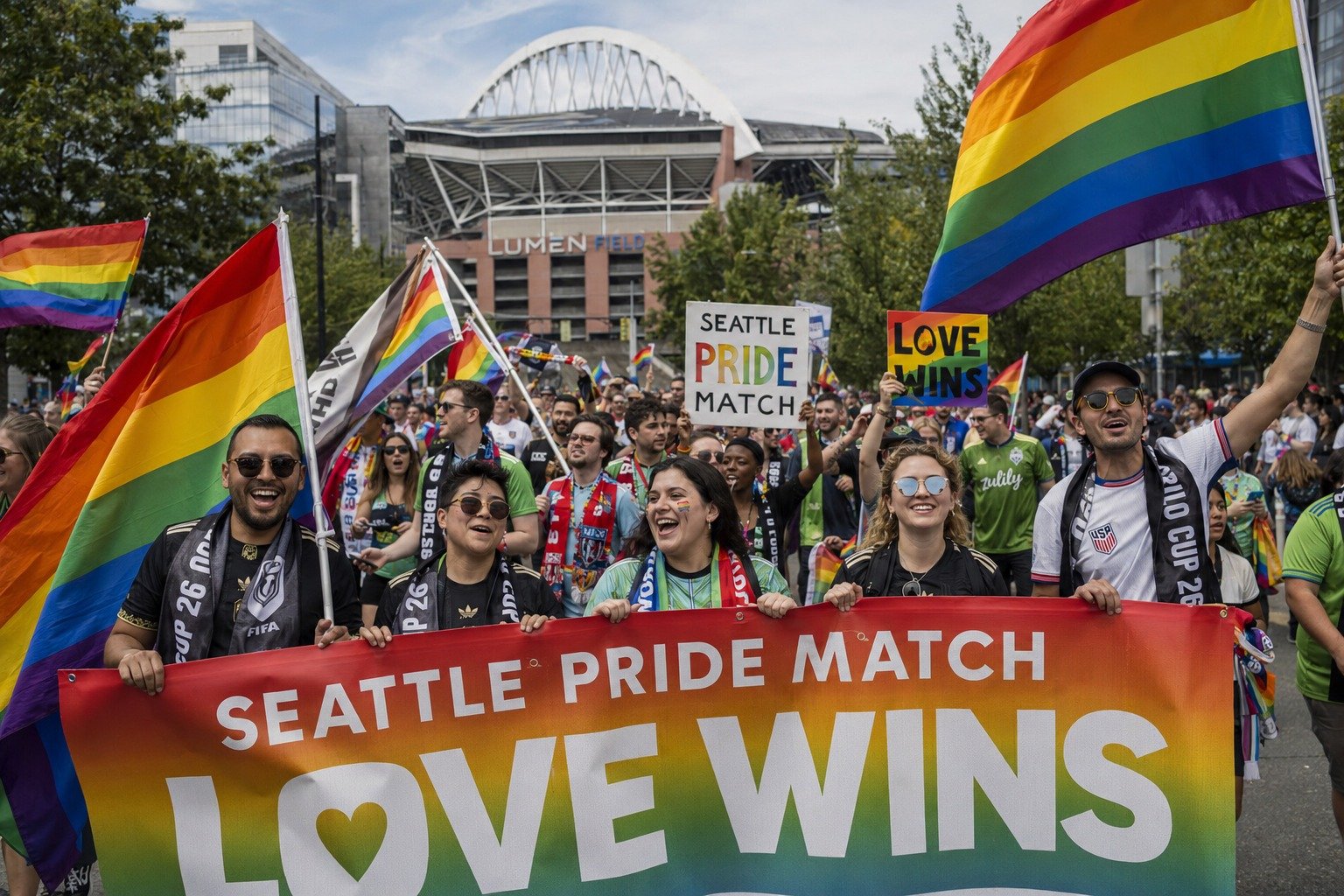
When the 2026 World Cup arrives in Seattle, the tournament’s group-stage draw has produced a collision no scheduler could have planned around. Iran and Egypt are set to meet at Lumen Field in a match reported for late June, landing squarely in the window when Seattle marks Pride. The city embraced the overlap and branded the fixture a “Pride Match.” Two governments that criminalize same-sex relationships were not pleased.
A Collision of Calendar and Politics
Major tournaments rarely turn a single group-stage game into a cultural flashpoint, but the timing here did exactly that. Seattle’s Pride celebrations are among the largest in the Pacific Northwest, and a marquee World Cup match falling inside that window gave organizers an obvious opportunity to fold the two events together. The “Pride Match” framing was meant to be welcoming. For Tehran and Cairo, it read as a provocation.
Both Iran and Egypt are countries where same-sex relationships are illegal and can carry severe legal penalties. For their governments, the image of an American stadium awash in rainbow flags during one of their national team’s biggest matches is precisely the kind of message they work to suppress at home. So both objected.
The Protest — and FIFA’s Answer
According to multiple reports, both nations protested the Pride branding and asked that the surrounding celebrations be canceled. The response was straightforward: no. FIFA confirmed that rainbow flags will be permitted inside the stadium, meaning fans can attend and celebrate openly regardless of which teams are on the pitch.
The decision draws a clear line. Spectators do not surrender their right to express support for LGBTQ+ people because a participating government finds that expression uncomfortable. The flags go up, the match goes on, and the celebration belongs to the people in the stands rather than to the officials who wanted it called off.
Iran had also pursued a separate request, asking FIFA to relocate its U.S. matches, citing the war in the Middle East. That request was denied as well. Tehran’s team will play where it was assigned, when it was assigned — and, as it turns out, under the very colors it tried to keep out of the building.
Why It Matters
The “Pride Match” label has become a story for a reason, and the discomfort is landing where it arguably should: on governments that wanted fans silenced, not on the fans themselves. Sporting events have long served as stages where the politics of the host country and the visiting nations rub against each other. Seattle’s choice to lean into Pride, rather than quietly downplay it, turns a single game into a statement about whose comfort the event is built to protect.
For American fans, the takeaway is simple. A public space in a U.S. city is being kept open to free expression even when foreign governments object. The right to wave a flag and celebrate who you are is not up for negotiation at the request of states that punish that same expression at home. When the match kicks off, that principle will be on display alongside the soccer.
Stay informed on the stories that matter most. Follow Your Daily Updates on Facebook and bookmark yourdailyupdates.news for breaking news and analysis.