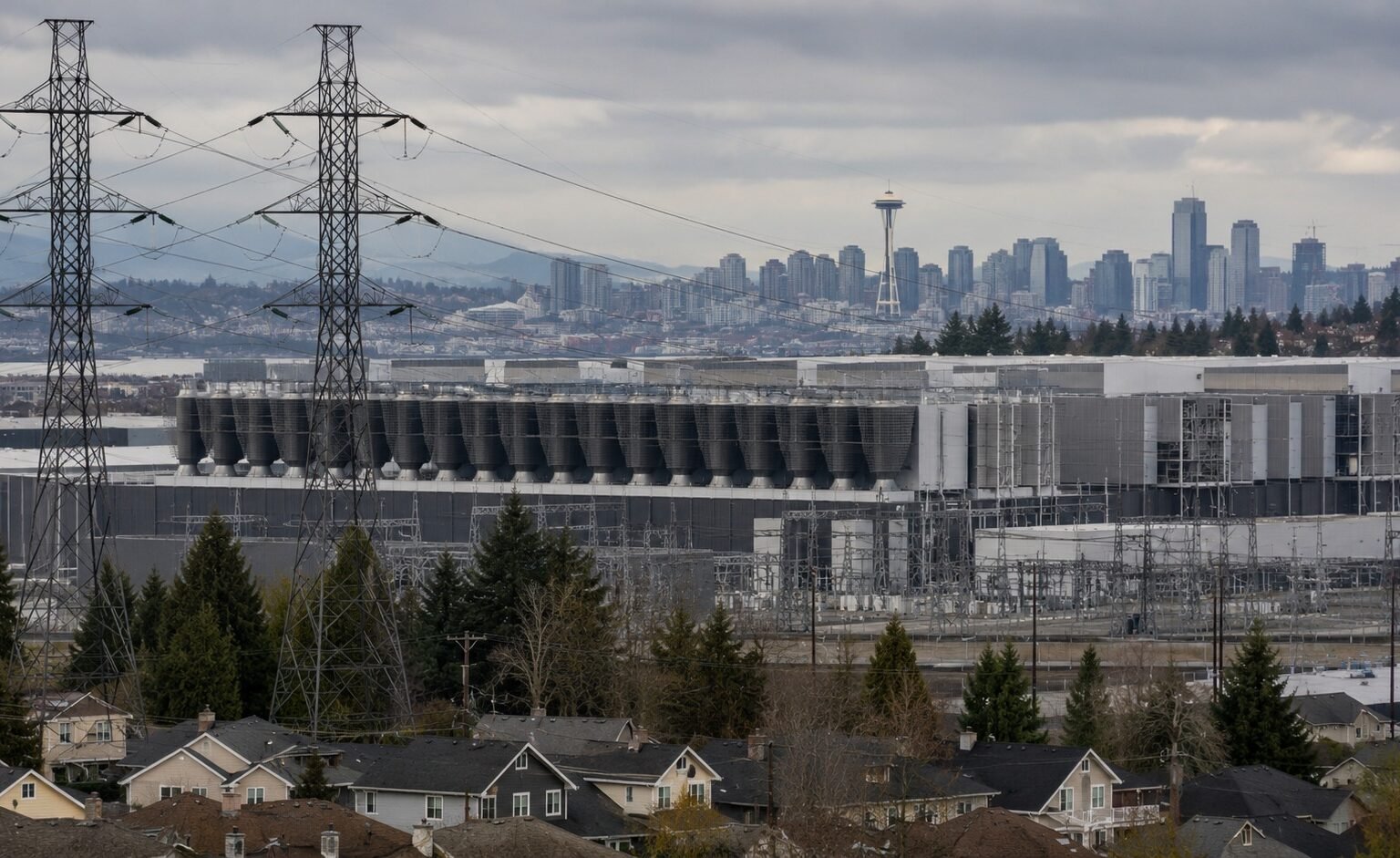
Seattle just drew a line in the sand. On June 9, 2026, the City Council voted 9-0 — unanimous, with not a single dissenting voice — to put a one-year pause on building giant new data centers inside the city. The decision marks one of the most decisive local stands yet against the runaway national race to build power-hungry computing warehouses.
What Triggered the Vote
The pause didn’t come out of nowhere. Tech companies had come knocking with plans for roughly five massive new facilities that, together, would demand about 369 megawatts of electricity. To put that in perspective, that’s nearly a third of everything Seattle uses on a typical day — enough power to run about 300,000 homes. Faced with that staggering number, the Council decided it needed to slow down and look before leaping.
Data centers are the physical backbone of the artificial-intelligence boom. Every chatbot query, every streamed video, every cloud file lives in rows of servers that run hot and never sleep. Keeping them online takes enormous amounts of electricity and water, and the new generation of AI facilities is bigger and thirstier than anything that came before.
What the Moratorium Actually Does
It’s important to be precise about what the Council passed. This is a temporary, one-year moratorium — a pause, not a permanent ban. It applies only to NEW data centers above 20 megavolt-amperes, the truly large facilities. Existing data centers are completely exempt and can still expand. And if the city needs more time to finish its homework, the Council can extend the pause by another six months.
Alongside the moratorium, the Council passed a companion bill that commissions a formal impact study. That study will examine how these facilities would affect the power grid, how much water their cooling systems would consume, what they would do to residential utility rates, and how they would reshape land use, jobs, and public health. In other words, before another power-hungry server farm breaks ground, the city wants real answers.
The Council’s Reasoning
The case Council members made was blunt and resident-first. Their three priorities: protect the power grid from being overwhelmed, protect the water these facilities guzzle to stay cool, and protect ordinary families from watching their utility bills climb to subsidize a corporate building spree. The fear is simple — if demand spikes by a third overnight, someone has to pay to expand the system, and historically that cost lands on households, not the corporations driving the demand.
Seattle Isn’t Alone
This vote is part of a fast-growing national pattern. Minneapolis, Denver, Baltimore, and Indianapolis have all begun pushing back on the data-center gold rush in their own ways. City halls across the country are wrestling with the same tension: tech firms promise investment and jobs, but the infrastructure strain and the bills land squarely on local residents. Seattle’s unanimous vote gives that movement a high-profile example to point to.
What This Means for Americans
The question now echoing in city halls everywhere is the one Seattle put front and center: who should pay for the power these warehouses demand — the corporations building them, or the people who live next door? For families already stretched by rising costs, that’s not an abstract policy debate. It’s the difference between a stable utility bill and one that creeps higher every year to underwrite someone else’s profit. Seattle’s answer, at least for the next year, is that residents come first.
Stay informed on the stories that matter most. Follow Your Daily Updates on Facebook and bookmark yourdailyupdates.news for breaking news and analysis.