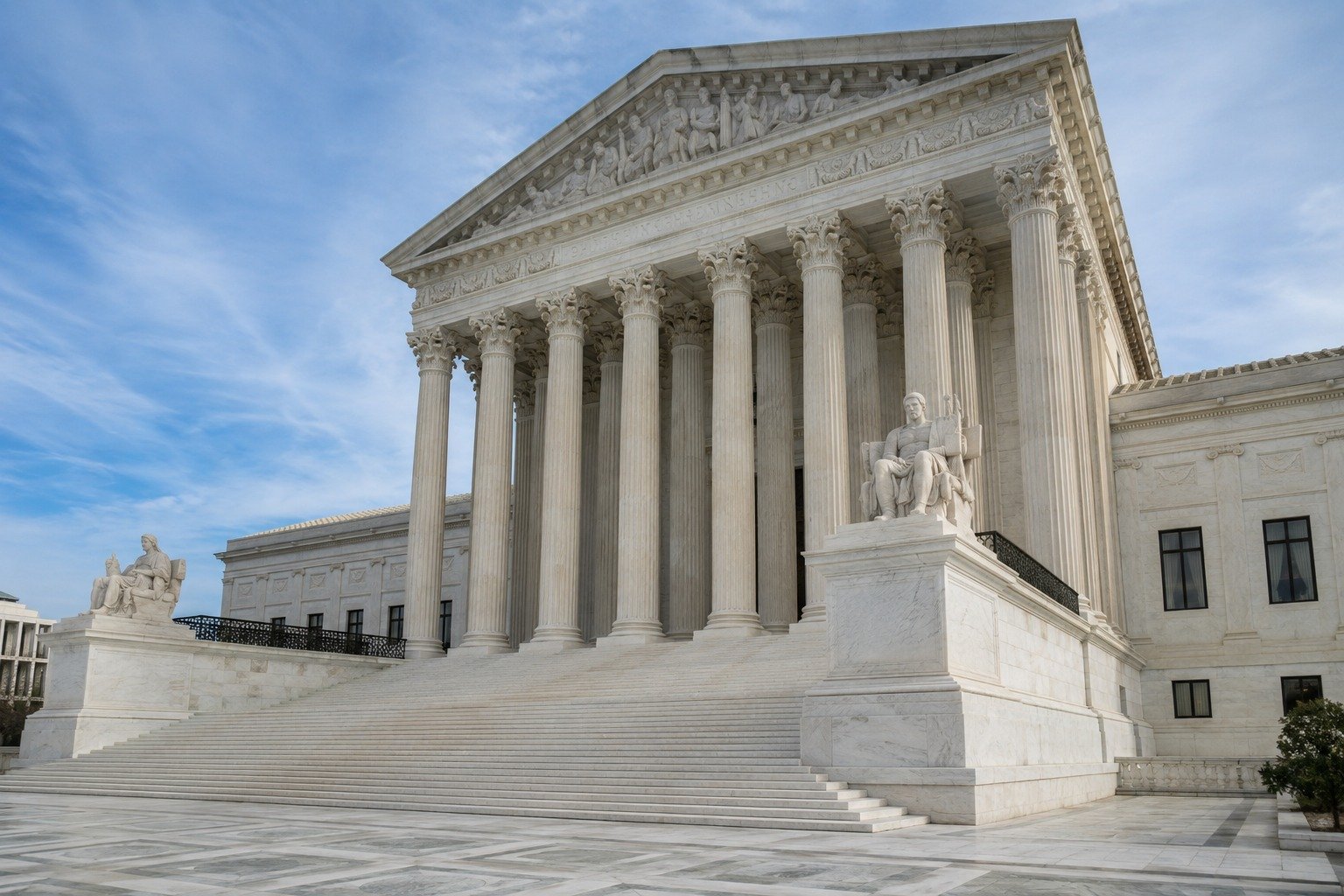
The U.S. Supreme Court has ruled that states may bar transgender girls and women from competing on female school sports teams, handing down a 6-3 decision on June 30, 2026 that resolves one of the most closely watched cases of the term. Writing for the majority, Justice Brett Kavanaugh concluded that the state laws at issue violate neither the Equal Protection Clause of the 14th Amendment nor Title IX, the federal statute barring sex discrimination in education.
The ruling came in the consolidated cases of West Virginia v. B.P.J. and Little v. Hecox, which arose from laws in West Virginia and Idaho restricting participation in girls’ and women’s athletics to students assigned female at birth. With the Court’s decision, the roughly two dozen states that have enacted similar measures are now free to continue enforcing them, and the legal path for future challenges has narrowed considerably.
For the transgender students at the center of the litigation, the stakes were deeply personal. The plaintiffs were young people who wanted to run track, play soccer, or join a team alongside their classmates. Their lawyers had argued that the bans single out an already vulnerable group of children and exclude them from an ordinary part of growing up, with lasting effects on their sense of belonging and well-being.
What the Majority Said
Justice Kavanaugh’s opinion framed the question as one of legislative discretion. The majority held that states are permitted to draw eligibility lines in school sports based on sex assigned at birth without running afoul of constitutional guarantees, reasoning that such classifications are tied to what the majority described as legitimate interests in competitive fairness and athletic opportunity for girls. The Court declined to find that transgender status triggers the heightened scrutiny that applies to some other classifications, and it concluded that Title IX’s protections do not extend to the participation rules the states adopted.
A Forceful Dissent
The Court’s liberal justices dissented sharply. In their view, the decision strips transgender young people of the equal protection the Constitution promises and effectively blesses laws that target a small and already marginalized group. The dissent warned that the ruling could invite a wave of additional legislation aimed at transgender youth, and it emphasized that the students affected are, in most cases, children navigating school life who are being drawn into a national political fight not of their making.
Civil-rights organizations echoed that concern, calling the decision a painful setback for transgender youth and their families. Advocates noted that transgender athletes make up a tiny fraction of school sports participants and argued that the broad bans sweep far more widely than any specific competitive concern would justify. Several groups pledged to continue pressing for protections at the state and local level, even as the constitutional avenue narrows.
The Argument Over Fairness
Supporters of the bans have framed the issue primarily as one of fairness in girls’ and women’s sports, arguing that eligibility rules are needed to preserve competitive balance. Opponents counter that the scientific picture is far from settled, that policies can be tailored without categorical exclusion, and that the real-world impact falls overwhelmingly on a very small number of children. The debate has become one of the most polarizing in American politics, playing out in statehouses, school boards, and now the nation’s highest court.
What Happens Next
The decision does not require any state to adopt a ban, but it removes a significant federal barrier for those that choose to. In states without such laws, participation policies will continue to be set by legislatures, athletic associations, and school districts. For transgender students and their families, the ruling leaves difficult uncertainty about where and whether they will be able to play, and it shifts much of the remaining fight to the state and community level.
The case marks another chapter in a broader legal and cultural reckoning over transgender rights, and its effects will be felt well beyond the courtroom – in locker rooms, on fields, and in the lives of the young people whose place in school sports now depends heavily on the state they call home.
Where Do You Stand?
This is a question that divides Americans deeply. We want to hear from our readers: where do you stand on the Supreme Court’s ruling that states can bar transgender girls from school sports? Share your view in the comments.