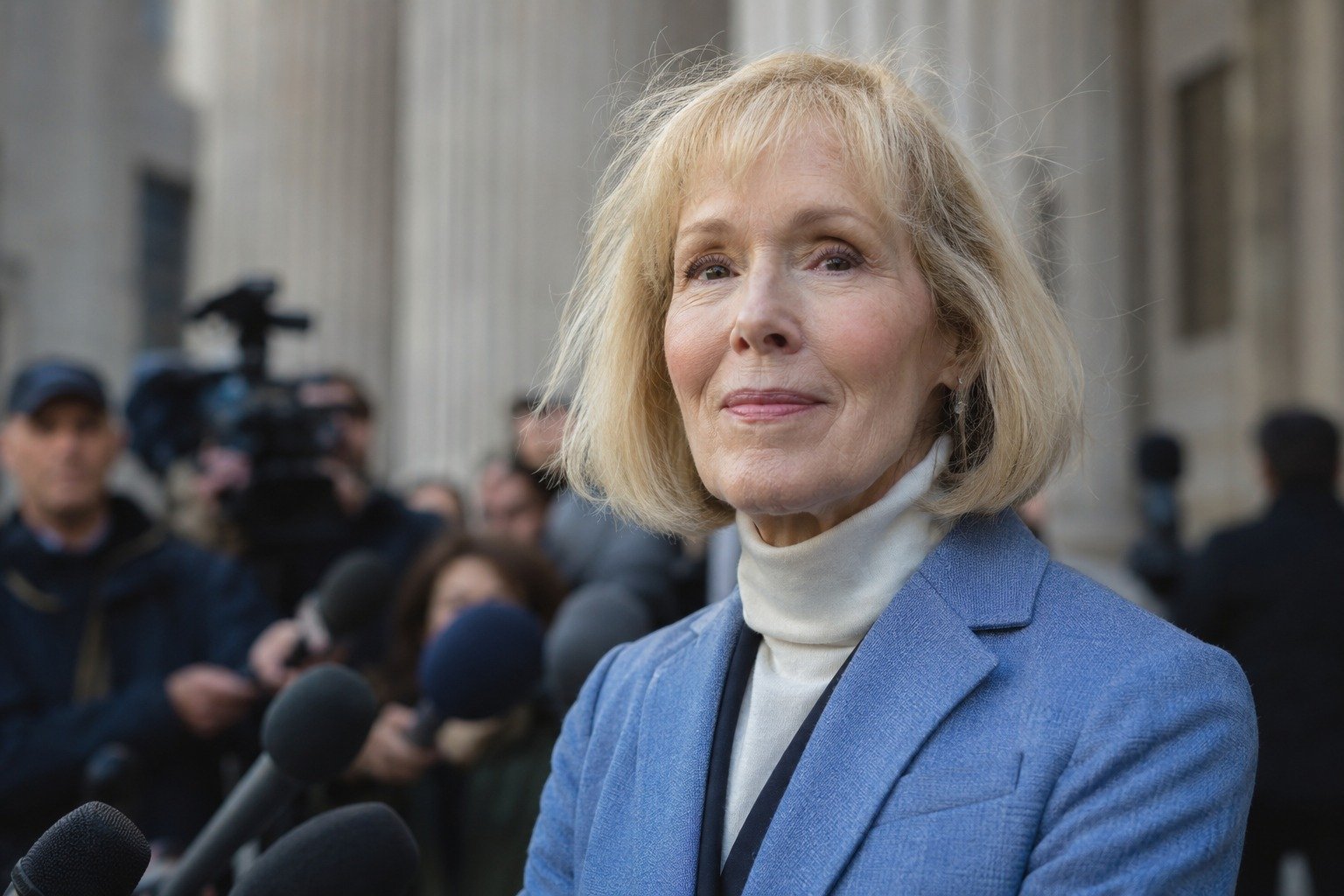
The nation’s highest court has quietly closed one of the most consequential chapters in Donald Trump’s long history of legal trouble. On June 29, 2026, the Supreme Court declined to hear the President’s appeal of a 2023 jury verdict that found he sexually abused and defamed the writer E. Jean Carroll – and awarded her $5 million. The denial means the verdict stands, and Trump must now pay that amount plus the interest that has accumulated over nearly three years.
The decision came in the form of a brief, unexplained order, which is the standard way the Court turns away the overwhelming majority of cases that seek its review. Notably, not a single justice publicly dissented. Three of the nine sitting justices were appointed by Trump himself, yet none of them signaled any desire to take up his cause. The silence spoke volumes: there was no appetite on the bench to disturb what a jury had already decided and what every level of appeal had since upheld.
How the case reached this point
Carroll, a longtime advice columnist, first went public in 2019 with the allegation that Trump had assaulted her in a Manhattan department store dressing room decades earlier. Trump responded by publicly and repeatedly calling her a liar, insisting he had never met her and suggesting she was not his “type.” Those statements became the basis for legal action.
The $5 million verdict at the center of this week’s Supreme Court action came out of a case filed in 2022 that went to trial first. In 2023, a federal jury in New York concluded that Trump had sexually abused Carroll and defamed her, and awarded her damages for both. Last year, the Second U.S. Circuit Court of Appeals affirmed that verdict, ruling that the trial judge had not committed errors serious enough to warrant a new trial.
Trump’s lawyers had asked the Supreme Court to step in, arguing that the verdict rested on what they called “highly inflammatory” evidentiary rulings. In particular, they objected to the trial court allowing testimony from two other women who had accused Trump of sexual misconduct decades earlier, as well as the introduction of the infamous 2005 “Access Hollywood” recording. The justices were unpersuaded, and by refusing the appeal they left the lower court’s reasoning fully intact.
What this does – and does not – resolve
It is important to be precise about what happened. The Supreme Court did not issue a new ruling on the merits, and it did not declare Trump guilty of anything beyond what the jury found. It simply declined to review the case – a denial of certiorari – which has the practical effect of ending Trump’s options in this particular dispute. For all intents and purposes, the $5 million judgment is now final.
This case should not be confused with the separate, larger judgment that also bears Carroll’s name. In a different trial stemming from her 2019 complaint, a jury awarded her $83.3 million in defamation damages. That far larger judgment is a distinct legal matter and remains on appeal in a lower federal appeals court. Monday’s action at the Supreme Court has no direct bearing on it. In other words, one fight has ended; another continues.
Accountability, delivered quietly
For years, Trump has treated litigation as something to be outlasted – a process to be delayed, appealed, and spun until opponents gave up or the political winds shifted. In this instance, that strategy has reached its limit. There is no higher court to petition, no further appeal to file. The verdict stands.
The outcome is a striking reminder that, at least in this corner of the legal system, the rules still apply to the powerful. A jury believed Carroll. Appellate judges agreed. And the Supreme Court, with its conservative majority and three Trump appointees, saw no reason to intervene. The most powerful man in the country could not talk, delay, or appeal his way out of this one. Accountability arrived not with fanfare, but in a single line of an unsigned order – and that may be exactly why it carries such weight.