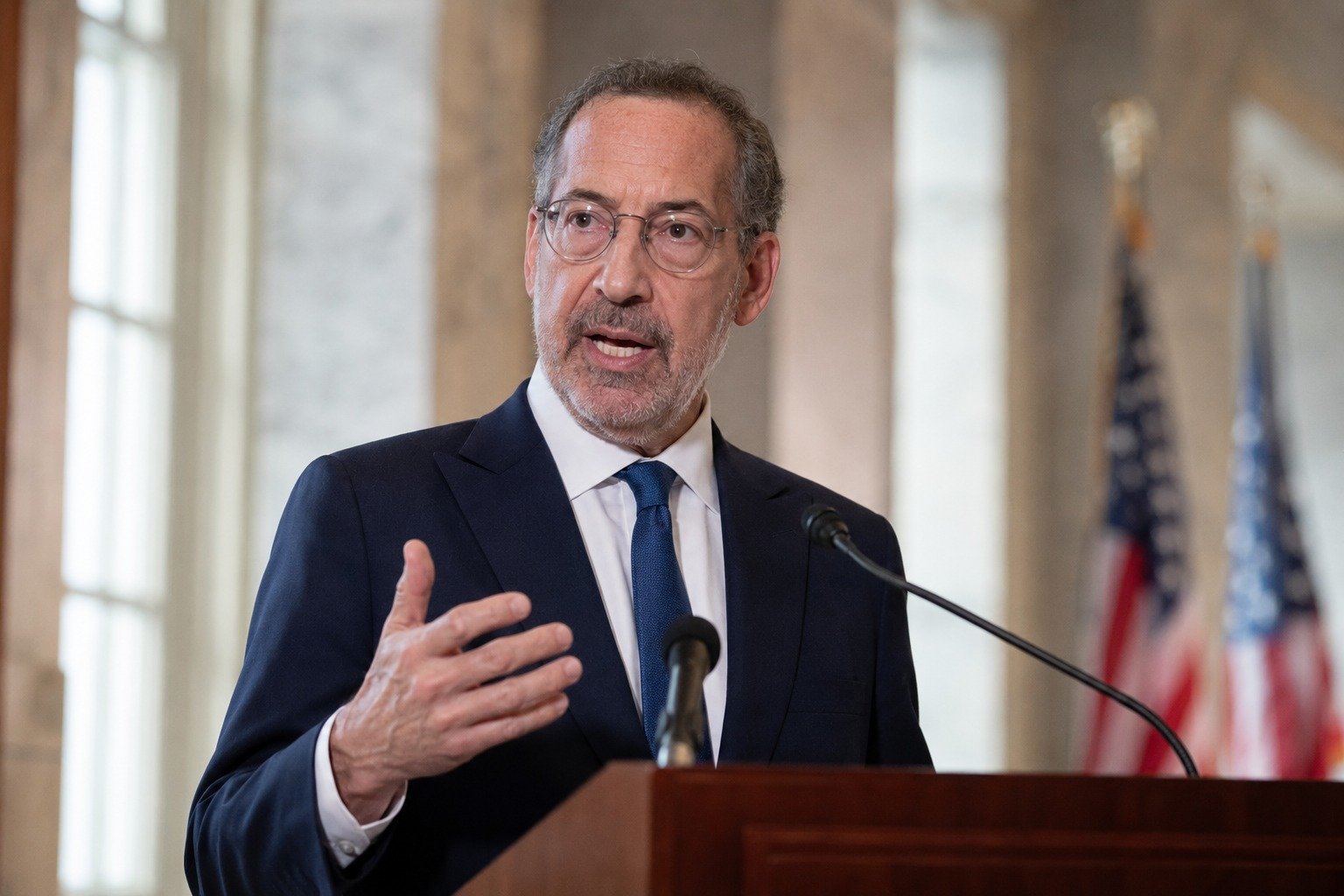
Rep. Jamie Raskin has introduced legislation that would make it illegal for a president to profit from the pardons and appointments they hand out, taking direct aim at one of the least-watched corners of presidential power.
The Maryland Democrat, who serves as the ranking member of the House Judiciary Committee, unveiled the anti-corruption proposal alongside Reps. Robert Garcia and Joe Morelle. The bill would bar a president from accepting payments from anyone they pardon or appoint, and it would require the president to disclose to Congress any payments received from people granted clemency or installed in Senate-confirmed positions.
Why This Matters
The pardon power is one of the broadest and least-checked authorities the Constitution grants a president. A president can wipe away federal convictions, commute sentences, and grant clemency with no requirement to explain the decision and no vote in Congress. The power to appoint people to powerful government posts carries similar weight. What has long gone unaddressed is what happens after — whether money can quietly flow back to a president from the very people who benefited from those decisions.
Supporters of the bill argue that closing this gap is a basic guardrail against self-dealing at the very top of government. It is the kind of safeguard many Americans probably assume already exists. In practice, there has been little standing in the way of a pardon recipient or a newly appointed official sending payments back toward the person who lifted their legal jeopardy or handed them a job.
What the Bill Would Do
The legislation works on two tracks. First, it would flatly prohibit a president from accepting payments from anyone they pardon or appoint. That is a hard line — a ban, not a disclosure requirement. Second, for payments that fall within its reach, it would force transparency: if a president receives money from someone they granted clemency to or appointed to a Senate-confirmed role, every such payment would have to be disclosed to Congress.
Together, those provisions are designed to make it far harder for a president to turn the powers of the office into a personal revenue stream — and to make any attempt to do so visible to lawmakers rather than hidden from them.
The measure is one piece of a broader anti-corruption package that Raskin, Garcia and Morelle are pushing, aimed at tightening rules around how those at the top of government can and cannot benefit financially from their official authority. The package reflects a wider push by some lawmakers to put firmer limits on presidential conduct rather than relying on norms and tradition alone.
A Proposal, Not Yet Law
It is important to be precise about where this stands. This is introduced legislation — a proposal — not enacted law. For it to take effect, it would have to clear a sharply divided Congress and be signed into law, and the politics of restraining presidential power are anything but simple. Bills that target how a sitting president can operate routinely face steep resistance, and there is no guarantee this one advances.
Still, the introduction itself frames a debate that supporters say is overdue: should the people who hold the most powerful office in the country be allowed to profit off the powers that come with it?
What This Means for Americans
At its core, this is a question about whether public power can be quietly converted into private gain. Pardons and appointments are supposed to serve the public interest, not function as favors that pay off later. A rule barring presidents from cashing in on those decisions — and requiring them to show their work to Congress when money is involved — speaks directly to the public’s trust that the office is being used for the country rather than for the person holding it.
Whether the bill becomes law or not, it puts the issue of presidential self-dealing on the table in plain terms, and forces a conversation about accountability at the very top.
Stay informed on the stories that matter most. Follow Your Daily Updates on Facebook and bookmark yourdailyupdates.news for breaking news and analysis.