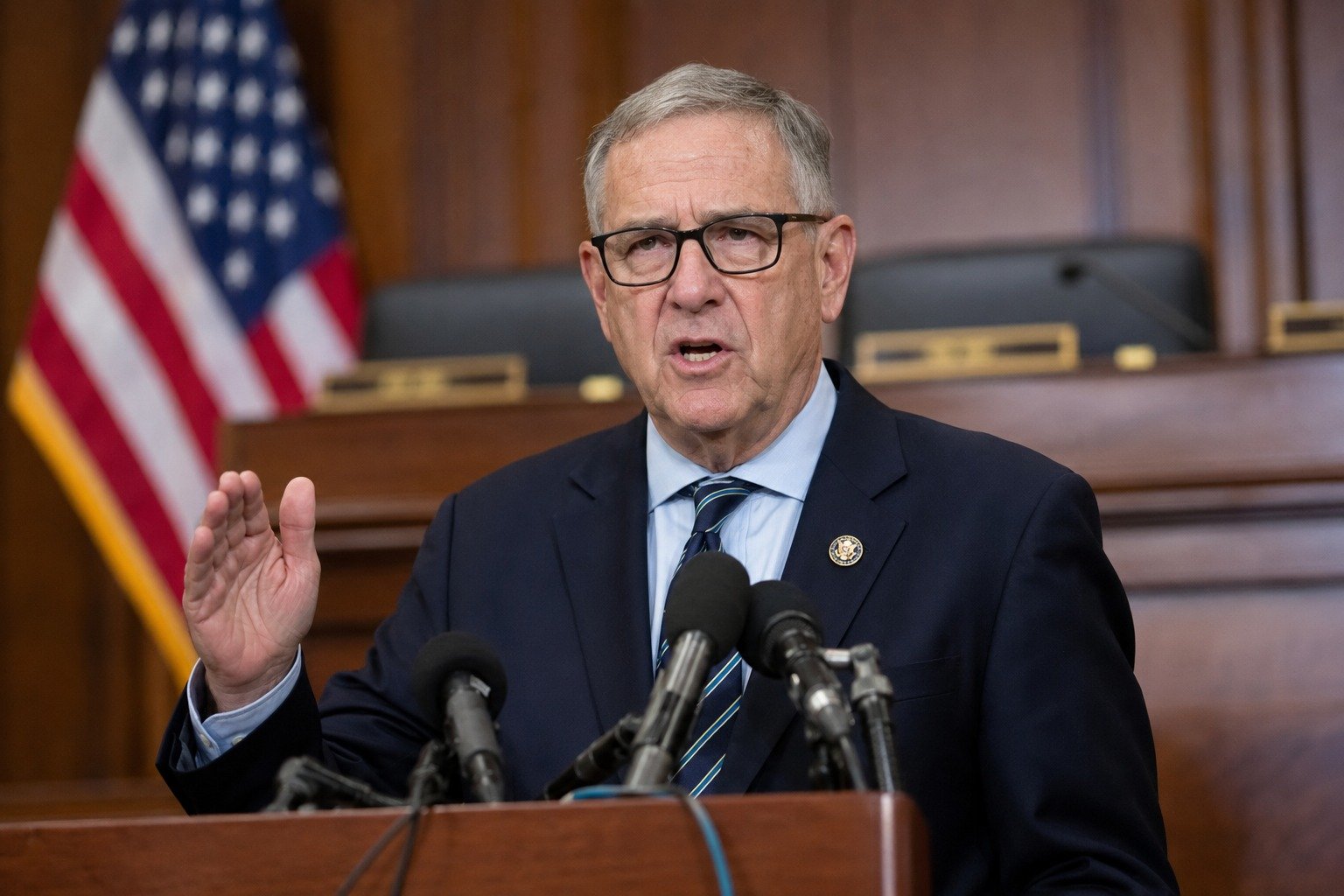
Rep. Jamie Raskin (D-Md.) has introduced legislation that would explicitly bar any sitting president from accepting money or anything of value from the people they pardon, a direct attempt to shut down what supporters describe as “pay-to-play” clemency.
The provision is part of the Protecting Our Democracy Act, a sweeping anti-corruption package Raskin reintroduced in May 2026 alongside Reps. Robert Garcia (D-Calif.) and Joe Morelle (D-N.Y.). The bill is a proposal, not enacted law, and the pardon-money ban is one piece of a much broader reform effort rather than a standalone measure.
Closing a pardon loophole
At the heart of the pardon provision is a simple principle: the power to grant clemency should be an act of mercy or justice, never a transaction. Under the bill, a president would be prohibited from granting a pardon and then accepting payments, gifts, or other things of value from the recipient. The same restriction would extend to presidential appointees, closing a parallel avenue through which favors could be quietly repaid.
For most of American history, the expectation that a president would not personally profit from the pardon power rested on norms and on the assumption that officeholders would simply choose to behave. Raskin and his co-sponsors argue that an honor-system approach is no longer adequate. When accountability depends entirely on a president’s willingness to restrain himself, they contend, it is not really accountability at all.
A broad anti-corruption package
The pardon-money ban does not stand alone. The Protecting Our Democracy Act is a wide-ranging bill that seeks to restore guardrails on executive power that lawmakers say have eroded over time. Earlier versions of the package have included measures to strengthen Congress’s oversight authority, protect inspectors general and whistleblowers from retaliation, tighten enforcement of anti-corruption statutes, and reinforce the separation of powers between the branches of government.
Framed that way, the prohibition on cash from pardon recipients is one thread in a larger argument: that the presidency has accumulated powers and informal privileges that need to be fenced in by clear, written rules. Supporters say codifying those expectations into statute is precisely the point, because a rule a president can simply ignore offers little real protection.
Where the bill stands
It is important to be precise about the bill’s status. Introducing legislation is the beginning of the process, not the end. The Protecting Our Democracy Act has been formally introduced, but it has not passed either chamber and is not law. For it to take effect, it would need to clear committee, win majorities in both the House and the Senate, and be signed by the president, an arduous path for any major reform package.
Raskin, a constitutional law professor before entering Congress and a leading voice on government accountability, has long championed measures aimed at curbing what he views as abuses of executive authority. By reintroducing the package and spotlighting the pardon provision, he and his co-sponsors are keeping the issue on the table and pressing colleagues to take a public position on whether the rules around pardons should be written down.
Whether the broader bill advances or stalls, the underlying question it raises is likely to persist: should the country continue to rely on a president’s good faith to prevent self-dealing, or should those limits be spelled out in law? For Raskin and his allies, the answer is clear. The harder question is whether Congress is willing to act on it.