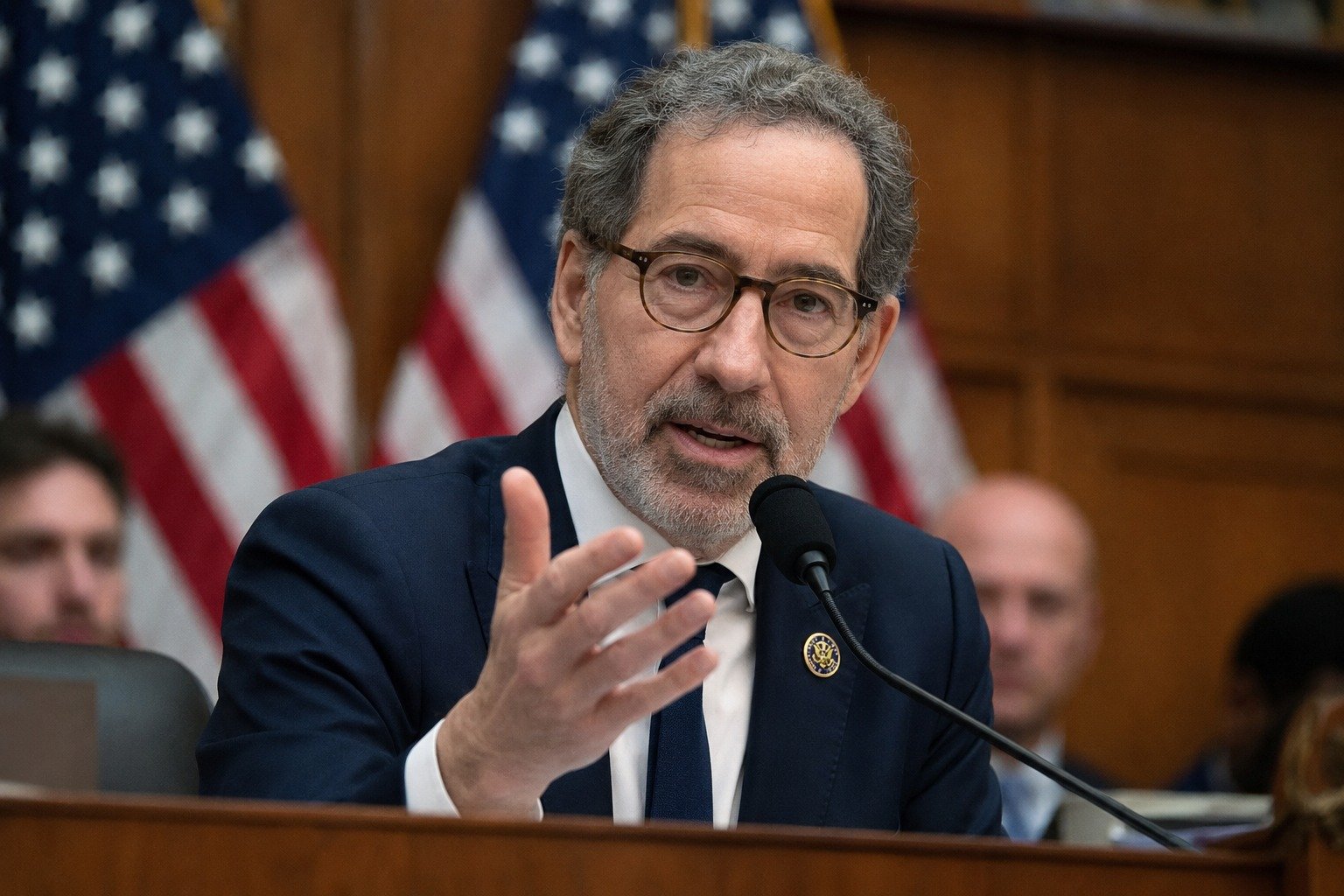
Rep. Jamie Raskin wants to make one thing impossible: a president getting paid by the very people they pardon. The Maryland Democrat, the top Democrat on the House Judiciary Committee, this week unveiled a package of bills aimed directly at pardon-for-cash corruption and presidential self-dealing, arguing that the country has no real safeguard against a commander-in-chief turning the pardon power into a personal revenue stream.
“No one should be able to buy a pardon,” Raskin said in announcing the legislation. The proposals are a direct response to what he and other Democrats describe as a pattern of profiteering from public office at the highest level of government.
Why This Matters
The presidential pardon power is one of the broadest and least-checked authorities in the Constitution. A president can wipe away federal criminal liability for almost anyone, for almost any reason, with no requirement to explain the decision and no vote to override it. For most of American history, the guardrail against abuse was political shame and the expectation that pardons would not be openly sold.
Raskin’s argument is that shame is no longer enough. If there is no statute on the books explicitly banning a president from accepting money from a pardon recipient, then the door is open to a straightforward pay-to-play scheme: grant clemency, collect the payment, and dare anyone to prove it was a quid pro quo. His legislation is built to slam that door shut before it can be walked through.
What The Bills Actually Do
The first measure prohibits the president from accepting payments from people they pardon or from individuals they have appointed to government positions. Crucially, it covers payments funneled through a business the president owns, closing the obvious loophole of routing money through a hotel, a licensing deal, or a private company rather than a direct check. The goal is to criminalize the transaction itself, not force prosecutors to prove a hidden agreement.
The companion measure, the BLANCHE Act, takes aim at a different mechanism: collusive settlements with the federal government. It would bar a sitting president from settling money-damages claims with the United States, a move Raskin says is designed to kill what critics have called a Department of Justice “super pardon” — an arrangement that could allow taxpayer money to flow into a president’s own pocket under the guise of a legal settlement.
Taken together, the bills target both ends of the corruption problem: money coming in from those seeking clemency, and money going out from the government to the president personally. Raskin has framed the package as a way to make clear that no president can use the machinery of the federal government to cut himself a check.
An Introduced Bill, Not Yet Law
It is important to be precise about where this stands. These are introduced bills, not enacted law. They face a steep climb in the current Congress, where the path to passage runs through committees and a Senate filibuster that demands 60 votes. Realistically, the package is unlikely to become law in this session.
But supporters argue the filing itself matters. It puts a specific anti-corruption standard on the official record and forces lawmakers to take a position: are they willing to say, in writing, that a president should not be allowed to profit from pardons? Critics dismiss the effort as a political statement with no chance of advancing. Backers counter that establishing the principle now lays the groundwork for accountability later.
What This Means For Americans
At its core, this is a fight over whether the most powerful office in the country can be used as a personal cash machine. If a president can quietly accept money from the people they pardon, then justice itself becomes something the wealthy and well-connected can purchase while everyone else is left to face the law as written. Raskin’s bills are an attempt to keep that from becoming normal — to draw a bright line that says public power cannot be rented out for private gain.
Stay informed on the stories that matter most. Follow Your Daily Updates on Facebook and bookmark yourdailyupdates.news for breaking news and analysis.