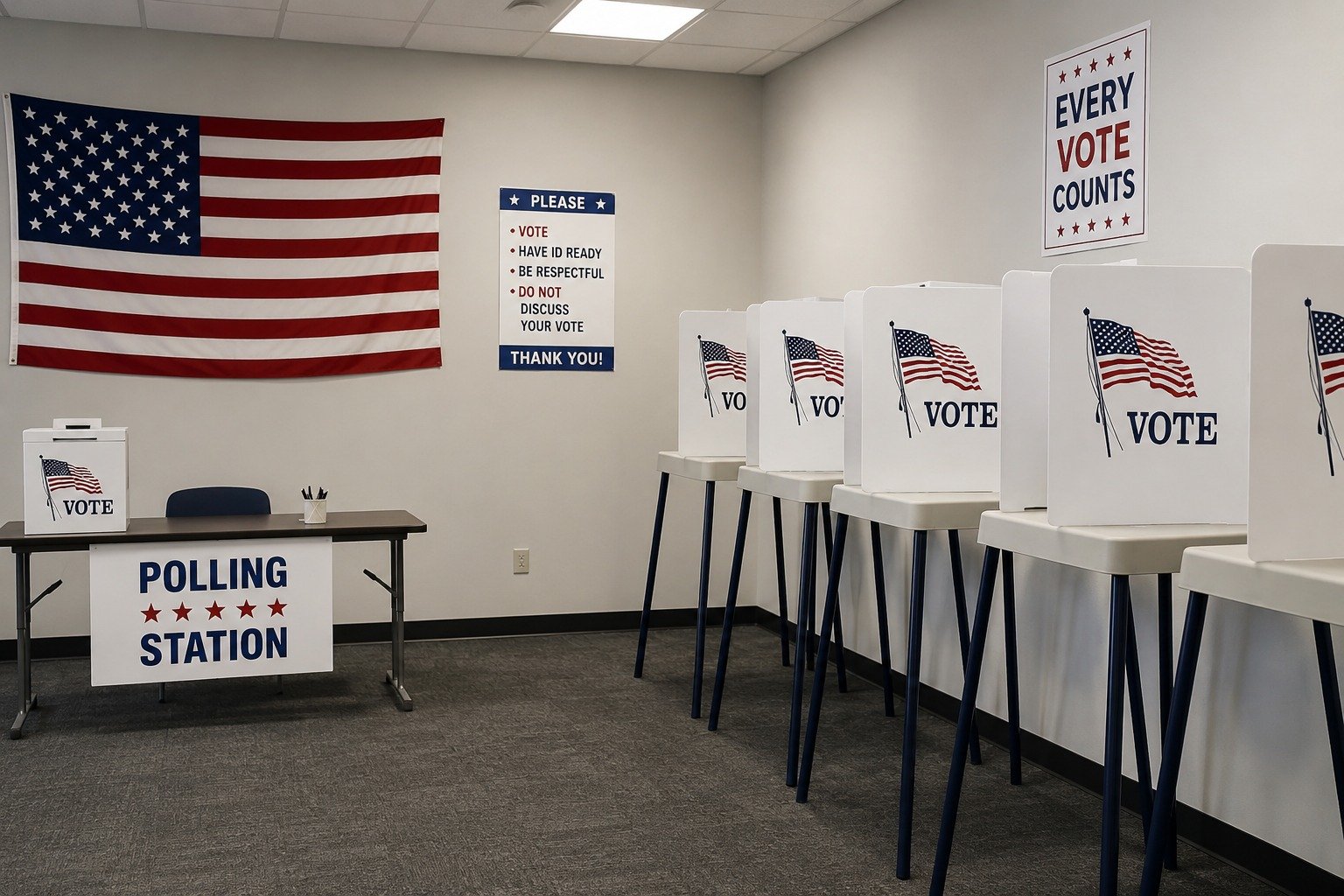
A group of Senate Democrats is moving to put a clear, explicit barrier between America’s armed forces and the nation’s polling places. On Thursday, Sen. Elissa Slotkin of Michigan introduced the Protect Our Polls Act, legislation aimed at one specific scenario: a president ordering troops or federal agents to the places where Americans cast their ballots.
Slotkin is joined by five co-sponsors — Sens. Ruben Gallego of Arizona, Mark Kelly of Arizona, Jacky Rosen of Nevada, Raphael Warnock of Georgia, and Tammy Baldwin of Wisconsin. Together, the six lawmakers say they want to close what they describe as gaps in existing law before anyone has a chance to test them.
What the bill would do
Federal law already places restrictions on the military’s presence at the polls. But the sponsors of the Protect Our Polls Act argue that the current rules leave room for interpretation, and they want to remove any ambiguity. As written, the bill would explicitly bar the president from deploying armed forces or federalized troops to intimidate, interfere with, or surveil voters as they cast their ballots.
The intent, supporters say, is to draw a bright line: voting should happen without soldiers standing watch over the line at a precinct. They frame the measure as a basic safeguard for election integrity, rooted in the idea that free and fair elections depend on voters feeling safe walking into their polling location.
Why the sponsors say it matters now
For Slotkin and her co-sponsors, the legislation is about reinforcing a principle that they believe should be beyond debate — that the ballot box stays off-limits to the military, regardless of who occupies the Oval Office. They argue that even the perception of armed forces near a polling place could discourage people from showing up to vote, and that the law should remove any uncertainty about whether such a deployment is permitted.
The bill’s backers come from a mix of competitive and traditionally Democratic states, and several represent battlegrounds where turnout and voter confidence are closely watched. Their message is that protecting access to the ballot is a nonpartisan value, even if the legislative effort is being led by members of one party.
An introduced bill, not a law
It is important to be precise about where this stands. The Protect Our Polls Act is a newly introduced bill, not an enacted law. Introduction is the first step in a long process: the measure would need to move through committee, win approval in both the Senate and the House, and be signed by the president before anything would change. In a closely divided Congress, that path is far from guaranteed.
Still, the introduction itself carries a message. A growing bloc of senators is signaling that it wants the question settled in statute rather than left to interpretation — that the presence of troops at polling places should be clearly and permanently prohibited, no matter the administration.
The bigger picture
Debates over the military’s domestic role have intensified in recent years, and questions about where and when federal forces can be deployed have moved from the abstract into active political discussion. By focusing narrowly on polling places, the sponsors of the Protect Our Polls Act are trying to carve out one area where they believe the answer should be unambiguous.
Whether the bill advances or stalls, its sponsors have framed the stakes plainly: the right to vote, they argue, should never be exercised under the watch of armed soldiers. For now, the measure joins a long list of proposals competing for attention — but the principle behind it is one its backers intend to keep pressing.