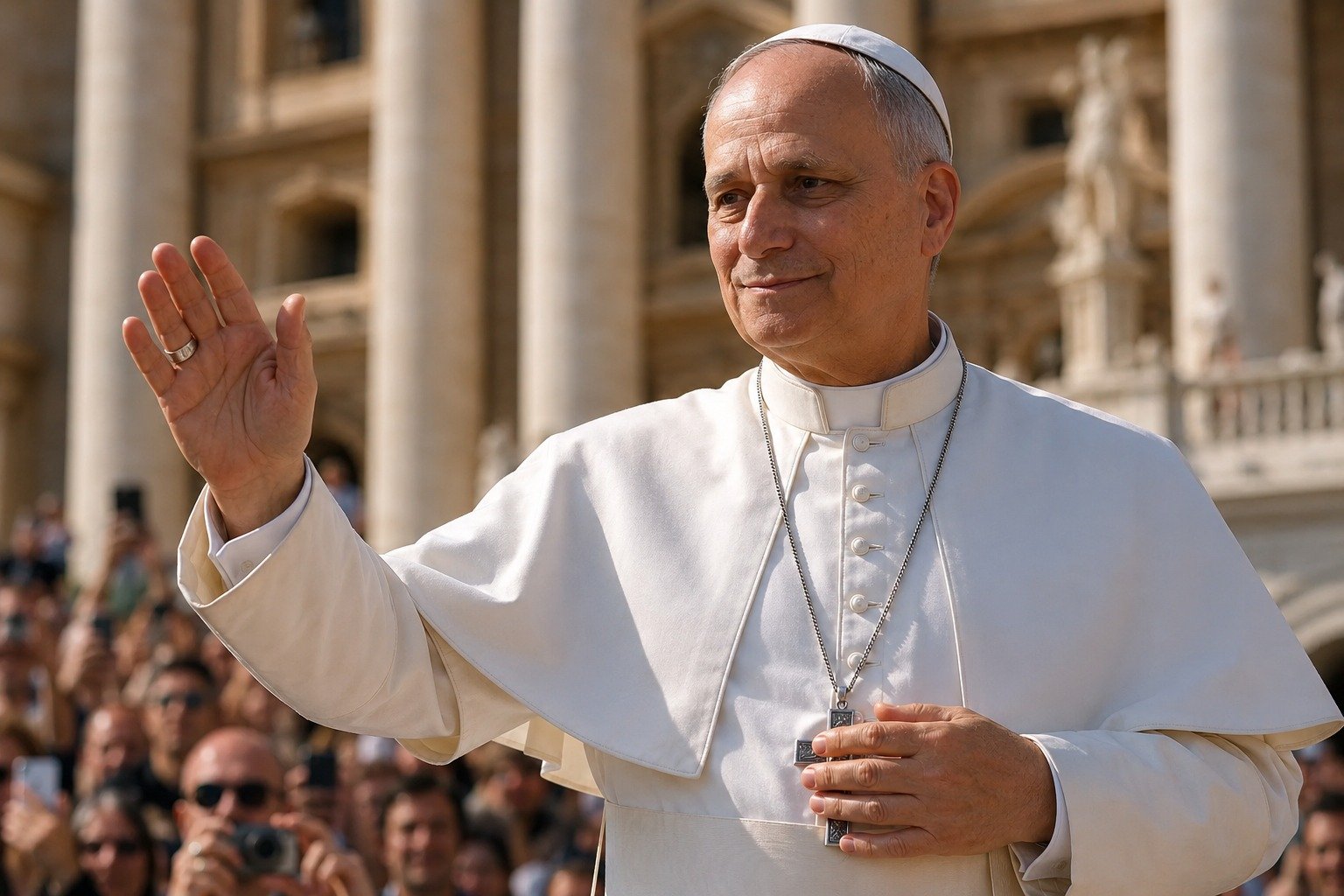
Pope Leo XIV used a quiet act of remembrance to make a loud point about who America was built to welcome. On June 22, the pontiff honored Saint Frances Xavier Cabrini – the first American saint and the patron of migrants – holding her up as a model for how the faithful should treat immigrants. The tribute, delivered in northern Italy near the region tied to Cabrini’s legacy, landed at a charged moment: it came as President Donald Trump publicly told the Pope to stay out of politics.
Cabrini, who died in 1917, spent her life building hospitals, schools, and orphanages for poor Italian immigrants in the United States at a time when newcomers were widely scorned. Canonized in 1946, she became the first U.S. citizen to be named a saint, and the Catholic Church recognizes her as the heavenly patron of immigrants. By invoking her now, Pope Leo tied a celebrated chapter of American Catholic history directly to one of the most divisive debates in the country today.
The framing was unmistakable. Honoring a saint who devoted herself to migrants – while immigration enforcement and deportations dominate U.S. headlines – is a statement of values, not just a liturgical date on the calendar. Leo presented Cabrini’s care for the vulnerable as a living instruction for Catholics, an example of faith expressed through hospitality rather than exclusion.
Trump tells the Pope to “focus on being a Great Pope, not a Politician”
The backdrop to the tribute is an escalating tension between the American president and the American-born pope. In a post on Truth Social, Trump took direct aim at Leo, writing that the Pope should stop “catering to the Radical Left” and instead “focus on being a Great Pope, not a Politician.” The message was widely read as a demand that Leo stay out of politics – particularly on immigration, where the Vatican’s emphasis on compassion sits awkwardly against the administration’s hardline approach.
It is a striking exchange. Leo is the first U.S.-born pope, and his willingness to speak about the dignity of migrants has drawn sharp pushback from a president who has made immigration crackdowns central to his agenda. The clash distills a larger fight over whether faith leaders should weigh in when policy collides with what they describe as moral obligations.
A faith leader’s case for welcoming immigrants
For Leo, defending immigrants is not a partisan stance but a continuation of long-standing Catholic social teaching, which holds that newcomers and the poor deserve protection and care. Cabrini’s life is one of the Church’s clearest illustrations of that principle in action: an Italian immigrant herself, she organized aid for families who arrived in America with little and were often treated as unwelcome.
That history gives Leo’s tribute its force. He is not introducing a new idea so much as reminding the faithful of one the Church already canonized nearly eighty years ago. When a pope points to a saint specifically remembered for serving migrants, the implication for the present is hard to miss.
The reporting on the tribute and the Trump exchange has been confirmed by multiple outlets, including PBS, America Magazine, and CBS News. Together they describe a pope choosing to elevate a champion of immigrants at the exact moment a sitting president is pressuring him to go silent.
Why this moment matters
The standoff is about more than one saint’s feast or one social-media post. It raises a question that keeps resurfacing in American public life: when political power pushes in one direction and a faith tradition pushes in another, which voice is supposed to yield? Leo’s answer, embodied in his choice to honor Cabrini, is that the Church’s commitment to the vulnerable does not pause because it has become politically inconvenient.
For supporters of immigrants, the tribute reads as moral clarity from one of the world’s most visible religious figures. For the Pope’s critics in the administration, it is an unwelcome intrusion. Either way, the message Pope Leo sent by honoring America’s first saint – a woman remembered for opening doors rather than closing them – is unlikely to fade quietly.