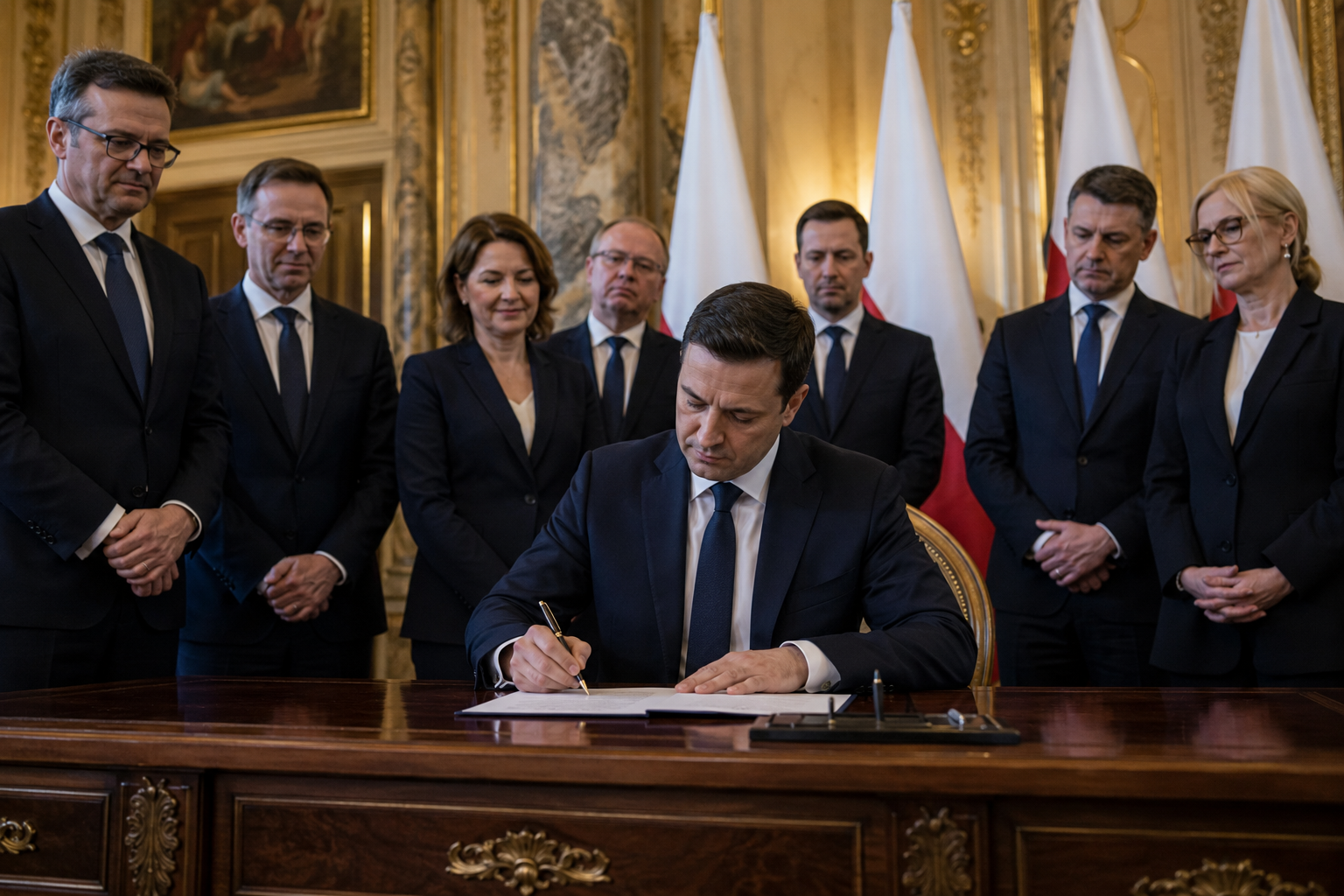
Poland just made history — and the rest of the world is paying close attention. President Karol Nawrocki signed a sweeping new tax law last fall that completely eliminates income tax for families with two or more children, setting off a global debate about what pro-family policy should actually look like.
The Law That Has Europe Talking
Poland has been one of the most aggressive countries in Europe when it comes to family incentives — and for good reason. The country has faced serious demographic pressure for years. A declining birth rate combined with rising emigration has steadily shrunk Poland’s working-age population, creating a long-term economic problem that no amount of immigration policy can fully offset. The government has responded with a string of pro-family programs, most notably the “Family 500+” initiative, which gives parents 500 zloty per month for each child. The zero income tax law is the most aggressive step yet.
Under the new law, households with two or more children who earn up to 140,000 zloty per year — roughly $37,000 USD — will pay zero income tax. That threshold applies to the household, not per parent. The law took effect in the 2026 tax year, meaning millions of Polish families are already filing under the new rules.
What Families Are Actually Saving
The Polish government estimates the average qualifying family will save approximately 1,000 zloty — around $250 — every single month. Over a full year, that’s 12,000 zloty back in the pockets of families who have kids. For higher earners with children, the savings climb even higher: those near the upper end of the threshold can save up to 11,000 zloty annually (around $2,700). For context, the average monthly salary in Poland is roughly 8,000 zloty — meaning this law effectively gives many families the equivalent of an extra month and a half of take-home pay every year.
Supporters of the law are calling it the boldest pro-family tax policy in all of Europe. Conservative governments in Hungary, Italy, and several other EU nations have watched Poland closely for years, and this law is expected to be cited in upcoming election campaigns across the continent as evidence that aggressive pro-natalist policy can work.
Critics Say It Misses the Families Who Need It Most
Not everyone is cheering. Economists and opposition politicians have identified a significant flaw in the design: the benefit is entirely tied to income tax liability. That means the families with the lowest incomes — those who already pay little to no income tax — see almost no benefit from the change. The biggest winners under this law are middle and upper-middle income earners with kids. Critics have called it “relief for the comfortable” rather than genuine support for the families struggling the most. Whether those criticisms slow the law’s political momentum remains to be seen.
What This Means for the American Debate
In the U.S., similar conversations are already playing out in Washington. The child tax credit has been a recurring flashpoint in Congress for years, with conservatives pushing to expand it and progressives pushing for direct monthly cash payments. A zero income tax threshold for families with children goes well beyond anything currently on the table in America — but Poland’s experiment may shift the window of what’s considered politically possible. If the policy produces measurable improvements in birth rates or household financial stability, that data will be hard for American policymakers to ignore.
The question isn’t just economic. It’s a statement of priorities. Poland is betting that giving families real, immediate financial relief — not tax credits, not rebates, but zero tax — is the most direct way to make having children a viable choice again. Whether that bet pays off is a question that could reshape family policy debates across the Western world for the next decade.
Stay informed on the stories that matter most. Follow Your Daily Updates on Facebook and bookmark yourdailyupdates.news for breaking news and analysis.