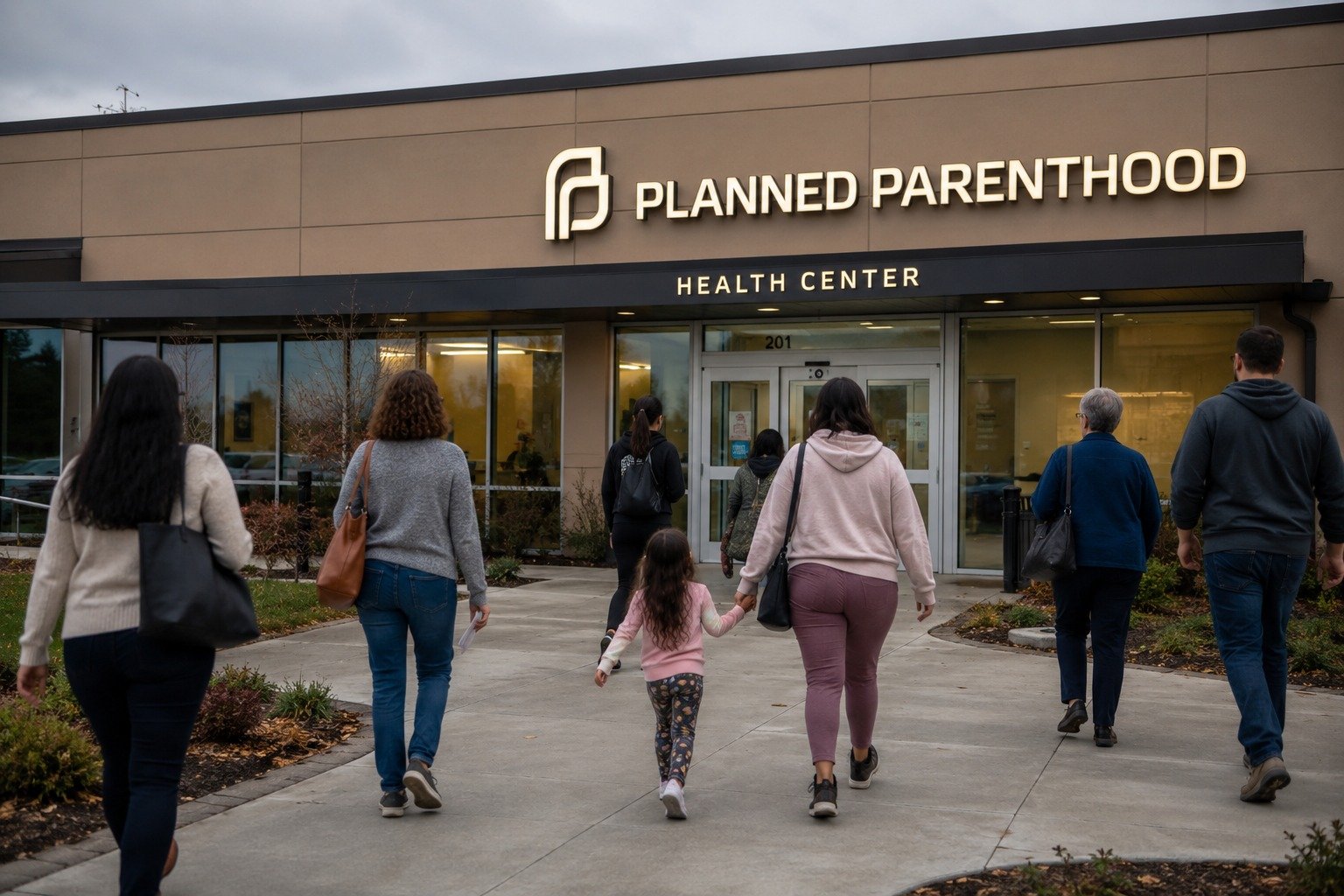
One of the most aggressive moves against reproductive health care in years is set to quietly run out of time. On or around July 4, 2026, the one-year federal provision that bars Planned Parenthood from being reimbursed through Medicaid is scheduled to expire. If it lapses as written, millions of low-income patients could once again use their Medicaid coverage at Planned Parenthood health centers for cancer screenings, birth control, and routine medical care.
And here is the development few expected: Republicans, who fought to put the ban in place, now privately concede they likely do not have the votes to extend it.
How the Ban Came to Be
The defunding measure was tucked into last year’s sweeping budget reconciliation package. Its supporters wanted a decade-long prohibition on Medicaid reimbursements flowing to organizations that provide abortion services, with Planned Parenthood as the clear target. But reconciliation bills must clear strict procedural rules in the Senate, and the chamber’s parliamentarian determined the provision could only stand for a single year, not the ten its backers sought.
That one-year clock is now nearly up. Unless Congress acts to renew the restriction before it lapses, expiration is the default outcome. Restoration of funding is not a guaranteed event that requires a new vote; rather, the funding cutoff simply ends when the provision sunsets.
Republicans Concede the Math
Extending the ban would require fresh legislation, and that is where the effort runs into a wall. With razor-thin majorities in both chambers and an election year underway, GOP leaders have signaled that the numbers are not there. Senior Republicans, including figures like Mitch McConnell and Susan Collins, have indicated that another defunding push is unlikely to pass. Speaker Mike Johnson has pledged to try, but a pledge to attempt something is not the same as the votes to accomplish it.
Several lawmakers have acknowledged that reviving the measure would likely require folding it into a future reconciliation bill — a heavy lift with no clear vehicle on the immediate horizon. In an election year, with vulnerable members wary of a fight over reproductive health care, the appetite to force the issue appears limited.
The Cost of a Single Year
Even one year of defunding left a mark. At least 23 Planned Parenthood health centers have closed since the provision took effect. The ripple effects showed up quickly in patient data. Visits for breast exams fell by roughly 25 percent. Appointments for birth control pills dropped about 20 percent. And visits for IUDs and other long-acting reversible contraception plunged by more than 40 percent in some months.
Those numbers represent real people. For many low-income patients, Planned Parenthood was not one option among many — it was the clinic they trusted and could reach. Cutting off Medicaid reimbursement did not erase their need for cancer screenings or contraception. It simply made the care harder to find, more expensive, or out of reach entirely.
What This Means for Americans
If the provision lapses, the most immediate beneficiaries would be the patients who lost access — people who rely on Medicaid and live in communities where Planned Parenthood is a primary source of affordable care. Restoring that access would not undo the clinic closures overnight, but it would stop the bleeding and reopen a door that had been shut for a year.
Nothing here is locked in. Expiration is the likely path, not a certainty, and a last-minute attempt to extend the ban remains possible even if it looks improbable. But for the first time in a year, the trajectory points back toward access rather than away from it — and toward a reckoning over what a single year of defunding actually cost the people who depended on that care.
Stay informed on the stories that matter most. Follow Your Daily Updates on Facebook and bookmark yourdailyupdates.news for breaking news and analysis.