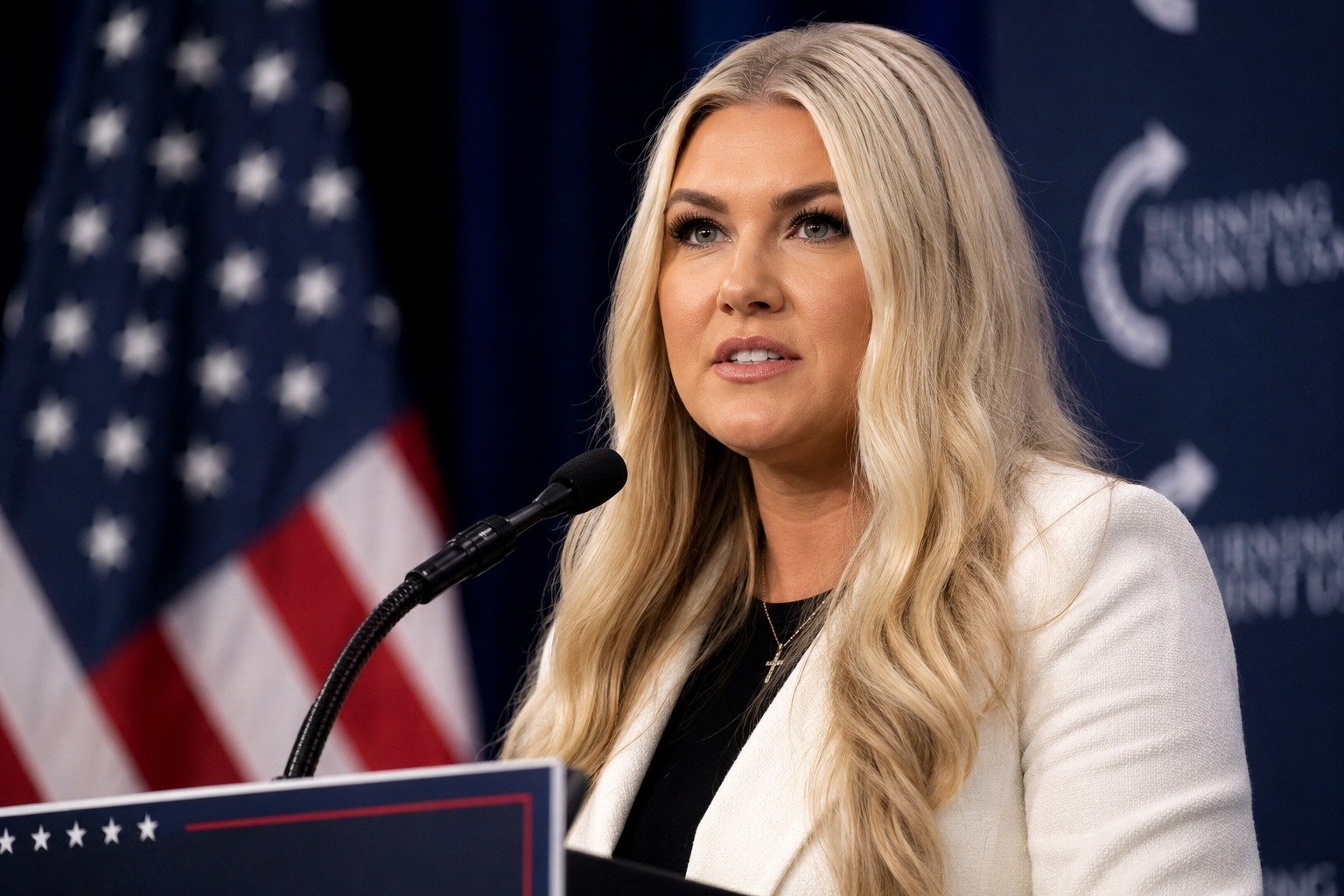
Students at Pinnacle High School in north Phoenix drew a hard line — and the principal backed down. When a Turning Point USA-affiliated student club invited Erika Kirk, the widow of the late Charlie Kirk and current CEO of Turning Point USA, to speak on campus during lunch, the backlash was swift and overwhelming.
Kirk, who took over the reins of TPUSA after her husband Charlie Kirk was assassinated in September 2025, has maintained a high-profile presence on the conservative speaking circuit. But her planned appearance at Pinnacle High School in the Paradise Valley Unified School District quickly became a flashpoint — not just for students and parents, but for the national conversation about student political clubs and school responsibility.
Students pushed back immediately and loudly. “I think the topics that she talks about are too extremist for a school. I think there are better representatives we can have,” one student told local media. Another senior described the planned visit as “a little crazy,” questioning why someone of Kirk’s political profile would be invited to a high school campus at all. The message from the student body was unmistakable: this wasn’t the right venue.
Principal Jeremy Richards listened. He announced the event would be pulled from school grounds entirely and relocated to an off-campus site — scheduled after school hours, restricted to club members only, with no school funds allocated to the visit. The Paradise Valley Unified School District moved quickly to clarify that the appearance carried no official endorsement from either Pinnacle High School or the district itself.
Kirk has faced security concerns on the speaking circuit since taking over TPUSA leadership. Earlier this year, she canceled an appearance at the University of Georgia citing what she described as serious and credible threats. Those security concerns reportedly followed her to Phoenix as well, with some parents citing safety — not just ideology — as a reason they wanted the event moved off school property.
Supporters of the student club argued that the visit represented a legitimate exercise of political expression and that restricting off-campus conservative speakers sets a troubling precedent. Others countered that bringing a nationally polarizing political figure into a school environment — regardless of ideology — creates an environment that isn’t conducive to learning for all students.
The situation at Pinnacle reflects a broader national tension playing out in school districts across the country: where exactly does the line fall between protecting student clubs’ rights to invite outside speakers and the responsibility schools have to their entire student body? That question doesn’t have a clean answer — and Pinnacle High School just put it front and center for the entire country to debate.