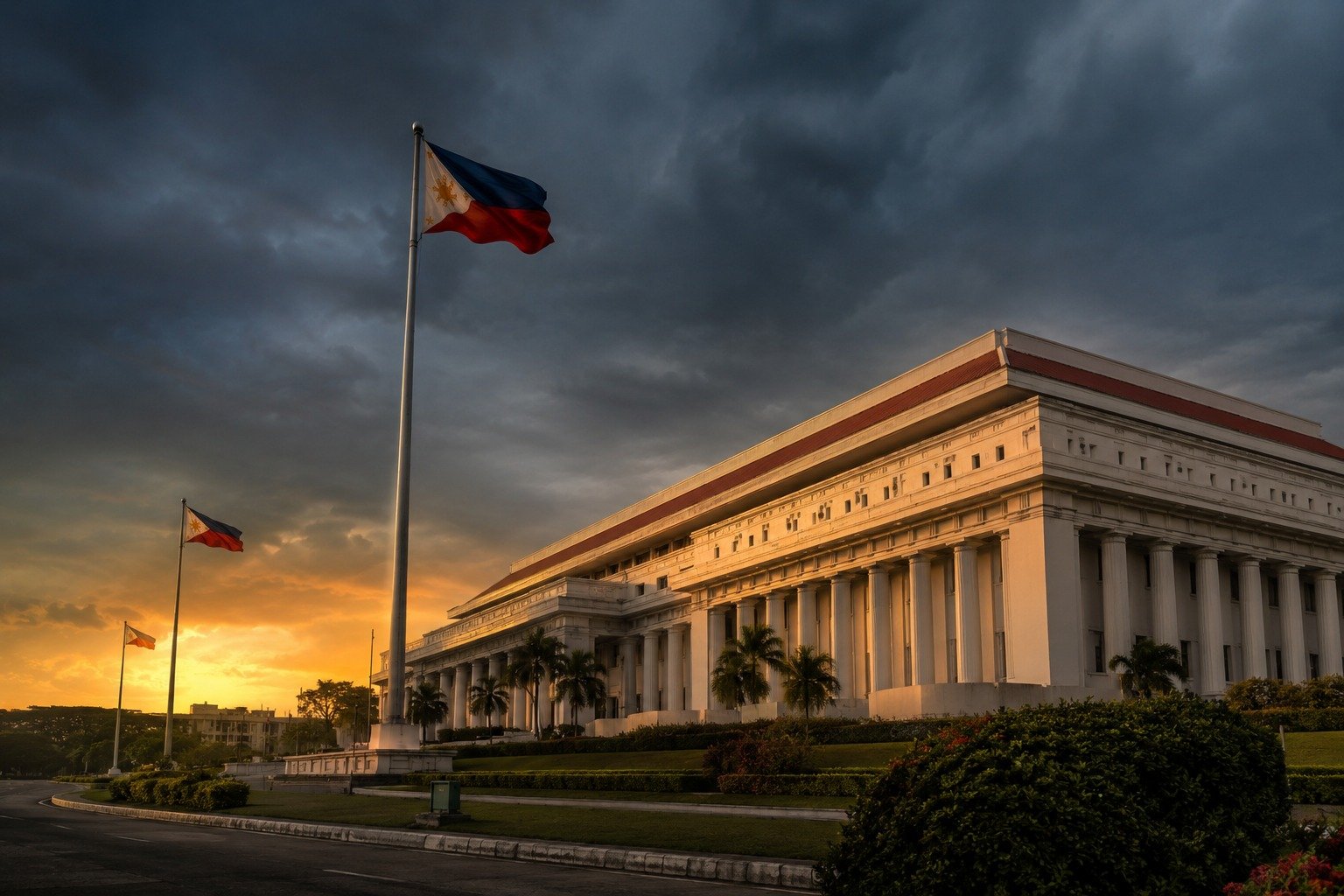
A Philippine lawmaker has filed a bill that would bring back the death penalty — specifically for government officials found guilty of corruption. Under the proposal, convicted politicians, military officers, and even the sitting President could face execution by firing squad.
A Country Tired of Empty Promises
The Philippines abolished capital punishment in 2006 following sustained pressure from the country’s powerful Catholic Church. More than 80 percent of Filipinos identify as Catholic, giving the Church enormous sway over public policy. But decades of entrenched corruption — from the barangay level all the way to the presidential palace — have left many Filipinos disillusioned with soft-touch reforms and anti-corruption task forces that rarely produce lasting results. For many citizens, the system feels designed to protect the powerful rather than punish them.
What the Bill Actually Says
Rep. Khymer Adan Olaso of Zamboanga del Norte filed the bill in the House of Representatives, explicitly targeting elected and appointed officials who abuse the public trust. The scope is sweeping: the bill covers the President, Vice President, senators, members of Congress, military and police commanders, judges, and even barangay captains — every layer of the Philippine government’s hierarchy.
Under the bill, the death penalty would apply to officials convicted of graft, bribery, plunder, and the misuse or theft of public funds. The method of execution would be death by firing squad — the same method historically used in the Philippines before capital punishment was abolished in 2006.
The bill includes procedural safeguards. Any death sentence would require affirmation by the Philippine Supreme Court, and all available legal appeals must be fully exhausted before a sentence could be carried out. Supporters argue these protections are sufficient — and that the severity of the penalty is precisely the point. Without a credible, irreversible consequence, they say, the cycle of corruption will never be broken.
Two Powerful Sources of Opposition
Critics are raising alarm on two fronts. First, the Catholic Church — which was the driving force behind the 2006 abolition — is expected to oppose the bill vigorously. Church leaders have historically argued that the death penalty is morally incompatible with the sanctity of human life, and that position is unlikely to soften based on the profession of the convicted.
Second, legal scholars and human rights advocates warn that a law targeting political officials is uniquely vulnerable to abuse. In a country where powerful families and political dynasties have long dominated local and national government, a death penalty applicable to rivals raises the specter of weaponization. Critics argue bluntly: any government corrupt enough to need this law is also corrupt enough to misuse it against political enemies.
What This Means for Ordinary Filipinos
For millions of ordinary Filipinos, corruption is not an abstraction. It is the reason roads go unbuilt, hospitals lack medicine, and disaster relief money disappears before it reaches survivors. The bill’s appeal is direct and visceral: if the punishment is severe enough, the calculus for corrupt officials changes. The bill currently sits in committee with no scheduled floor vote — whether Congress has the will to advance it depends entirely on how much public pressure builds behind the idea.
Stay informed on the stories that matter most. Follow Your Daily Updates on Facebook and bookmark yourdailyupdates.news for breaking news and analysis.