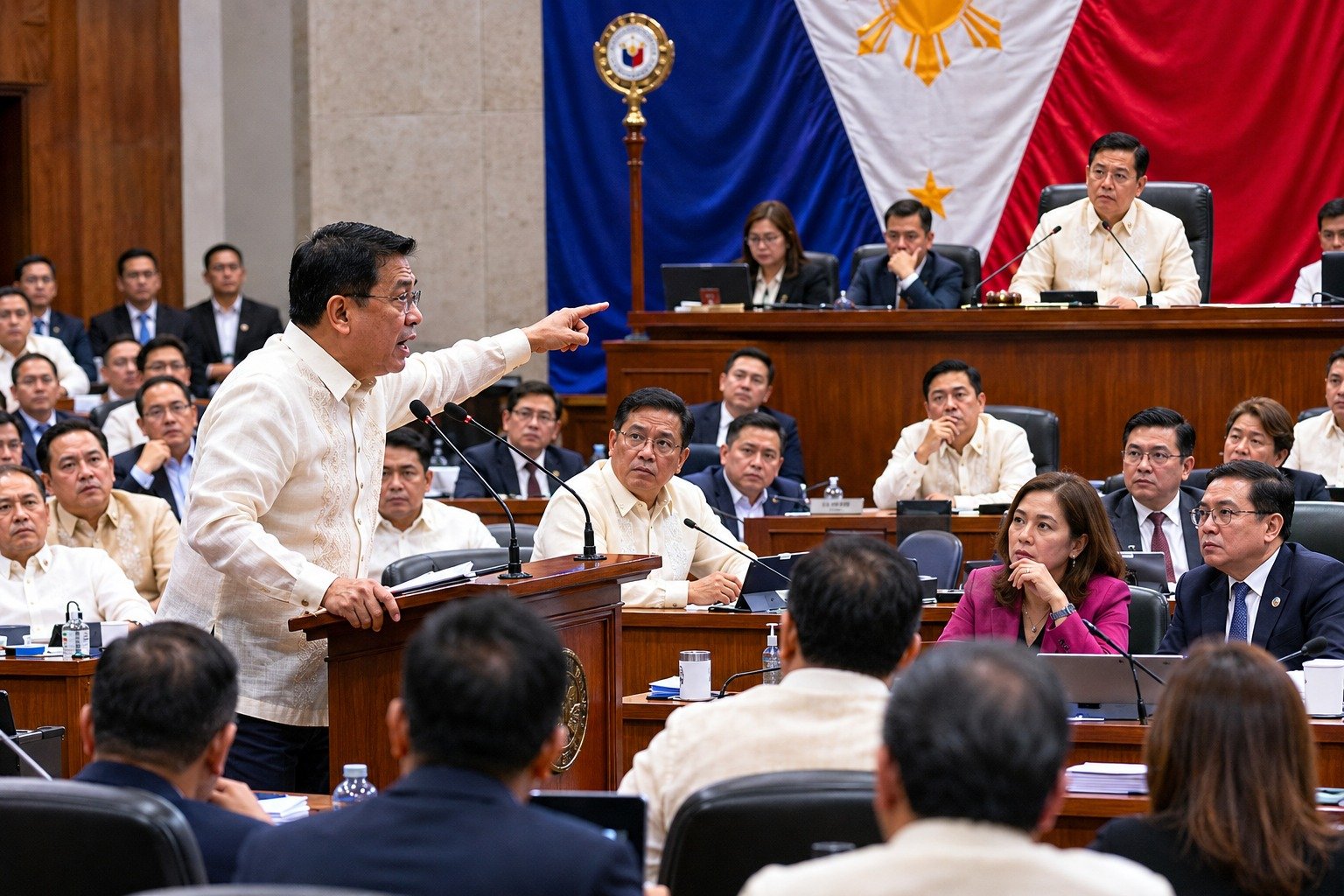
A Philippine lawmaker has introduced legislation that would impose the death penalty — by firing squad — on any government official convicted of corruption. The bill covers every tier of public office, from the smallest village leader to the sitting president of the Philippines.
The Bill and What It Proposes
Rep. Khymer Adan Olaso of Zamboanga del Norte introduced House Bill 11211, formally titled the Death Penalty for Corruption Act. Under the proposed law, any government official convicted of graft, malversation of public funds, or plunder would face execution by firing squad. The penalty would apply to officials at every level of government — from barangay (village) leaders at the local level all the way up to the sitting president of the republic.
The bill stipulates that convictions must be affirmed by the Supreme Court before any death sentence can be carried out, and mandates an automatic review process designed to prevent unjust executions. Olaso framed the legislation as a last resort — not a punishment designed for mild misconduct, but a terminal consequence for officials who systematically loot public resources.
Why a Lawmaker Is Calling for This
Olaso’s argument is blunt: the existing laws aren’t working. The Philippines has multiple statutes targeting graft and plunder, including the Anti-Graft and Corrupt Practices Act and the Plunder Law. High-profile prosecutions have occurred over the decades. Yet corruption at every level of government continues with remarkable persistence.
The lawmaker’s position is that existing penalties — prison sentences, asset forfeiture, disqualification from public office — simply aren’t enough of a deterrent when officials know they can plunder millions and still retain some chance of clemency, early release, or appeals that drag on for years. The firing squad, in Olaso’s framing, changes the math entirely. The personal cost becomes existential — and irreversible.
The Constitutional Wall
The bill faces a formidable legal obstacle. The Philippines abolished the death penalty in 2006, and the 1987 Philippine Constitution explicitly prohibits capital punishment — except in cases of the most heinous crimes, and only if Congress later determines those circumstances warrant its reinstatement. Beyond the domestic constitutional barrier, the Philippines is also a signatory to the Second Optional Protocol to the International Covenant on Civil and Political Rights, an international treaty that commits signatories to permanently abolishing executions.
Any realistic path for House Bill 11211 to become enforceable law would almost certainly require a constitutional amendment — a massive political undertaking requiring supermajority votes in both chambers of Congress plus either a national referendum or a constitutional convention. That process alone could take years, assuming the political will exists to push it through. Whether that political will exists in sufficient quantity remains an open question.
Why It Resonates Despite Long Odds
The bill’s constitutional obstacles haven’t diminished public interest in it — and that’s telling. Corruption has been one of the Philippines’ most persistent and damaging national problems for generations. Billions of pesos in public funds meant for schools, hospitals, infrastructure, and disaster relief have been diverted by officials at every level. For ordinary Filipinos who struggle to access basic services while watching officials live in conspicuous wealth, the frustration is deep and long-standing.
Even critics of the death penalty have acknowledged the underlying reality Olaso’s bill is responding to: the current system is not delivering accountability at the speed or severity that public frustration demands. Whether the solution is execution or not, the sentiment driving the bill reflects a genuine crisis of trust between Filipino citizens and the institutions meant to serve them.
What This Means for Accountability Worldwide
The Philippines isn’t alone in wrestling with this question. From Latin America to Southeast Asia to sub-Saharan Africa, citizens in dozens of countries have watched officials enrich themselves with impunity while legal systems move too slowly — or not at all — to deliver consequences. The debate over how severe penalties for public corruption should be is a global one, and House Bill 11211 is the latest flashpoint in that conversation.
Whether this bill advances in the Philippine Congress, gets watered down, or dies in committee, it has done one thing already: it has put every elected official in the Philippines on notice that public patience with corruption is running out. And it’s put the world on notice that at least some lawmakers are willing to propose the most extreme consequences imaginable to address it.
Stay informed on the stories that matter most. Follow Your Daily Updates on Facebook and bookmark yourdailyupdates.news for breaking news and analysis.