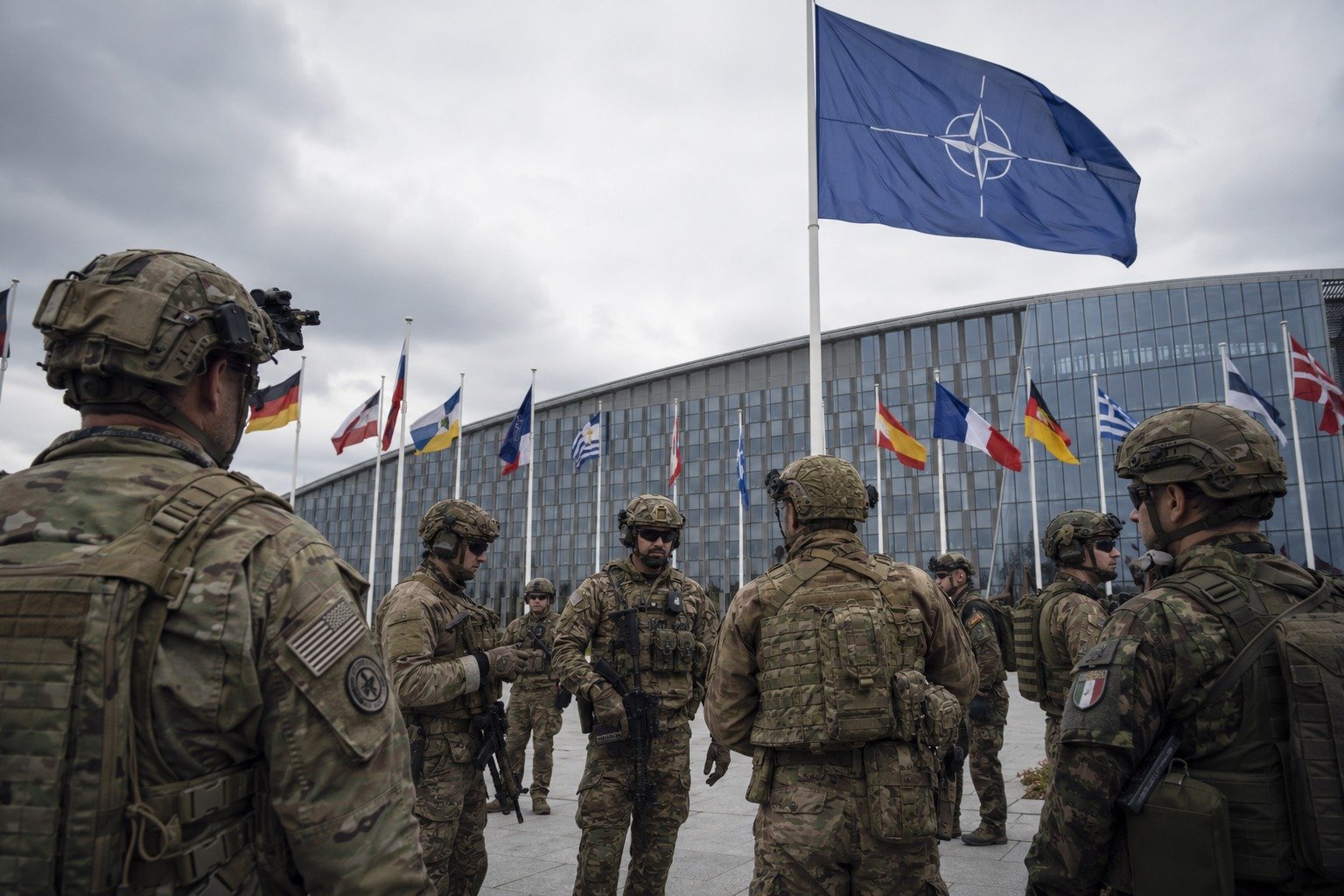
The Trump administration has delivered one of its clearest signals yet about America’s commitment to European defense — and the message is making allies deeply uneasy. According to multiple sources familiar with internal discussions, the Pentagon is preparing to formally reduce the pool of U.S. military forces it would make available to NATO during a major crisis or conflict. The announcement, expected at a recent meeting of NATO defense policy chiefs in Brussels, marks a concrete policy shift away from decades of American military primacy on the continent.
What the NATO Force Model Change Actually Means
Under the NATO Force Model framework, each alliance member designates a specific pool of troops and military capabilities — soldiers, aircraft, ships, armor — that could be activated and deployed during a major conflict. The United States has historically been the backbone of that force pool, contributing more than any other single nation.
The Pentagon’s decision scales back that designated U.S. contribution significantly. It is, in effect, the Trump administration putting a number on its reduced commitment — moving from a vague rhetorical push for European burden-sharing to an actual, formalized reduction in what America promises to field in a wartime scenario. Defense officials say the move is a direct extension of Trump’s long-stated position that Europe has been freeloading on American military power for too long.
Colby’s Position: Nuclear Yes, Ground War No
Pentagon Policy Chief Elbridge Colby has been explicit about the philosophical framework driving the change. The United States will maintain its nuclear deterrent commitment to NATO allies — that umbrella stays open. But when it comes to conventional forces, the soldiers and tanks and fighter jets that would actually fight a ground war in Europe, Colby has made clear that the administration believes European nations must now step up and lead.
It’s a significant distinction. Nuclear deterrence is largely theoretical — a promise that functions precisely because it rarely has to be tested. Conventional force commitments are the real-world sinew of an alliance: how many troops show up, how fast, and how well-equipped. By scaling back its conventional force model pledge, the U.S. is telling allies that in the event of a crisis, they should not count on American ground forces arriving in the numbers or timelines they previously planned around.
A Pattern of Pullback
The Force Model announcement is not an isolated move — it is part of a broader pattern that has rattled alliance confidence throughout 2025 and into 2026. The administration announced plans to cut 5,000 U.S. troops from European bases. A planned Army brigade deployment to Poland — a critical frontline NATO state on Russia’s doorstep — was abruptly cancelled without warning. The Poland cancellation drew unusually sharp bipartisan condemnation from Congress, with lawmakers from both parties arguing the move sent exactly the wrong message to Moscow at exactly the wrong time.
Senior NATO officials have described the alliance as under “unprecedented strain” — language that, in the typically restrained world of diplomatic communiqués, is striking. For decades, European security planning has been built on the bedrock assumption that the United States would be present and dominant in any major conflict scenario. That assumption is now being openly revised.
The July Summit and an Unanswered Question
The next NATO summit is scheduled for Turkey in July, and it will be the first major test of whether the alliance can hold together under the weight of these U.S. policy shifts. European defense ministers have spent months trying to calculate what a reduced American commitment actually looks like in practice — how to fill the gaps, whether European nations have the industrial capacity to rearm fast enough, and whether political will exists across the continent to dramatically increase defense spending.
The question hanging over every alliance capital right now is the same one it has always been — just louder. If America scales back its commitment, and Russia judges the moment to be an opportunity, who shows up? The formal answer, for the first time in decades, is no longer obvious.
Stay informed on the stories that matter most. Follow Your Daily Updates on Facebook and bookmark yourdailyupdates.news for breaking news and analysis.