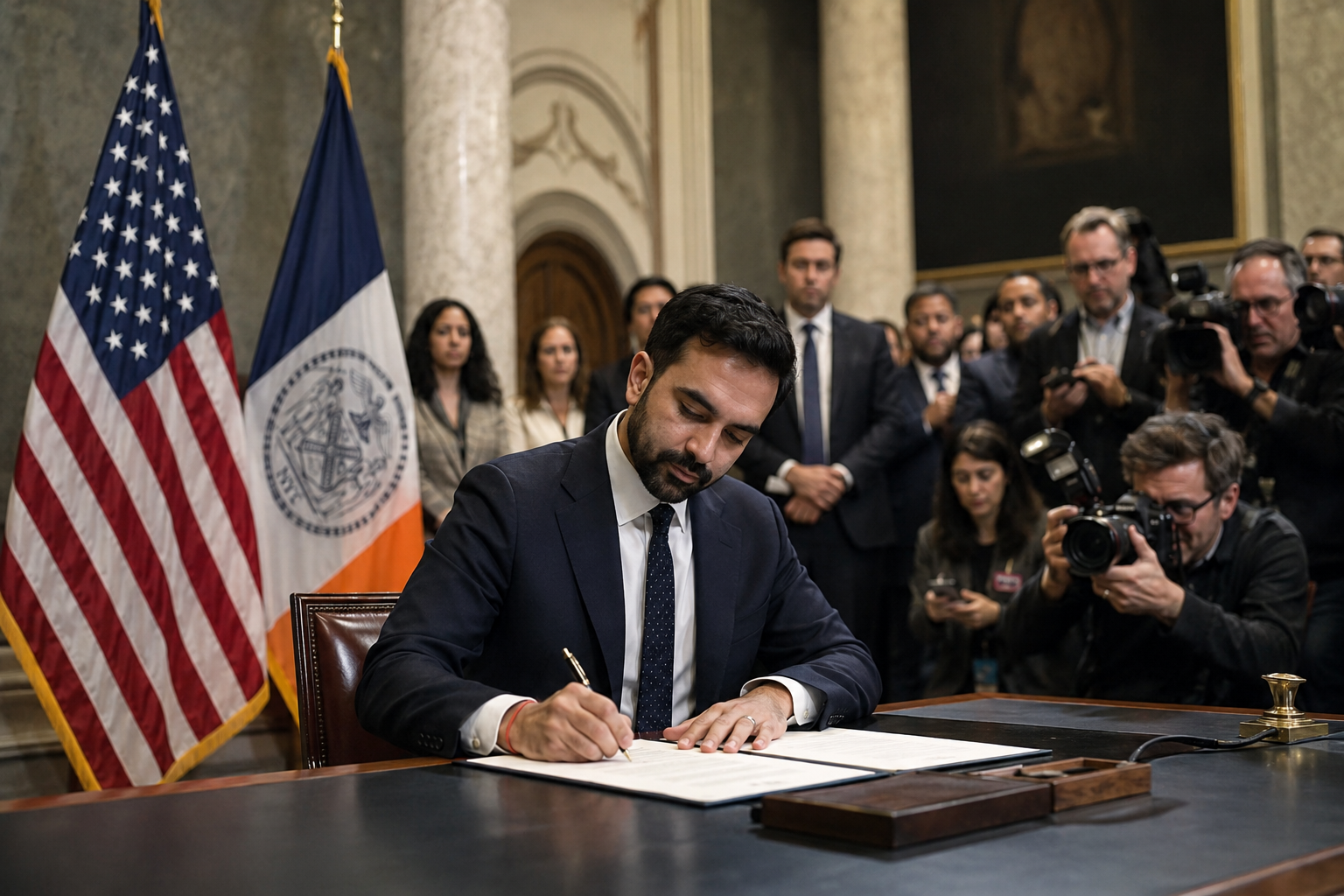
New York City’s new mayor isn’t wasting any time picking a fight with the federal government. Zohran Mamdani signed Executive Order 13 this week, drawing a hard line between city institutions and federal immigration enforcement — declaring that ICE agents cannot enter public schools, hospitals, or city-run shelters without a judicial warrant.
It sounds simple, but the distinction carries enormous legal weight.
Judicial Warrant vs. Administrative Warrant: Why It Matters
ICE has long used what are called “administrative warrants” — internal documents signed by immigration officials, not judges. These warrants are issued by the Department of Homeland Security itself and have never required any sign-off from the judicial branch. Under existing federal practice, ICE has used these documents to justify entering a wide range of facilities.
Mamdani’s Executive Order 13 draws a clear line: administrative warrants are not enough. Only a court-issued judicial warrant — reviewed and signed by an actual judge — will grant ICE access to New York City’s public schools, hospitals, and shelter system. No warrant, no access. Period.
The order applies to all city employees and institutions under Mamdani’s jurisdiction, instructing them not to cooperate with ICE entry requests that do not meet the judicial warrant standard.
DHS Pushes Back Hard
The Department of Homeland Security did not stay quiet. Federal officials called the order dangerous, warning that it would make New York City “less safe” by obstructing lawful immigration enforcement operations. DHS also pointed to a striking statistic: over 7,100 ICE detainer requests — requests that city jails hold individuals for ICE pickup — have already been refused by New York City under existing sanctuary policies.
Federal officials made clear they view Executive Order 13 as an escalation, not a continuation. The order doesn’t just maintain existing sanctuary policies — it actively instructs city employees to refuse entry to federal agents under specific circumstances. That’s a level of direct conflict that Washington appears unprepared to let slide without a response.
The Backdrop: Why Mamdani Signed It Now
Mamdani cited a darker recent history as part of his justification for the order. He referenced the reported killings of two U.S. citizens by ICE agents in Minneapolis earlier this year — an incident that drew national attention and increased scrutiny of ICE enforcement tactics in civilian spaces.
His argument: if federal agents are operating in schools, hospitals, and shelters without judicial oversight, there is no meaningful check on how those operations are conducted. City institutions, he argued, must be protected spaces — places where residents can seek medical care, education, and emergency housing without fear of immigration enforcement.
A Growing National Trend
New York isn’t alone. Several other governors and mayors have taken similar steps in recent weeks, expanding sanctuary protections as the federal government intensifies its immigration enforcement campaign. The moves are part of a broader pushback by Democratic-controlled cities and states against what they describe as aggressive and unchecked federal overreach.
Legal scholars are already flagging this developing standoff as a potential 10th Amendment showdown. The 10th Amendment reserves powers not granted to the federal government to the states — and a growing number of legal experts argue that states and cities cannot be compelled to actively assist federal enforcement operations. Local governments, the argument goes, can decline to participate without violating federal law.
What Happens Next
DHS has the legal authority to operate independently of local orders. Federal agents can still attempt to enter city facilities — Mamdani’s order can direct city employees, but it cannot physically stop a federal officer. The real battleground is likely to be the courts.
A legal challenge to Executive Order 13 — either from the federal government or from advocacy groups on either side — appears increasingly likely. When that challenge arrives, it will force judges to weigh the limits of local sanctuary authority against the federal government’s immigration enforcement powers.
For now, New York City is drawing its line. Whether Washington crosses it — and how the courts rule if it does — is a question that may define the boundaries of federalism in the immigration era for years to come.