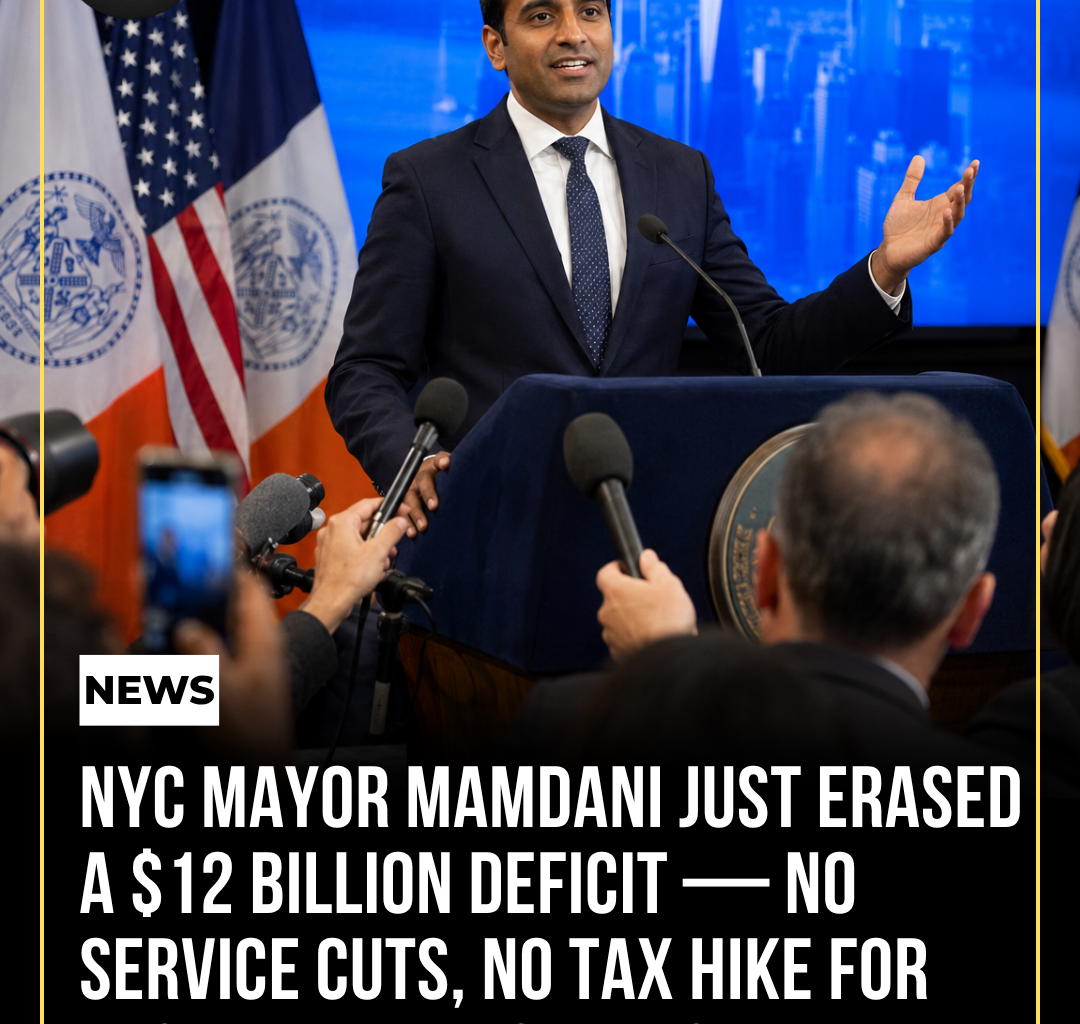
New York City Mayor Zohran Mamdani released a $124.7 billion executive budget on Monday, completely eliminating the $12 billion deficit he inherited from former Mayor Eric Adams — the largest single-year budget gap the city has faced since the Great Recession.
How the Deficit Was Inherited
When Mamdani took office earlier this year, he stepped into one of the most challenging fiscal situations in New York City’s recent history. The $12 billion shortfall was driven by rising migrant services costs, post-pandemic revenue pressures, and years of deferred fiscal decisions under the previous administration. Budget analysts at the time projected the gap could force either significant cuts to city services or a broad-based tax increase on working New Yorkers.
Mamdani made clear early in his term that he intended to fight for a third option — closing the gap through state support, operational efficiency, and targeted new revenue without touching the property taxes most New Yorkers pay. He put direct political pressure on Governor Kathy Hochul, warning publicly that Albany’s failure to act would force his hand.
The Three-Part Plan That Worked
The budget closes the gap through three distinct mechanisms. The largest single piece came from the state: Governor Hochul agreed to direct $4 billion in state aid to New York City — one of the most significant Albany-to-NYC fiscal transfers in recent memory. That single commitment covered roughly a third of the deficit alone.
The second component — $1.77 billion — came from internal efficiency measures. The city trimmed spending by leaving vacant government positions unfilled, streamlining administrative operations, and reducing expenditures in non-essential areas. No mass layoffs were required to hit this number.
The third piece is new revenue. Mamdani introduced a pied-à-terre tax targeting luxury second homes in New York City. The tax is projected to generate approximately $500 million annually and is designed to apply to high-value properties held as secondary or investment residences — hitting wealthy non-resident owners rather than working-class families or primary homeowners.
The Political Stakes
Mamdani framed the budget as a vindication of his governing philosophy — evidence that progressive fiscal policy can be both ambitious and responsible. His supporters are pointing to the outcome as a model for urban governance: close gaps without punishing ordinary residents, leverage the state relationship, and create new revenue streams from those most able to pay.
But budget watchdogs aren’t fully sold. Several fiscal monitoring groups have flagged what they call “one-shot” reliance — the state aid package and the luxury home tax are not structurally guaranteed to recur at the same levels year over year. If a future governor doesn’t deliver comparable aid, or if pied-à-terre tax revenues come in below projections, the underlying structural deficit returns. Critics on the right argue the new tax sets a troubling precedent; critics on the left worry that relying on position attrition could slowly hollow out city agencies.
What This Means for New Yorkers
For now, the practical answer is straightforward: services are intact, property taxes aren’t going up, and the city is officially in the black. Whether year two looks the same depends on whether the structural fixes hold and Albany stays cooperative. For Americans in other cities watching their own budget battles unfold, this is a live case study in what it takes — and what it costs — to close a fiscal crisis without crushing the people who live there.
Stay informed on the stories that matter most. Follow Your Daily Updates on Facebook and bookmark yourdailyupdates.news for breaking news and analysis.