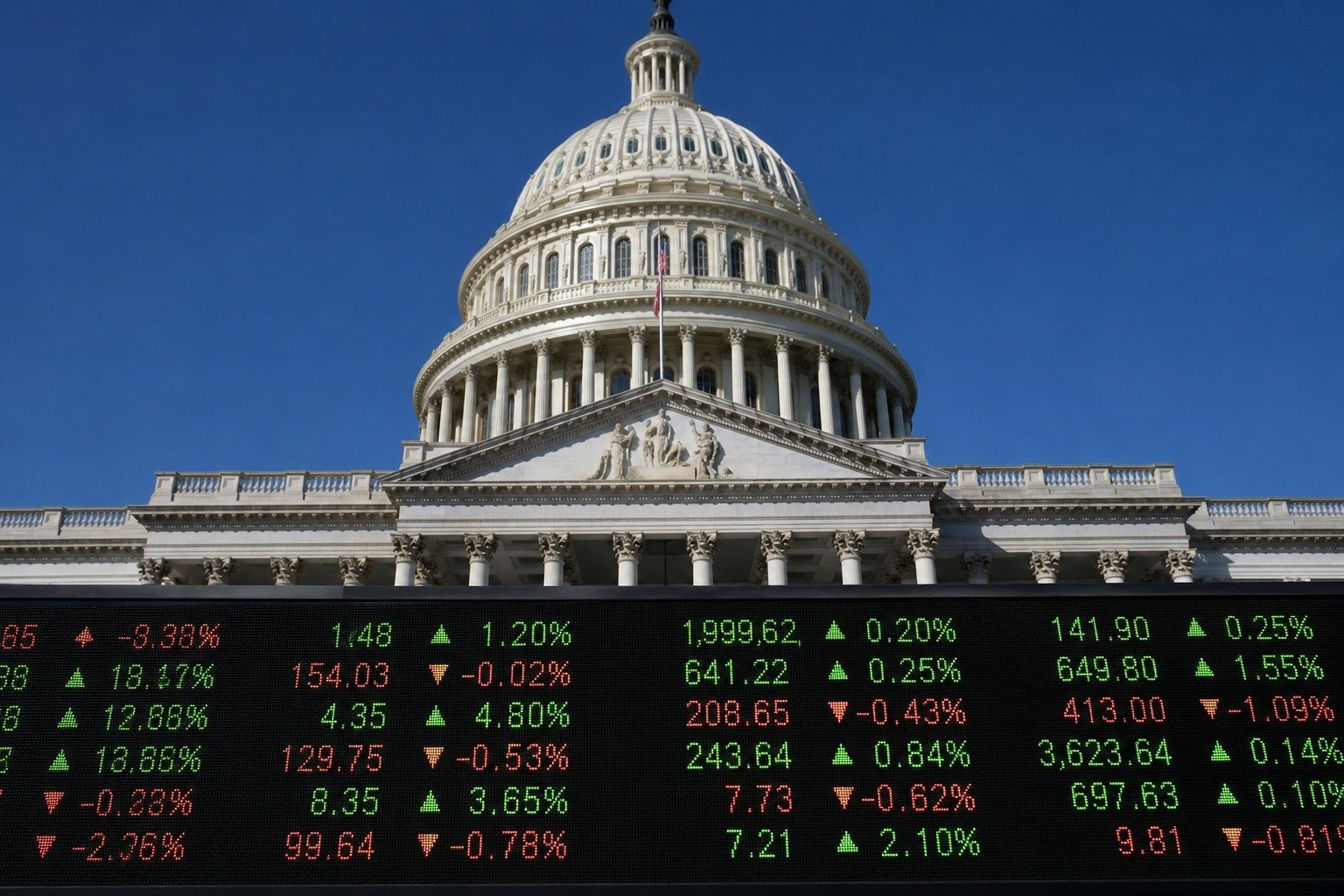
In a Congress where the two parties rarely agree on anything, a Democrat and a Republican have joined forces on a bill targeting the financial perks lawmakers give themselves. Rep. Marie Gluesenkamp Perez, a Democrat from Washington, and Rep. Zach Nunn, a Republican from Iowa, introduced the bipartisan No Corruption in Government Act, a measure aimed at one of the most popular reform ideas in American politics: stopping members of Congress from cashing in on their own power.
The legislation, filed in the House as part of the 119th Congress, takes direct aim at three perks that have long frustrated voters across the political spectrum. And because it carries both a Democratic and a Republican name, supporters argue it has a credibility that purely partisan reform efforts often lack.
What the Bill Would Do
The No Corruption in Government Act is built around three core changes. First, it would ban members of Congress — and their spouses — from holding or trading individual stocks. That provision goes after a practice that has raised conflict-of-interest questions for years, as lawmakers vote on legislation and gain access to information that can move markets while simultaneously buying and selling shares in the very industries they oversee.
Second, the bill would repeal the law that automatically hands members of Congress a pay raise every year. Under current rules, that increase takes effect quietly unless lawmakers vote to block it — meaning a raise can happen without any member ever having to cast a public vote in favor of paying themselves more.
Third, the measure would triple the length of the waiting period before a former member of Congress can become a lobbyist. The so-called revolving door — in which lawmakers leave office and quickly take high-paying jobs influencing their former colleagues — has been a target of reformers for decades. Extending the cooling-off period is designed to slow that pipeline.
Why It Matters
The push comes against a backdrop of mounting public distrust over how lawmakers handle their personal finances. One study found that roughly one in five members of Congress have been buying and selling stocks in situations where a conflict of interest could exist. The concern is straightforward: when the people writing the nation’s laws can profit from the companies those laws affect, the public has no easy way to know whether a vote was cast in the national interest or a personal one.
Enforcement of the existing rules has been spotty. During the 117th Congress, 78 members were flagged for violating the STOCK Act, the law that already requires lawmakers to publicly disclose their trades within a set window. Critics say those repeated violations — often met with little more than small fines — show that disclosure alone has not been enough to deter questionable trading.
An Introduced Bill, Not a Law
It’s important to be clear about where this stands. The No Corruption in Government Act has been introduced — it is a proposal, not a law. To take effect, it would have to pass the House, clear the Senate, and be signed by the president. Each of those steps is a significant hurdle.
Reforms like this have a long history of stalling. Congressional stock-trading bans have been introduced repeatedly in recent years with broad public support, only to lose momentum behind the scenes. The uncomfortable reality is that the lawmakers who would be bound by these rules are the same ones who decide whether the rules ever come up for a vote.
What This Means for Americans
For ordinary Americans, the bill speaks to a basic question of fairness. Most workers cannot trade on inside knowledge of their employer without facing serious consequences, and most never receive an automatic annual raise they don’t have to justify. The reforms in this package would hold members of Congress to standards closer to the ones the rest of the country already lives under. Whether a rare moment of bipartisan agreement is enough to overcome Congress’s long habit of protecting its own perks is the real test ahead.
Stay informed on the stories that matter most. Follow Your Daily Updates on Facebook and bookmark yourdailyupdates.news for breaking news and analysis.