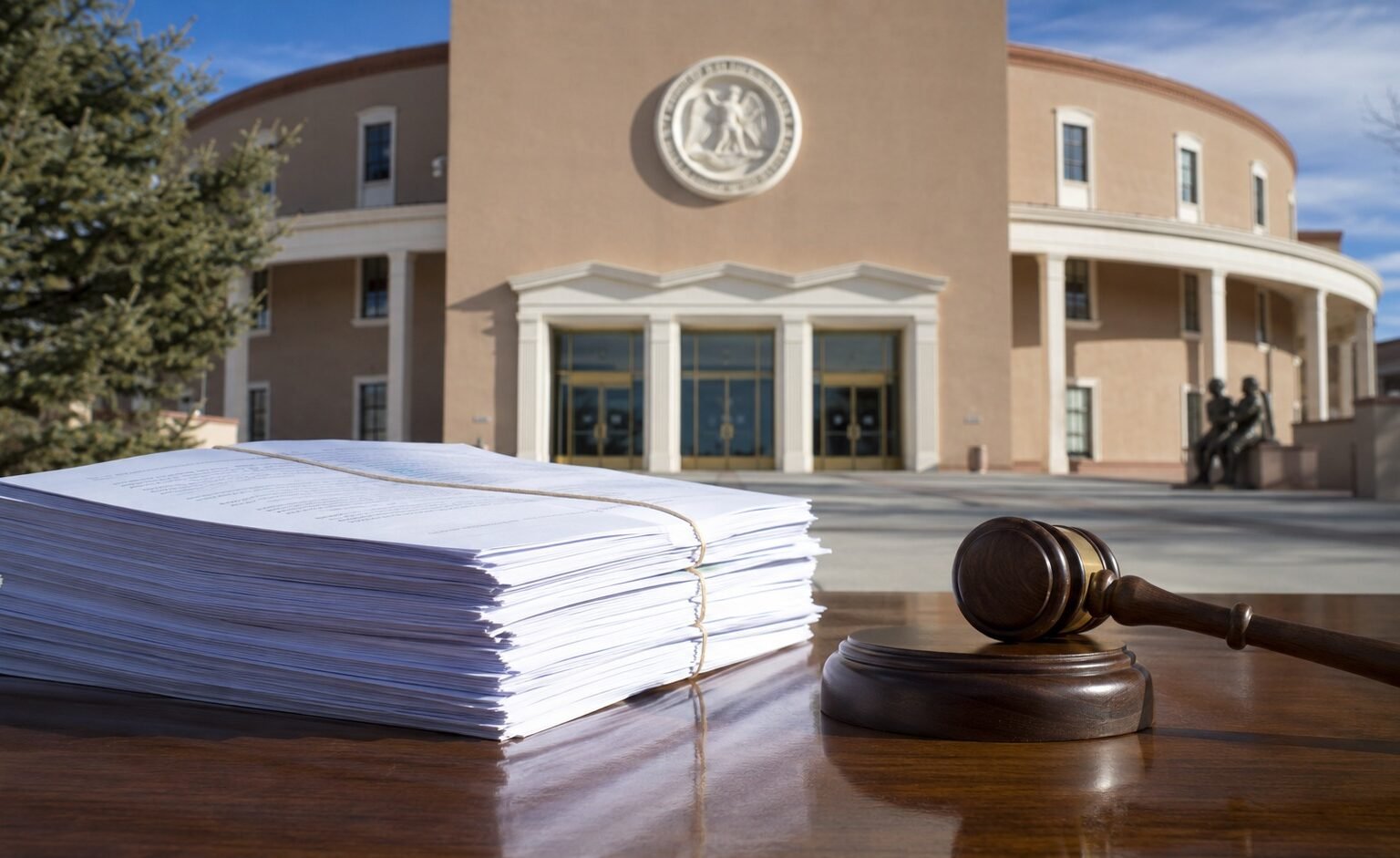
A state-run “truth commission” in New Mexico has dramatically widened its investigation into Jeffrey Epstein, announcing on June 1 that it will issue 14 subpoenas to a sweeping list of banks, federal agencies, and state institutions. The bipartisan legislative panel is now reaching directly into the financial and governmental machinery that surrounded Epstein for decades.
The move marks one of the most aggressive state-level actions taken in the Epstein saga, and it pulls some of the most powerful names in American finance and law enforcement into a New Mexico inquiry that many assumed had gone quiet.
Who Is Being Subpoenaed
The 14 subpoenas target a striking range of entities. On the federal side, they include Epstein’s estate, the FBI, the U.S. Department of Justice, and the U.S. Attorney’s Offices for both the District of New Mexico and the Southern District of New York. Two of the world’s largest banks – Deutsche Bank and JP Morgan Chase – are also on the list, both having faced prior legal scrutiny over their financial relationships with Epstein.
The subpoenas also reach deep into New Mexico’s own institutions. The state’s Department of Public Safety, its Department of Justice, the governor’s office, the State Land Commissioner, the Santa Fe County Sheriff’s Department, and the Santa Fe Institute have all been named. According to the commission, the goal is to determine who at these agencies and companies was in contact with Epstein and his associate Ghislaine Maxwell.
A Commission Funded by the Banks It’s Investigating
One detail has drawn particular attention. The commission operates on a $2 million budget – and that money came directly from legal settlements with Epstein’s banks. In effect, some of the very institutions now receiving subpoenas helped finance the investigation now scrutinizing them.
The panel was created earlier this year by New Mexico’s Legislature as a bipartisan House investigatory subcommittee. Its mandate is broad: to gather the accounts of survivors, examine the financial and institutional failures that allowed Epstein to operate, and vet information – collected through both solicited tips and subpoenas – that could ultimately be referred to the New Mexico Department of Justice for potential prosecution.
The Focus on Zorro Ranch
Much of the investigation centers on Zorro Ranch, the sprawling property Epstein owned in New Mexico. The commission is examining activities tied to the ranch alongside the broader question of how federal and state institutions handled – or failed to handle – information about Epstein over the years.
By subpoenaing both federal law enforcement and major financial institutions, the panel is signaling that it intends to look not only at what happened, but at who knew and what records exist. That scope is unusual for a state-level body and sets up potential jurisdictional friction with federal agencies.
What Comes Next
The commission has set an interim report deadline of July 31, meaning the public could see its first formal findings within weeks. How thoroughly agencies like the FBI and DOJ comply with subpoenas from a state legislative body remains an open question, and any disputes could shape the pace of the inquiry.
For a case that many Americans assumed had faded from official attention, the New Mexico panel’s action is a reminder that scrutiny of the institutions connected to Epstein has not ended. The questions of accountability – for banks, for federal agencies, and for state officials – are now being pressed forward through formal legal process.
Stay informed on the stories that matter most. Follow Your Daily Updates on Facebook and bookmark yourdailyupdates.news for breaking news and analysis.