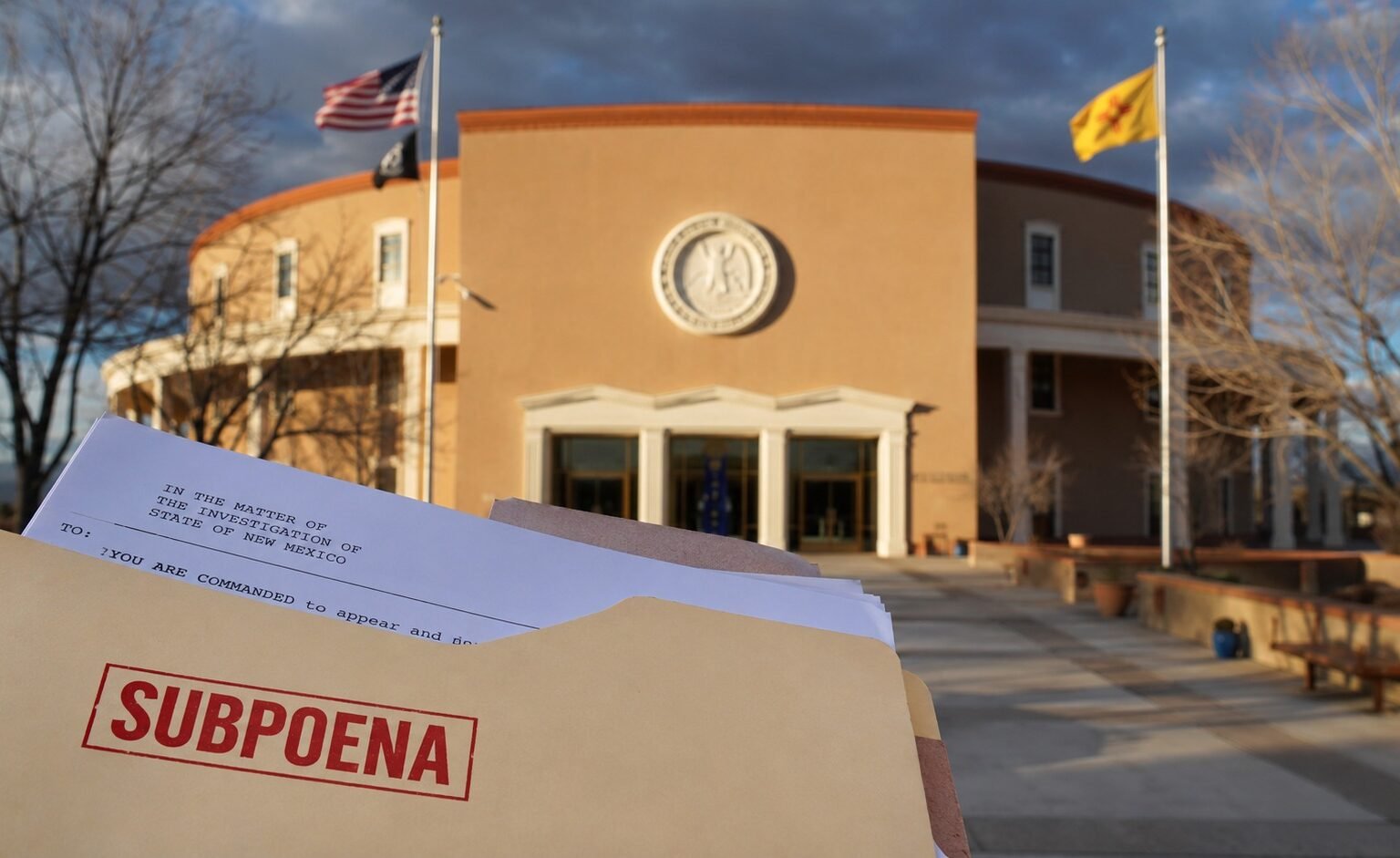
New Mexico has decided it will not wait on Washington to get answers about Jeffrey Epstein. In early June 2026, the state’s Democratic-led Legislature approved a sweeping round of subpoenas — roughly 14 in all — targeting the FBI, the U.S. Justice Department, Deutsche Bank, JPMorgan Chase, Epstein’s estate, the Santa Fe Institute, and several state agencies. The subpoenas are the most aggressive move yet by the state’s Epstein “truth commission,” a body created to build a complete public record of how one of the most notorious abusers of the century operated for so long.
What the Commission Actually Is
It is important to be precise about what this commission can and cannot do. It is a state legislative commission — not a prosecutor’s office and not a court. It cannot file charges, hand down indictments, or put anyone on trial. What it can do is compel the production of documents, take testimony, and assemble the fullest public account yet of who knew what, and when. Where it uncovers evidence of crimes, its role is to refer that evidence to law enforcement agencies that do have the power to prosecute.
That distinction matters, because it defines both the commission’s limits and its real power. The body cannot deliver convictions on its own. But the subpoena is a serious legal instrument, and by aiming it at federal agencies, global banks, and Epstein’s estate, New Mexico is attempting to force open files that have stayed sealed, redacted, or quietly closed for years.
How It Started
The commission was launched in February 2026. Its mandate is tied directly to New Mexico soil: Epstein owned Zorro Ranch, a sprawling property in the state that became central to allegations of s*x trafficking, financial misconduct, and the institutional failures that allowed his conduct to continue. Lawmakers framed the commission as a way to document those failures in full — not just what Epstein did, but how the systems around him repeatedly failed to stop it.
The Targets
The list of subpoena targets reads like a map of every institution that intersected with Epstein. Two federal agencies — the FBI and the Justice Department — handled investigations and cases connected to him over the years. Two global financial institutions — Deutsche Bank and JPMorgan Chase — moved his money for extended periods. Epstein’s estate still holds records that have never been made fully public. And the Santa Fe Institute, a New Mexico research organization he donated to, is also named.
By subpoenaing all of them at once, the commission is signaling that it intends to examine the entire ecosystem that surrounded Epstein — the law enforcement decisions, the financial relationships, and the institutional ties — rather than focusing on any single piece. Several state agencies were also included, reflecting an effort to scrutinize how New Mexico’s own systems responded.
Why This Is Different
For years, the standard answer to the question “who protected Epstein, and how?” has been silence — sealed records, redacted filings, and investigations that ended without clear public explanation. The federal process has moved slowly and, to many observers, opaquely. What makes New Mexico’s effort notable is that a state has chosen to use one of the few tools genuinely at its disposal: the legislative subpoena.
Whether the targeted institutions comply fully, contest the subpoenas, or fight them in court remains to be seen. Federal agencies and large banks have legal teams and arguments at the ready, and subpoena fights can stretch on. But even the act of demanding the documents publicly puts pressure on entities that have long preferred to keep them out of view.
What This Means for Americans
For the public, the stakes are straightforward: this is about accountability and the right to know how powerful people and institutions handled — or mishandled — one of the gravest abuse cases in recent memory. A public record built from compelled documents could finally answer questions that have lingered for years. And if the commission’s referrals lead law enforcement to act, the consequences could extend well beyond New Mexico.
Stay informed on the stories that matter most. Follow Your Daily Updates on Facebook and bookmark yourdailyupdates.news for breaking news and analysis.