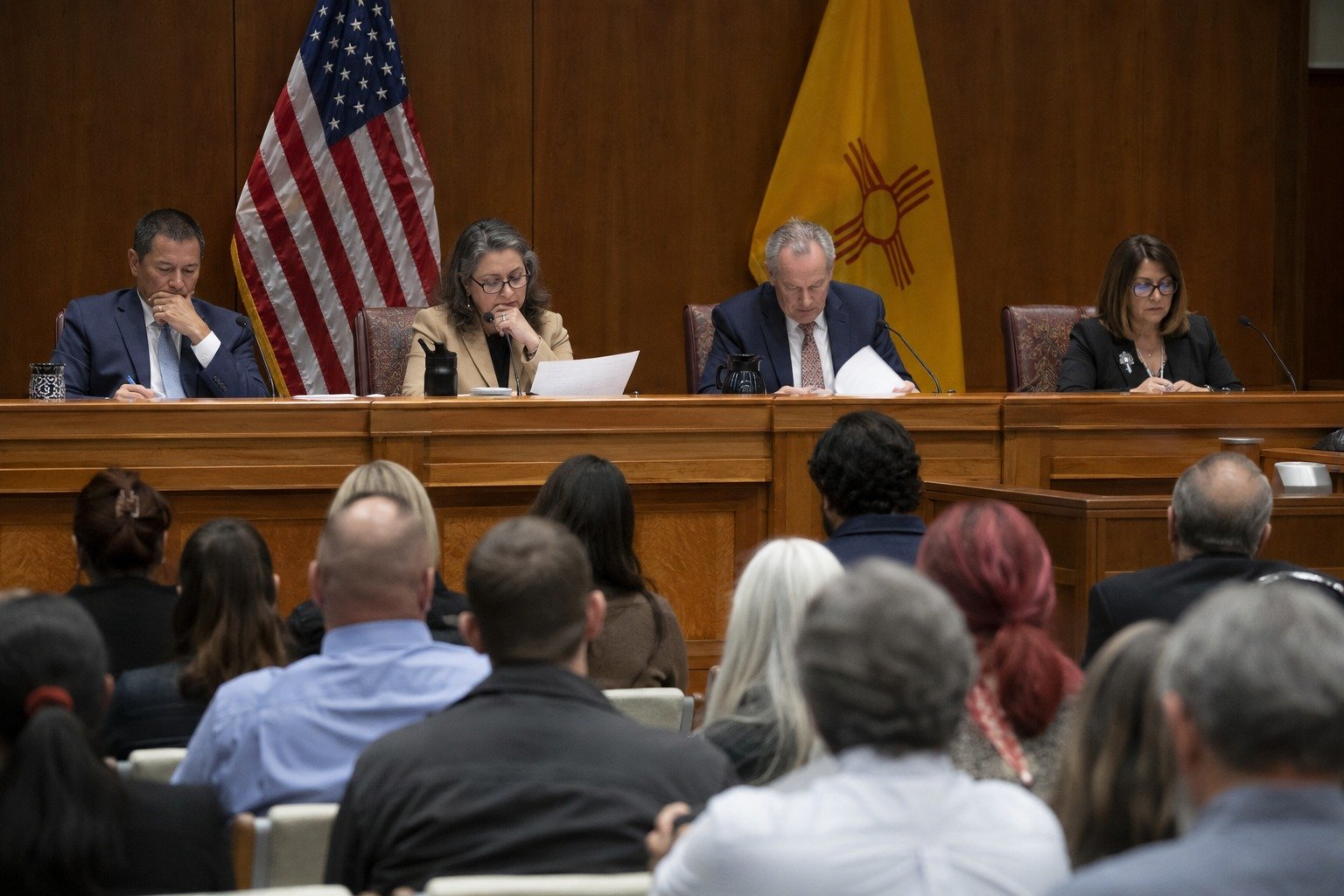
A commission created by New Mexico state lawmakers to investigate Jeffrey Epstein’s ties to the state has moved from words to legal force. At its very first meeting, the panel issued 14 subpoenas, demanding records and testimony from Epstein’s estate, the banks that handled his finances, and other entities connected to the long-running investigation.
The group, informally known as the Epstein “Truth Commission,” is a four-member body assembled by lawmakers with the authority to compel cooperation through the courts. Its inaugural session lasted less than an hour, but it made clear that this is not a symbolic gesture. The commission intends to use subpoena power to pry open a chapter of the Epstein story that has stayed largely sealed for years.
Why New Mexico Is at the Center of This
The investigation centers on Zorro Ranch, the sprawling New Mexico property Epstein owned for years. The remote estate has long drawn suspicion as a site potentially used in connection with trafficking and abuse. For survivors and advocates, the full account of what took place there has remained frustratingly out of reach, buried in private records and shielded by the people and institutions that surrounded Epstein during his life.
By forming a state-level commission with real legal teeth, New Mexico lawmakers are betting that a focused, locally driven inquiry can surface answers that broader federal scrutiny has not. The subpoenas are not aimed at named individuals so much as at the financial and institutional machinery that kept Epstein’s operations running — his estate and the banks that moved his money.
What the Subpoenas Demand
The 14 subpoenas issued at the first meeting represent legal demands, not polite requests. They target the Epstein estate, banking institutions tied to his finances, and additional entities connected to the investigation. Recipients are now legally obligated to produce documents and, where applicable, testimony — or face the consequences of defying a court-backed order.
That distinction matters. Over the years, calls for transparency around Epstein have often come in the form of press conferences, public statements, and online demands that carried no enforcement power. A government body armed with subpoenas can do something those efforts could not: force reluctant parties to hand over what they have.
Survivors Take the Floor
The brief inaugural meeting also served a second purpose. It gave Epstein survivors and the family of the late Virginia Giuffre a chance to be heard on the record. For people who spent years feeling sidelined by a system that seemed to protect the powerful, having their accounts formally entered into a state proceeding carried weight beyond the legal mechanics.
The commission now faces a deadline of July 31 to produce an interim report, with a fuller final report expected later in the year. One lawmaker on the panel has already signaled that additional resources may be needed before the work can be completed — a hint that the inquiry could grow as records come in and new questions emerge.
What This Means for Americans
For the public, the significance is straightforward. This is one of the few times a government body with the power to compel testimony has trained that power directly on the institutions surrounding Epstein. Whether the subpoenas produce real answers — or run into delay, litigation, and stonewalling — will say a lot about how accountable the powerful truly are when a court is doing the asking.
The open question now is simple: who talks, and who tries to run out the clock before the July 31 deadline arrives.
Stay informed on the stories that matter most. Follow Your Daily Updates on Facebook and bookmark yourdailyupdates.news for breaking news and analysis.