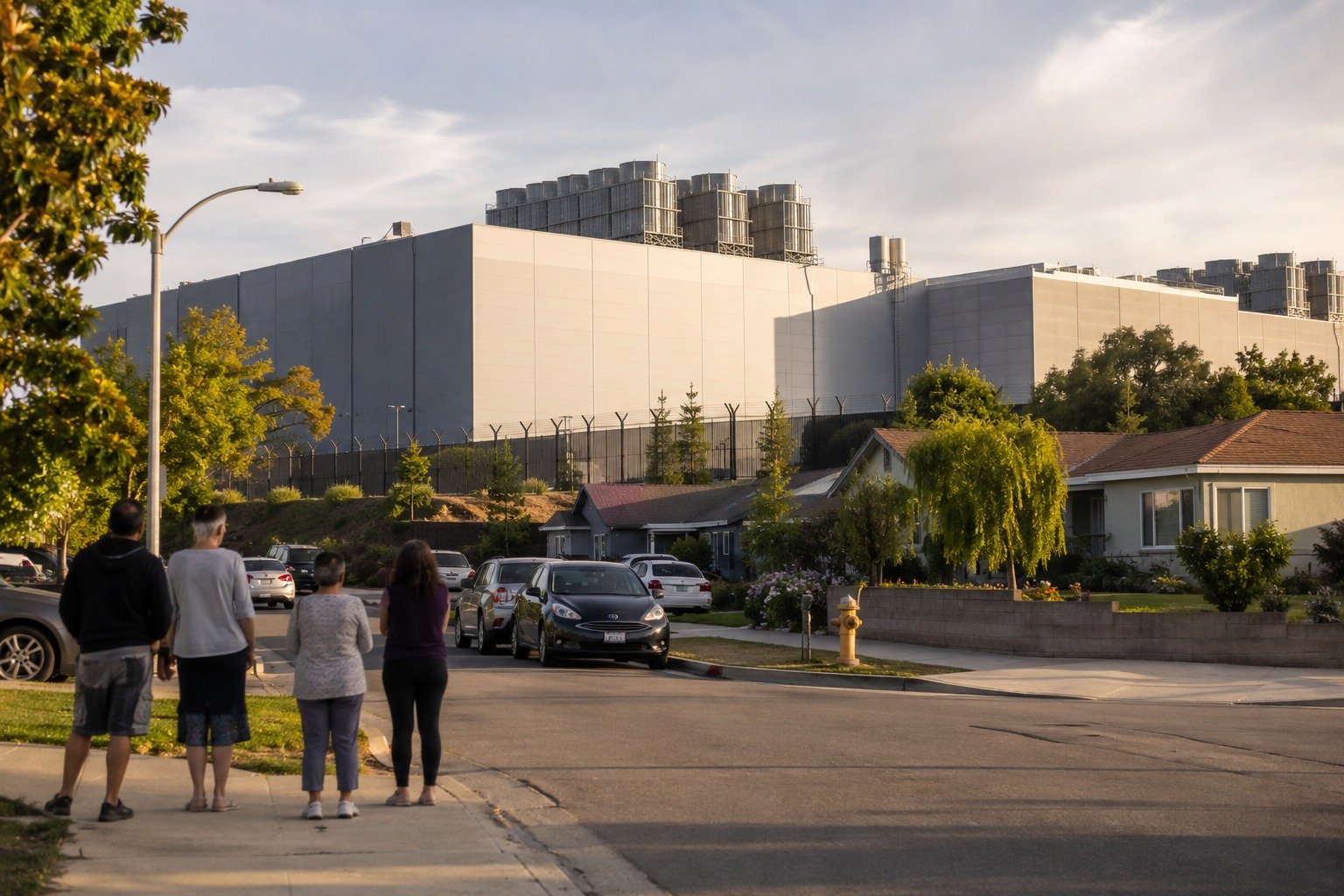
Monterey Park, California has become the first city in America to permanently ban new data centers through a vote of the people – and the margin wasn’t close. Roughly 86% of voters backed the first-of-its-kind ballot measure, locking the prohibition into law with no expiration date.
The result is being called a landmark for local control. In a single election, a community of residents did what zoning boards and city councils across the country have struggled to do: they slammed the door, permanently, on an industry that has been racing to build across the nation.
Why Data Centers Became a Flashpoint
Data centers – the sprawling, windowless server farms that power the internet and the artificial intelligence boom – have exploded in number over the past few years. They are also among the most resource-hungry buildings ever constructed. A single large facility can consume as much electricity as a small city and millions of gallons of water for cooling.
For the neighborhoods that host them, the trade-offs have become hard to ignore. Residents report rising utility costs as the facilities strain local power grids. Water that communities depend on gets diverted to keep servers cool. And the jobs that companies often promise – the selling point that’s supposed to make it all worth it – frequently fail to materialize at the scale advertised, because once a data center is built, it runs largely on automation.
A First-of-Its-Kind Ballot Measure
What makes Monterey Park’s vote historic is not just that residents opposed a data center – communities have been pushing back on these projects for years. It’s that they made that opposition permanent, and they did it at the ballot box rather than waiting for a council fight or a planning commission to maybe act someday.
By taking the question directly to voters, the city converted public frustration into binding law. The roughly 86% approval is the kind of lopsided result that leaves little room for interpretation: this was not a divided town narrowly tipping one way. It was a community speaking with one overwhelming voice.
A Warning Shot to a Powerful Industry
Supporters frame the measure as a win for ordinary residents over deep-pocketed tech firms accustomed to getting their way. The message, as they describe it, is simple: a community’s air, its electric grid, and its water supply are not for sale to the highest-bidding data company.
The industry, for its part, argues that data centers are critical infrastructure for the modern economy and that blanket bans push needed facilities elsewhere without solving the underlying demand. But for a growing number of towns watching their power bills climb and their reservoirs shrink, those arguments are landing with less and less force.
What This Means for Americans
The stakes here reach far beyond one California city. As the AI boom drives a nationwide construction rush, more and more communities are discovering what data centers actually cost them in higher utility rates, drained water supplies, and dirtier air from backup generators – often with few lasting local jobs to show for it. Monterey Park has just handed every one of those towns a blueprint for fighting back, and the tools to make their decision stick.
The question now is how many cities are watching – and how many are ready to follow.
Stay informed on the stories that matter most. Follow Your Daily Updates on Facebook and bookmark yourdailyupdates.news for breaking news and analysis.