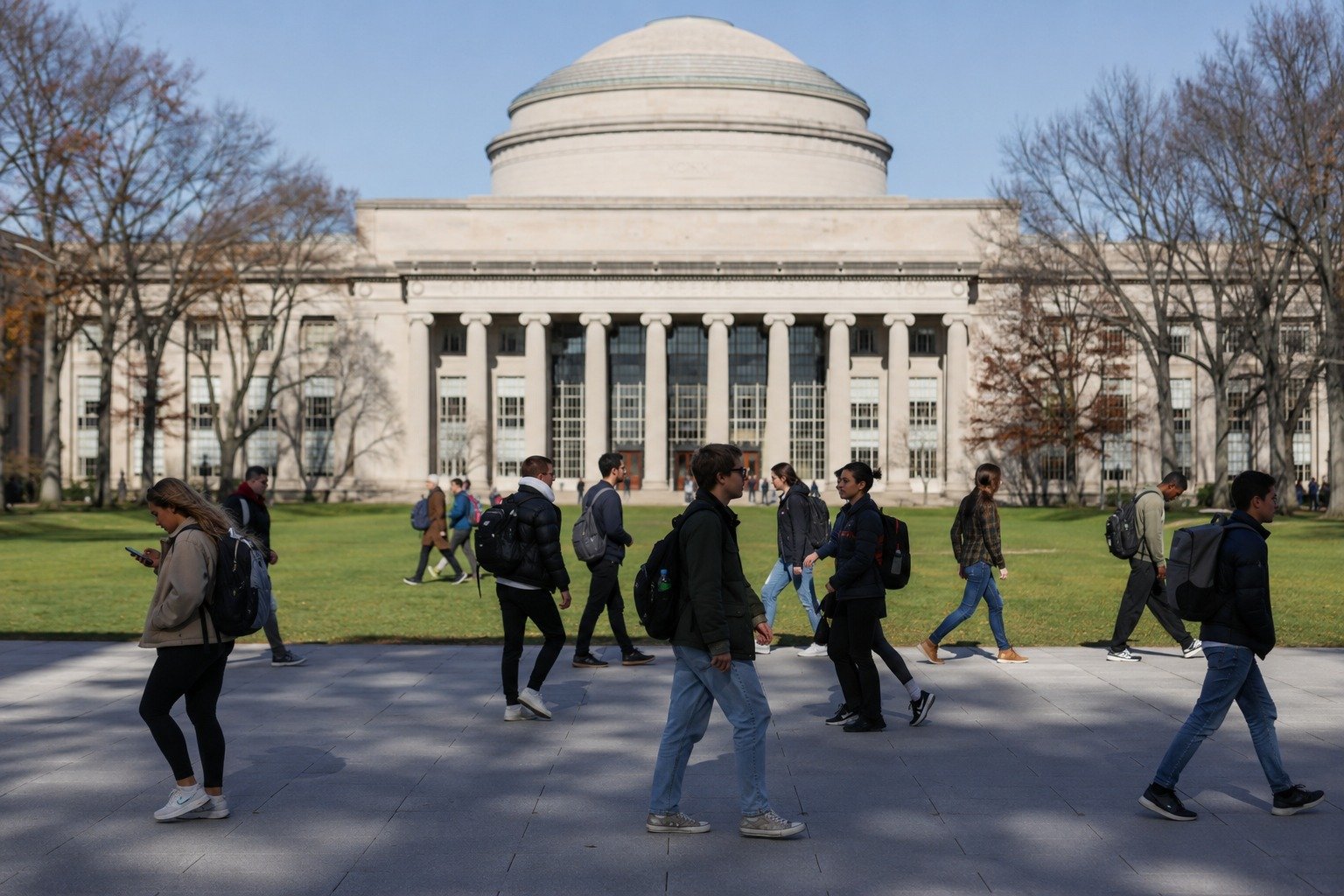
You do not need to be admitted to the Massachusetts Institute of Technology, pay a cent of tuition, or even fill out an application. Through a free program called MIT OpenCourseWare, the materials behind more than 2,500 of the university’s courses sit online, open to anyone with an internet connection. And MIT says the effort has reached an astonishing milestone: it has impacted the lives of more than 500 million people worldwide.
A Quarter-Century of Open Knowledge
MIT OpenCourseWare, often shortened to OCW, is not a new experiment. The university launched it back in 2001 with a then-radical idea: publish the teaching materials from its courses on the open web, free of charge, for the entire world to use. Today the program operates as part of MIT Open Learning, the institute’s broader push to widen access to education beyond its Cambridge campus.
Over roughly 25 years, that catalog has grown to span the undergraduate and graduate curriculum. What started as a handful of syllabi has become one of the largest collections of openly licensed university course material anywhere.
What You Actually Get
It is worth being precise about what OpenCourseWare offers, because the scale of it can be easy to misread. The site provides course materials from more than 2,500 MIT courses: syllabi, lecture notes, problem sets, past exams, and in many cases full video lectures. There is no paywall, no login requirement, and no admissions committee deciding whether you are good enough to see it.
What it is not is just as important. These are materials you study on your own. They are not interactive classes with an MIT professor grading your work, and completing them does not earn you course credit or an MIT degree. Think of it as being handed the same notes, assignments, and lectures an MIT student works through — without the classroom, the deadlines, or the diploma at the end.
That distinction matters, but it does not shrink the achievement. For a curious teenager in a rural town, a worker trying to retrain for a new career, or anyone who could never afford a school like MIT, OpenCourseWare is a door that simply did not exist a generation ago.
Half a Billion People Reached
The headline number — more than 500 million people — comes from MIT itself, which says OpenCourseWare resources have impacted that many lives worldwide. It is a cumulative figure built up over the program’s roughly 25 years, not a count of people currently enrolled or a single graduating class. In other words, it reflects the total reach of the materials across two and a half decades, from one-time visitors to lifelong learners.
The program’s footprint shows up in other ways too. The MIT OpenCourseWare YouTube channel alone has roughly 5 million subscribers, with viewers working through everything from introductory calculus to computer science. Lecture series from the channel have become a quiet staple for students and self-learners around the globe.
What This Means for Americans
The timing of this story lands hard. The cost of higher education in the United States keeps climbing, and a degree increasingly comes attached to years — sometimes decades — of debt. Against that backdrop, one of the most prestigious universities on earth decided that the knowledge itself should not be locked behind a tuition bill.
It raises an uncomfortable but fair question. If MIT can give away the materials behind 2,500 courses and reach hundreds of millions of people, why is open access still the exception rather than the rule? For learners shut out by cost, geography, or circumstance, programs like this are not a substitute for a full education — but they are proof that the barriers are not as fixed as they often seem.
Stay informed on the stories that matter most. Follow Your Daily Updates on Facebook and bookmark yourdailyupdates.news for breaking news and analysis.