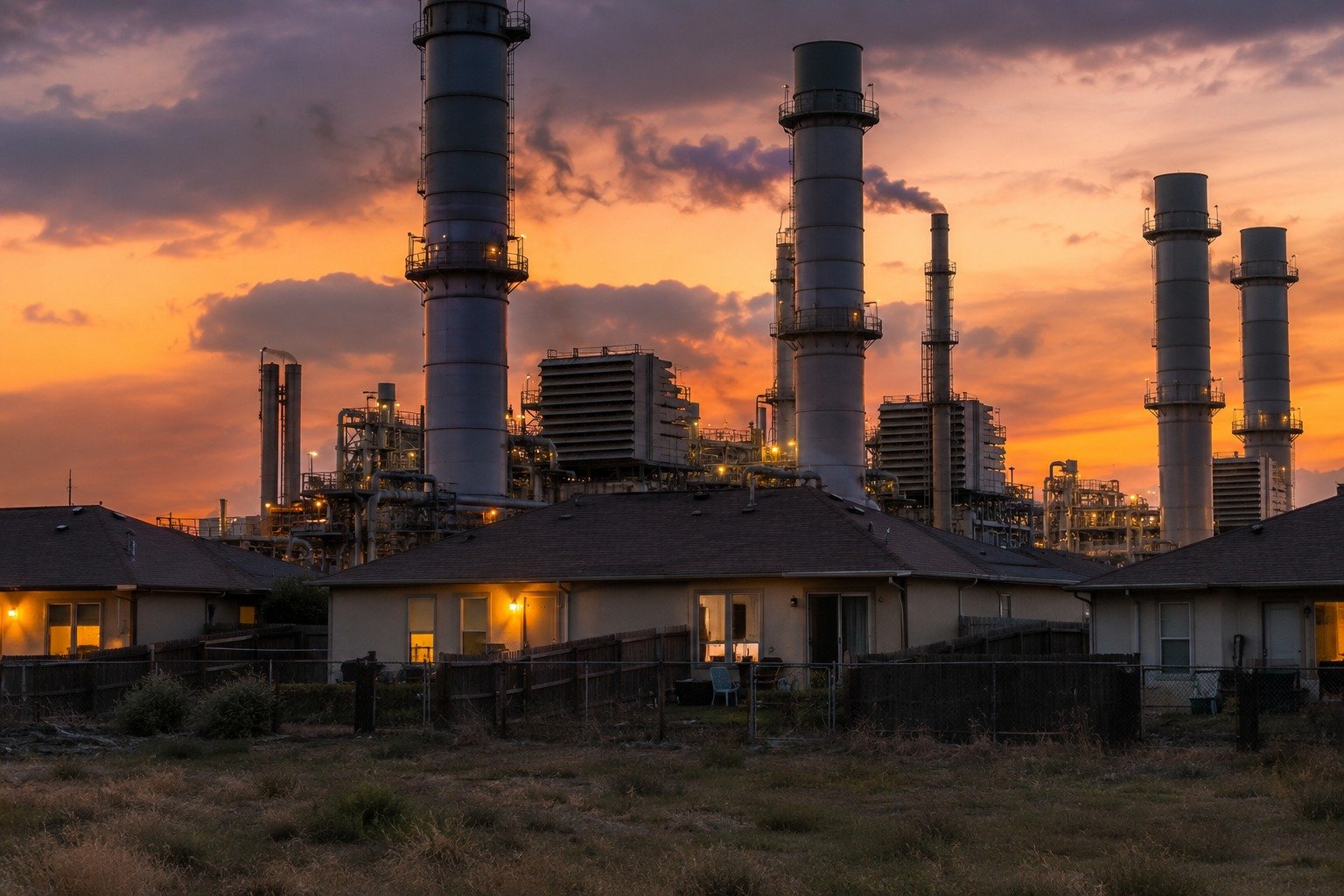
In the suburbs of Southaven, Mississippi, the sound never stops. Residents who once enjoyed quiet evenings say their neighborhood now hums and roars around the clock – and on June 9, 2026, they took that complaint to federal court, filing a class action lawsuit against Elon Musk’s xAI, SpaceX, and xAI subsidiary MZX Tech over the relentless noise and vibration pouring off dozens of gas turbines that power the company’s “Colossus” data center project.
For the families who brought the suit, this is not an abstract dispute about industrial policy. It is about whether they can sleep in their own homes. The case was filed in the U.S. District Court for the Northern District of Mississippi, and it names not one company but three – a detail that matters, because it puts the full weight of Musk’s AI ambitions, not just a single contractor, in the legal crosshairs.
A 24/7 Roar That Penetrates the Walls
The plaintiffs describe a constant roaring, a deep low-frequency rumble, and a persistent humming that pushes straight through the walls of their homes. Unlike ordinary traffic or construction noise, low-frequency sound is notoriously hard to block – closed windows and insulation do little to stop it. Residents say it is there in the middle of the day and there at three in the morning, an unbroken industrial drone they cannot turn off and cannot escape.
The turbines at the center of the case sit at a power plant in Southaven, a community just south of the Tennessee line. The Colossus project itself is tied to the broader Memphis-area push to build out massive computing power for artificial intelligence – an effort Musk has publicly framed as building the future. But the plant being sued over is firmly in Mississippi, and it is Mississippi families who say they are paying the price for it.
What the Lawsuit Claims
The complaint lays out several claims: public nuisance, negligence, intentional or negligent infliction of emotional distress, and lost property value. In plain terms, the residents argue the companies created an ongoing harm that interferes with their basic ability to use and enjoy their homes – and that the operation has dragged down what those homes are worth.
That property-value claim cuts to the heart of the grievance. These are ordinary homeowners watching the value of their single largest investment erode while a trillion-dollar AI buildout hums in their backyard. The lawsuit deliberately avoids pinning down an exact turbine count – public reports have ranged widely – and instead points to the sheer scale of the installation: dozens of gas turbines running to feed an enormous, power-hungry data operation.
A Second Front: The NAACP and the Clean Air Act
The noise suit is not the only legal challenge the operation faces. A separate lawsuit brought by the NAACP alleges that the turbines were run in violation of the Clean Air Act, operating without the proper air permits. That case raises a pointed question that hangs over the whole project: who signed off on letting dozens of gas turbines run next to a residential neighborhood, and what protections – if any – were put in place for the people living beside them?
Together, the two suits frame a community caught between two harms at once – the relentless noise pressing into their homes, and the air being pushed out of the turbines they never agreed to live beside. For a region that has long borne more than its share of industrial burden, the combination has struck a nerve.
What This Means for Americans
The Southaven case is a preview of a fight playing out across the country as the AI boom collides with the places where its infrastructure actually gets built. Data centers and the power plants that feed them have to go somewhere, and too often that somewhere is a working-class neighborhood with little say in the matter. The promise is jobs and progress; the reality, for the people next door, can be a wall of noise and a cloud of exhaust. When a company worth a fortune builds in your backyard, the question is simple but urgent: who is accountable when the people who live there are left to absorb the cost?
Stay informed on the stories that matter most. Follow Your Daily Updates on Facebook and bookmark yourdailyupdates.news for breaking news and analysis.