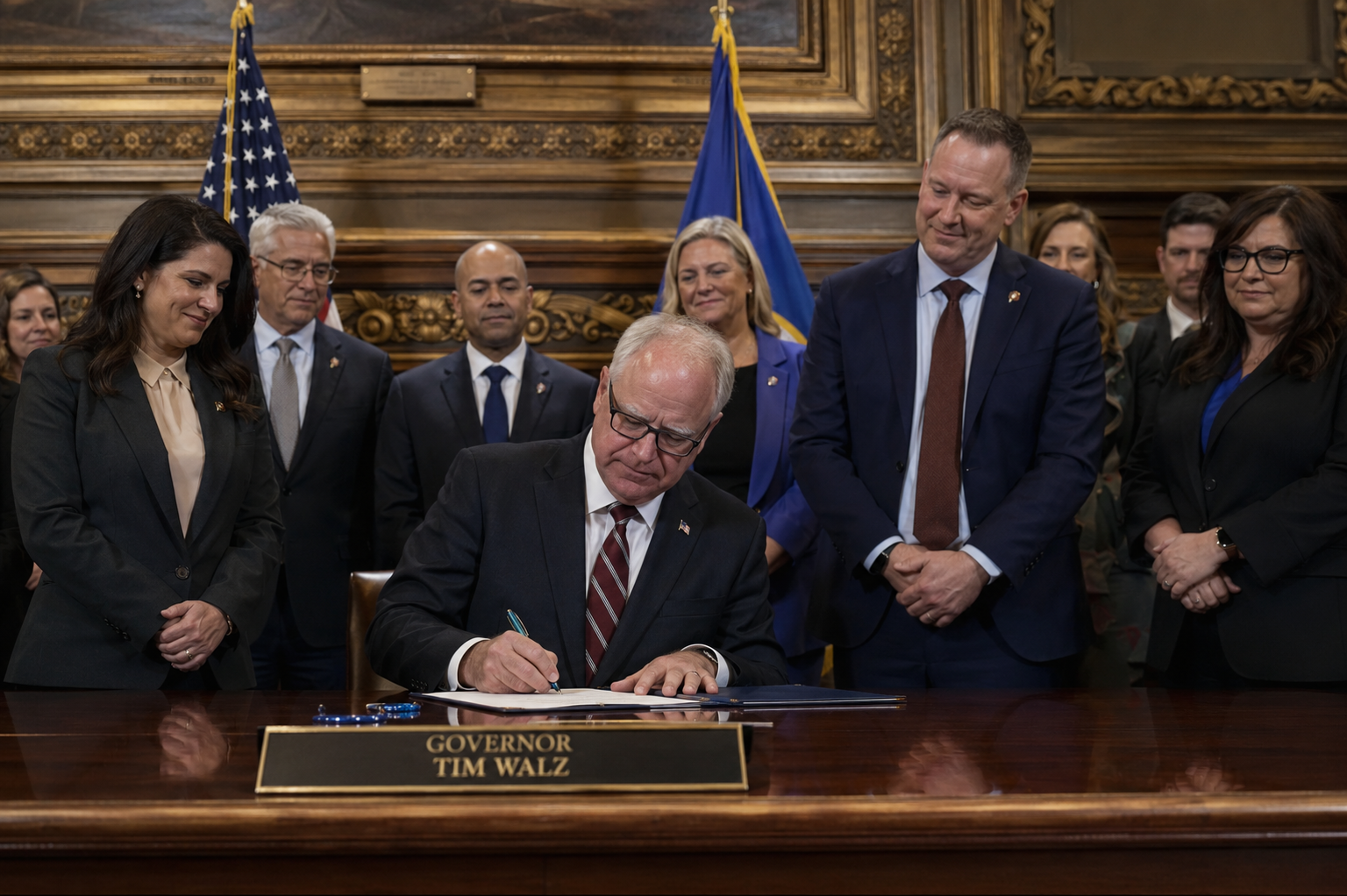
Minnesota Governor Tim Walz signed SF4760 into law on May 18, 2026, making Minnesota the first state in America to outright ban prediction markets. Trading on platforms like Kalshi and Polymarket is now illegal within state borders, and violators face felony charges starting August 1. Within hours of the signing, the federal government filed suit to stop it.
What Minnesota Just Did
SF4760 doesn’t just regulate prediction markets — it bans them entirely. The law prohibits wagering on a sweeping range of outcomes including sports results, deaths of public figures, war, and popular culture events. Any Minnesota resident who trades on platforms like Kalshi or Polymarket after August 1 faces felony criminal charges.
The bill passed amid growing public alarm that prediction markets had crossed a line — from legitimate financial instruments into something more like unregulated gambling operating beyond the reach of state consumer protection laws. Supporters argued that Minnesotans deserved protection that the federal government had refused to provide, and that allowing real-money betting on deaths and military conflicts had serious moral implications regardless of how markets are legally classified.
The Federal Government Moved Immediately
The Commodity Futures Trading Commission didn’t wait. The CFTC filed suit against Minnesota within hours of the signing, arguing that prediction markets fall exclusively under federal jurisdiction. The agency’s position is unambiguous: Congress established a comprehensive regulatory framework for financial derivatives decades ago, and states cannot override it.
The Justice Department went further. In a statement accompanying the lawsuit, DOJ attorneys declared that “Minnesota’s attempt to criminalize derivatives contracts is precisely what Congress sought to prevent.” The CFTC called it the most aggressive state action against federally regulated markets in more than 50 years — a remarkable claim that underscores just how seriously Washington is taking this challenge.
The Constitutional Question at the Center of It All
The legal fight comes down to a single question that courts have wrestled with for decades: when federal law covers a field, can states still regulate — or criminalize — the same conduct?
The CFTC says yes, federal law preempts state gambling regulations when the subject matter involves financial derivatives. Their argument is that Congress gave the CFTC exclusive authority over instruments like prediction market contracts, and that authority cannot be carved out by state legislatures, regardless of how they choose to classify the activity.
Minnesota’s counterargument is rooted in states’ rights and public protection. The state’s position is that its residents deserve consumer protections that the federal government has not provided — and that the people of Minnesota, through their elected representatives, have the authority to decide what kinds of wagering are acceptable within their borders. In the absence of meaningful federal action on the societal harms of prediction markets, Minnesota is stepping into the void.
How Prediction Markets Went Mainstream
Prediction markets exploded into public consciousness during the 2024 election cycle, when millions of Americans began watching political odds on Kalshi and Polymarket in real time — often treating market prices as more reliable than polls. Platforms reported tens of millions of dollars in election-related trading, and mainstream media began citing prediction market odds alongside traditional polling data.
What began as a niche financial tool used by economists and traders to aggregate probabilistic information has become a mainstream phenomenon. Markets now cover not just elections but deaths, wars, celebrity events, and economic indicators. The speed of that expansion outpaced both state and federal regulatory frameworks, leaving a legal gray zone that Minnesota has now chosen to resolve by elimination.
What This Means for Americans
If the federal courts side with Minnesota, other states could follow with their own bans, effectively fragmenting the U.S. prediction market industry by geography. If the CFTC wins, it sets a clear precedent that states have no authority to restrict federally regulated financial instruments — even ones that look a lot like gambling to the average person. Either way, the outcome of this lawsuit will determine whether Americans in every state have access to these platforms, or whether the map becomes a patchwork of what’s legal and where.
Stay informed on the stories that matter most. Follow Your Daily Updates on Facebook and bookmark yourdailyupdates.news for breaking news and analysis.