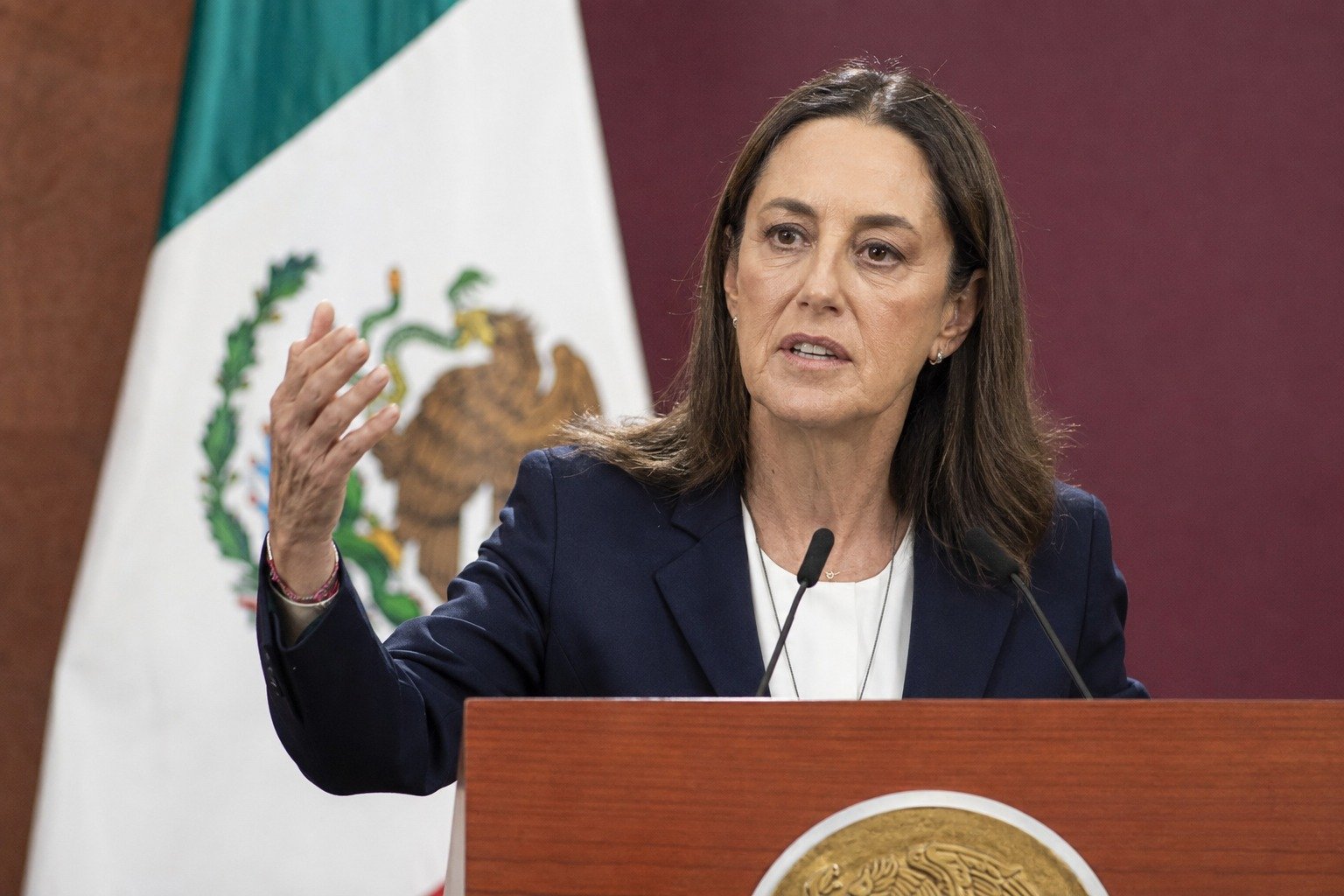
Mexico is in the middle of one of the most ambitious public health projects in the hemisphere, and this week it reaches the country’s oldest residents. From August 17 to 22, adults 65 and older and people with disabilities can register for the Credencial del Servicio Universal de Salud — the single health ID card at the center of President Claudia Sheinbaum’s plan to merge Mexico’s separate public health systems into one national network.
What the Decree Actually Does
Sheinbaum signed the decree creating the Servicio Universal de Salud on April 7, 2026. It was published in the Diario Oficial de la Federación on April 17. It is a presidential decree — an executive framework — not a law passed by Congress, and that distinction matters both for how quickly it can be built and for how easily a future administration could unwind it.
It also does not conjure free care out of nothing. Mexico already provides free public care to people outside formal employment through IMSS-Bienestar. What the decree does is different, and in some ways harder: it orders the country’s separate public health institutions to start behaving like a single system.
Four Systems, One Network
For decades, Mexican health care has been divided by where you work. IMSS covers private-sector workers. ISSSTE covers government employees. Pemex runs its own medical service for oil workers. IMSS-Bienestar serves everyone else. Each has had its own hospitals, its own records and its own budget. A patient’s employer effectively decided which hospital door they were allowed to walk through, and being turned away from the nearest facility because it belonged to the wrong institution was an ordinary occurrence.
The decree folds those four into one coordinated network, with the stated goal that any Mexican can be treated at any public facility regardless of which institution they are affiliated with.
Nothing Changes Overnight
This is the part that gets lost in the headlines. The shared cross-institution services do not begin operating until January 1, 2027. Even then, they start narrow: emergencies and high-priority care, specifically high-risk pregnancy, heart attack, stroke and breast cancer. The second half of 2027 is when the shared network expands to radiotherapy, laboratory work and diagnostic imaging.
In other words, the framework exists now; the care-sharing it promises is still more than four months away, and it will arrive in stages rather than all at once.
The Plumbing Nobody Talks About
Two unglamorous mechanisms have to work before any of this functions. The first is shared patient databases — records that can be read across institutions, with the patient’s authorization. The second is a cámara de compensación, a clearinghouse that moves money between institutions so that no hospital is left absorbing the cost of treating a patient who is formally somebody else’s responsibility.
Those two pieces are the difference between a real network and a press release. Cross-institution care only works if the receiving hospital can see the patient’s history and get paid for the visit.
The Registration Drive
Credentialing began April 13 to 30, 2026, with people aged 85 and older. The broader phase opened May 27 and runs through November 14, 2026, across 2,136 Bienestar modules in 24 states. The current window, August 17 to 22, covers adults 65 and older and people with disabilities.
The target population is effectively the whole country, but enrollment is very much mid-rollout. The card is being issued in waves, and the registration drive does not close until November.
Hospitals Going Up
On August 16, Sheinbaum inaugurated the IMSS-Bienestar General Hospital in Ciudad Madero, Tamaulipas, a facility expected to serve roughly 538,000 people. At the opening she repeated her commitment to universal care. Her administration says it has now opened 32 hospitals across IMSS, IMSS-Bienestar and ISSSTE.
None of this means Mexico’s public hospitals have solved their problems. Shortages of staff, medicine and equipment have been persistent and well documented, and a decree does not fix a supply chain. But the direction of travel is unambiguous.
What This Means for Americans
The comparison writes itself, and it is not flattering. A country with a fraction of the wealth of the United States is spending this decade methodically knitting its public health system together, issuing every resident a card, and building the financial machinery to make hospitals treat whoever walks in. Over the same period, the United States has moved in the opposite direction — narrowing who qualifies for Medicaid and leaving enormous numbers of people underinsured or one diagnosis away from financial ruin. The obstacle here has never been that universal coverage is technically impossible. It is that it has not been chosen.
Stay informed on the stories that matter most. Follow Your Daily Updates on Facebook and bookmark yourdailyupdates.news for breaking news and analysis.