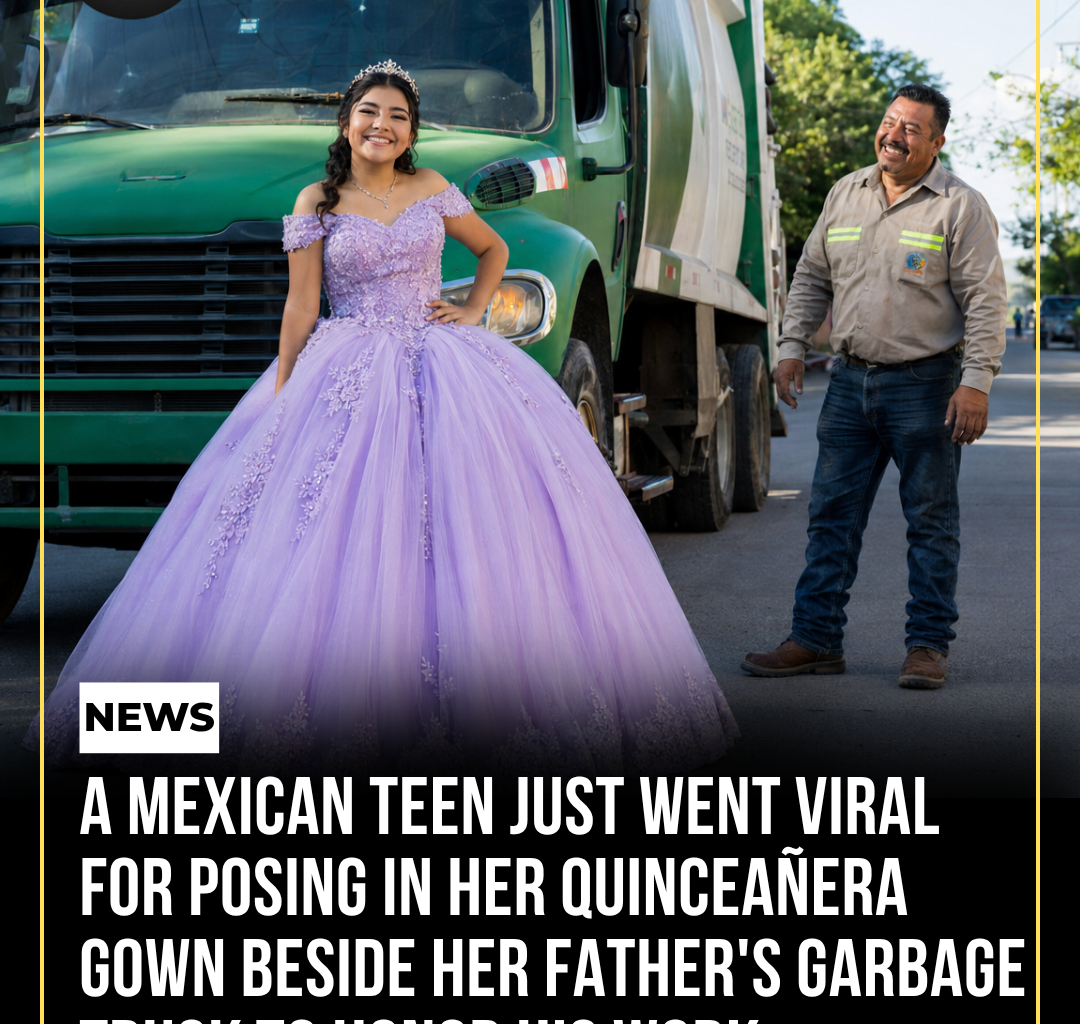
In December 2023, a teenager named Yukari slipped on a lavender quinceañera gown, walked out to the streets of El Mante, Tamaulipas — and asked the photographer to set up next to her father’s garbage truck. Not as a joke. Not by accident. Because that truck was exactly where she wanted to be.
The Photo That Stopped Mexico
A quinceañera is one of the most significant milestones in Latin American culture — a young woman’s fifteenth birthday celebration marking her transition into adulthood. Families save for years. The dress, the venue, the music, the cake — it all adds up. For many families, it represents a genuine sacrifice.
Yukari knew exactly what that sacrifice looked like. Her father had driven a garbage collection truck through the streets of El Mante for years. Every peso that went into her gown, her party, her celebration came from that work. So when it came time for photos, she didn’t want a garden or a ballroom or a scenic overlook. She wanted the truck. She wanted him.
What the Photos Showed
The images are striking. Yukari stands beside the garbage truck in full quinceañera attire — a floor-length lavender ball gown, hair styled, every detail of the celebration on display. Her father stands next to her in his work uniform, the truck bearing the words “Dios es amor” — God is love — painted on its side. Yukari made sure those words were in every frame.
The photos weren’t professionally staged in the traditional sense. There was no glamorous backdrop, no rented venue, no manicured garden. Just a young woman, her father, and the machine that built her life. That was the point.
The Response Was Immediate
When the photos spread across Mexican social media in December 2023, the reaction was overwhelming. Millions of people shared them. Comments poured in from people who recognized something deeply personal in the image — a working parent, a child who saw them clearly, a moment of dignity in work that often goes unnoticed.
The response reached Elektra México, one of the country’s largest electronics and home goods retailers. The company tracked Yukari down and gave her a new laptop for school — a gesture that matched the spirit of what she had done. Her story had moved the country, and someone wanted her to know it.
Her mother captured the whole thing simply: “She knows the party came from there.” That was it. No speech. No lesson required. Yukari already understood.
Why This Hit So Hard
There’s a category of work that keeps cities running — garbage collection, janitorial work, warehouse jobs, delivery routes — that most people spend their lives not thinking about. It’s the kind of labor that disappears the moment it’s done well. Clean streets, full shelves, packages at the door. Nobody claps. Nobody notices.
Yukari’s photos did something rare: they made that work visible. Not as a statement, not as a social media campaign, not as political commentary. Just as a daughter saying, in the most public way she could think of, that her father’s labor deserved to be in her most important photographs.
What This Means
A lot of people in the United States grew up with a parent who worked a job like that. A route driver. A night shift worker. Someone who came home tired in ways they couldn’t always explain. For those people, Yukari’s photos aren’t just a feel-good story out of Mexico — they’re a mirror. She did what many of us never quite got around to doing: she said, out loud and on camera, that it mattered.
Stay informed on the stories that matter most. Follow Your Daily Updates on Facebook and bookmark yourdailyupdates.news for breaking news and analysis.