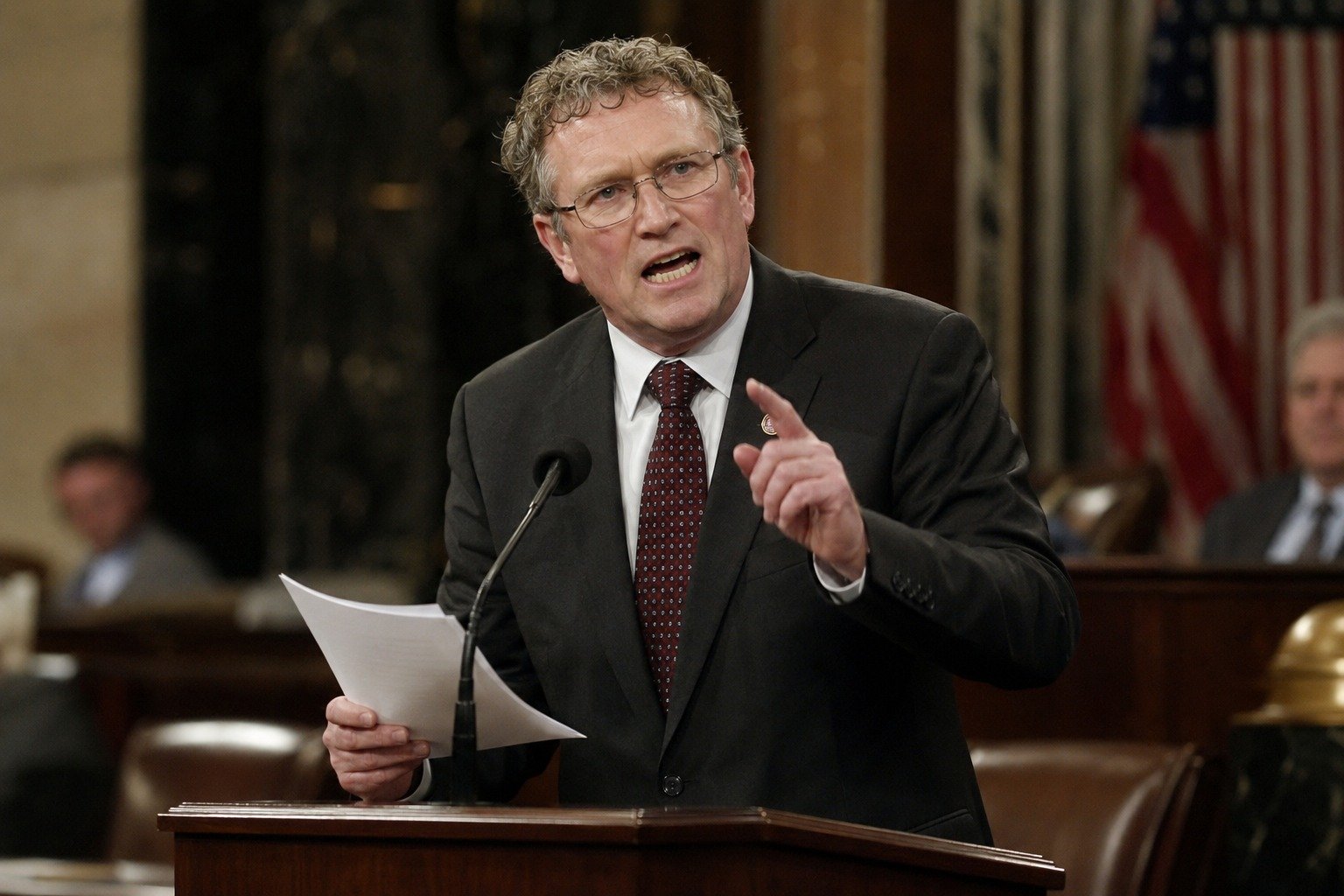
Rep. Thomas Massie (R-KY) took the House floor and did something federal prosecutors had spent months trying to prevent — he named names. Specifically, three men whose identities the Department of Justice had blacked out of the Epstein files with no explanation, no charges, and no public accountability.
The Redactions That Congress Couldn’t Ignore
Jeffrey Epstein’s death in federal custody in 2019 left a gaping hole in one of the most significant criminal investigations in modern American history. The financier had spent decades cultivating relationships with some of the world’s most powerful and wealthy men — relationships that federal investigators documented in extensive detail. But when the public finally began to see those files, critical names had been blacked out, with no explanation from the DOJ as to why and no indication that charges were coming.
For years, lawmakers on both sides of the aisle have demanded transparency. Epstein died with a vast network of alleged co-conspirators still unaccounted for, and the Justice Department’s silence on the matter has fueled years of public suspicion about who was being protected — and why.
What Massie and Khanna Found at the DOJ
Massie and Rep. Ro Khanna (D-CA) were granted access to review unredacted portions of the Epstein files at the Justice Department. What they found was damning: at least six individuals had been identified by investigators as “likely incriminated” by the evidence — and every single one of those names had been redacted in the public versions of the documents. No charges. No explanation from the DOJ. Just black boxes where names used to be.
After reviewing the files, Massie made the decision to walk to the House floor and read three of those names publicly — protected by the constitutional speech and debate clause that shields members of Congress from legal liability for statements made during legislative proceedings.
The Three Names Massie Read Aloud
Leon Black — the billionaire co-founder and former CEO of Apollo Global Management, one of the world’s largest private equity firms. Black had previously acknowledged paying Jeffrey Epstein $158 million in consulting fees between 2012 and 2017, even as Epstein was a registered sex offender. Black stepped down from Apollo in 2021 after the payments became public.
Jes Staley — the former chief executive of Barclays bank. Staley had a documented relationship with Epstein dating back to his time at JPMorgan Chase. JPMorgan itself later settled a civil lawsuit that alleged the bank knowingly facilitated Epstein’s trafficking by maintaining the financier as a client for over a decade after his 2008 conviction.
Leslie Wexner — the billionaire founder of L Brands and Victoria’s Secret. Wexner’s connection to Epstein is among the most extensively documented of all Epstein’s associates. He gave Epstein a power of attorney over his financial affairs, transferred ownership of his Manhattan townhouse to Epstein, and provided access to his private aircraft for years before the relationship reportedly ended in the early 2000s. Wexner has maintained he was deceived by Epstein and cut ties once he learned of the allegations.
No charges have been filed against any of the three men in connection with the Epstein files.
Congress Demands Answers
Massie’s floor speech immediately went viral, generating millions of views and reigniting national debate about the scope of the Epstein investigation and why so few of his alleged associates have faced legal consequences. Both conservative and progressive commentators called the move long overdue.
The DOJ has not issued a public statement explaining why these specific names were redacted. Massie is now demanding a formal response from the Justice Department — either an acknowledgment that the redactions were improper, or a legal justification for continuing to withhold the names of individuals identified as “likely incriminated” from elected members of Congress. Khanna has joined the demand, making this a rare and notable bipartisan effort on a politically charged issue.
What This Means for Americans
The Epstein case represents one of the most consequential unanswered questions in modern American justice — a decades-long criminal network that allegedly reached into the highest levels of wealth and power, and a DOJ that has declined to explain why so few people have faced accountability. Massie’s floor speech didn’t resolve those questions. But it forced them back into the center of the national conversation — and put real names to the redactions that millions of Americans have been demanding answers about for years.
Stay informed on the stories that matter most. Follow Your Daily Updates on Facebook and bookmark yourdailyupdates.news for breaking news and analysis.