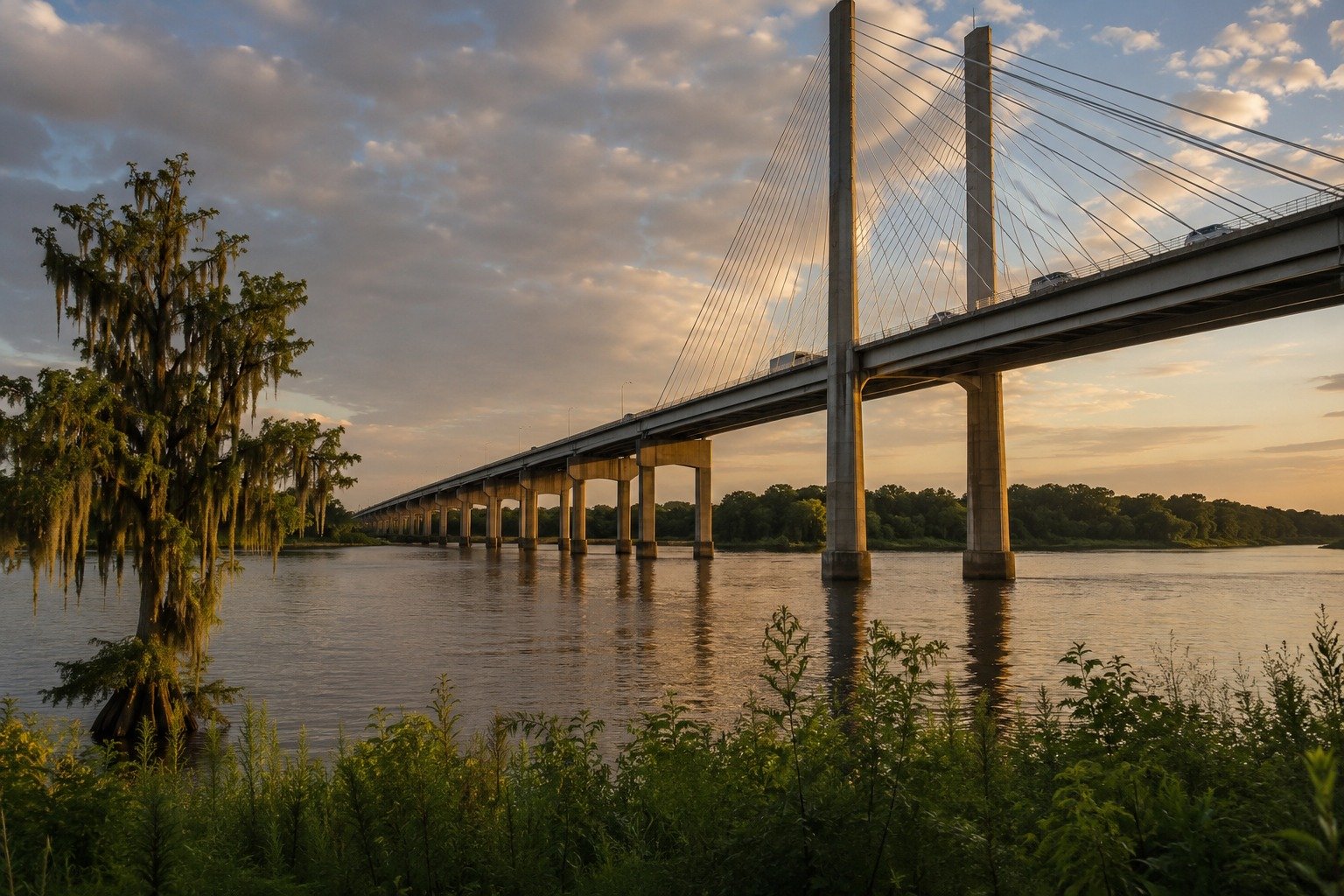
A proposal to name a new Louisiana bridge after President Donald Trump has failed, ending the legislative session without the honor its sponsor had pushed for. House Bill 221 would have officially designated a planned bridge as the “President Donald J. Trump Expressway,” but it never reached a vote in the state Senate before lawmakers adjourned on June 1, 2026.
The bill was authored by Rep. Michael Echols, a Republican from Monroe, who framed the naming as a tribute to the president. It cleared the Louisiana House of Representatives on a 68-26 vote, a comfortable margin that gave supporters momentum. But in the end, the calendar proved to be the bill’s undoing.
How the Bill Stalled
Naming a piece of public infrastructure may sound routine, but in Louisiana it still requires a full trip through the legislative process. A bill must pass both the House and the Senate before it can be signed into law. HB 221 made it through the first chamber but ran out of road in the second.
The Senate never brought the measure to the floor for a vote. When the legislative session formally ended on June 1, every bill that had not completed the process simply died. There was no dramatic final vote and no veto — the bill expired quietly when time ran out. For supporters, that meant all the effort that carried it through the House counted for nothing once the session closed.
A Divided Vote
Even in the House, where the bill passed, the 68-26 tally showed the issue was not unanimous. Roughly a quarter of voting members opposed it, a reminder that naming infrastructure after a sitting politician can stir disagreement regardless of party strength in a chamber.
Echols defended the measure as a way to honor the president. Opponents raised a mix of concerns, including questions about the priority of the bill amid a packed legislative calendar and the cost and appropriateness of attaching a current political figure’s name to a public roadway. Those debates are common whenever lawmakers consider memorial namings, and they often surface most sharply when the honoree is an active, polarizing public figure rather than a historical one.
What Happens Next
For now, the planned bridge will keep its working name. Because the bill failed rather than being formally rejected, the door is not permanently closed. A lawmaker could refile a similar measure in a future legislative session and start the process over from the beginning.
Whether that happens depends on the appetite of Echols or other legislators to revisit the idea. Memorial naming bills are frequently reintroduced after stalling once, and a sponsor who believes the votes are there in both chambers may try again when the legislature reconvenes.
What This Means for Americans
The episode is a small but clear illustration of how the legislative process actually works. A bill can win a decisive vote in one chamber and still go nowhere if the other chamber never takes it up before time expires. For everyday residents, it is a reminder that headlines about a bill “passing the House” do not mean a measure has become law. Both chambers have to act, and the clock is always running.
Stay informed on the stories that matter most. Follow Your Daily Updates on Facebook and bookmark yourdailyupdates.news for breaking news and analysis.