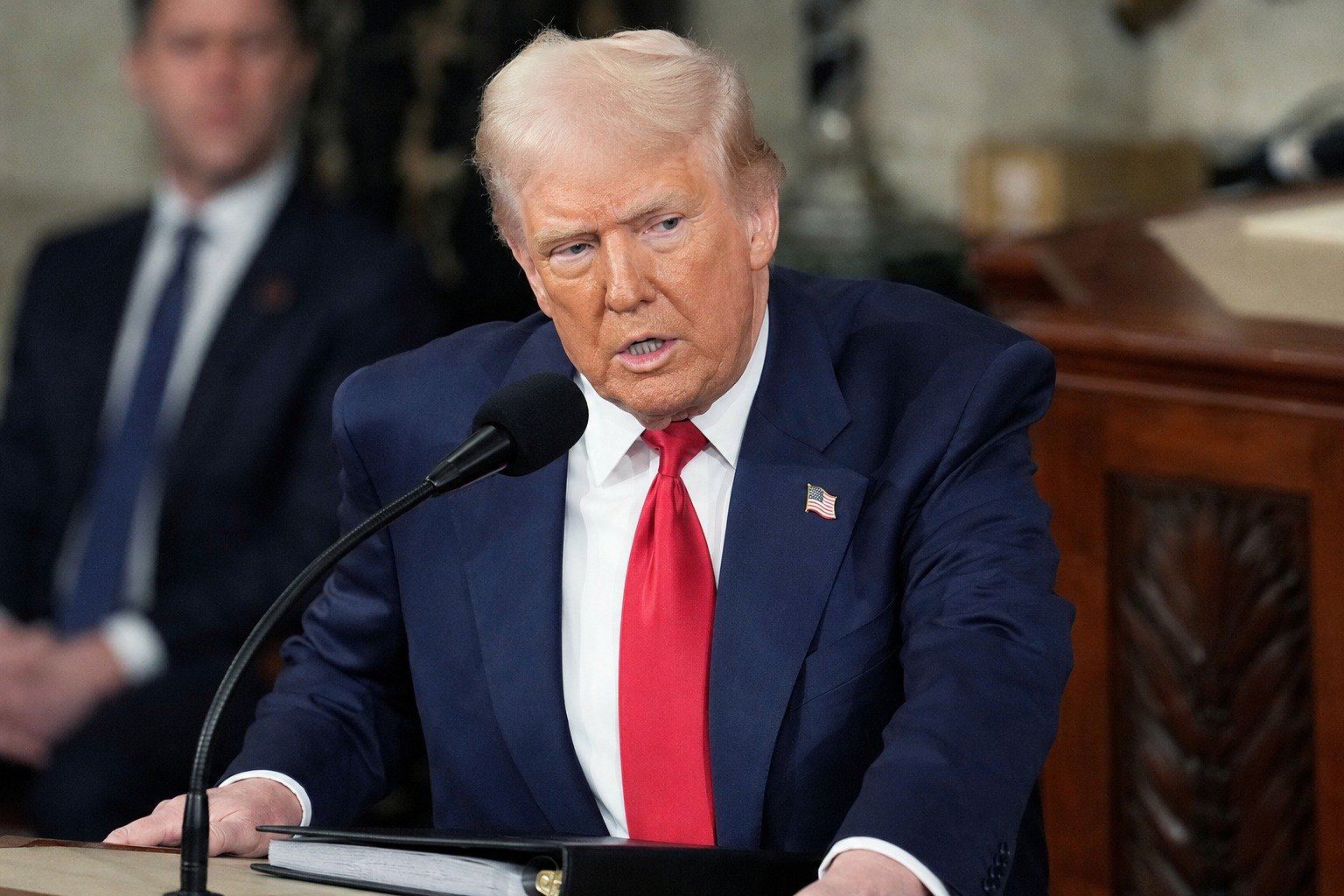
A formal accountability effort against President Donald Trump is now officially on the record in Congress. On April 7, 2026, Rep. John Larson (D-CT) introduced 13 articles of impeachment against the president, a sweeping resolution drafted with the help of longtime government-accountability advocates Ralph Nader and Bruce Fein.
Before going further, an important clarification: these articles have been introduced, not passed. No vote has been held on them, and Trump has not been impeached. This is a single member’s resolution laying out a case — a marker that places a set of alleged abuses of power into the Congressional Record. It is not, at this stage, an action adopted by the House of Representatives.
What the 13 articles allege
The resolution lays out a broad set of accusations. According to the articles, the charges center on three primary themes: the circumvention of Congress’s constitutional war powers, the militarization of domestic law enforcement, and detentions and deportations the resolution describes as driven by race and politics.
Each of these areas has been the subject of intense public debate. The war-powers claim touches on the long-running tension between the executive branch and Congress over who has the authority to commit the country to military action. The law-enforcement claim raises questions about the appropriate boundary between civilian policing and military-style force. And the detentions-and-deportations claim speaks to one of the most contested areas of the administration’s record.
Who is behind the resolution
Rep. John Larson is a veteran Connecticut Democrat. The articles he introduced were drafted with assistance from Ralph Nader, the consumer-advocate and four-time presidential candidate, and Bruce Fein, a constitutional lawyer who served in the Reagan-era Justice Department and who has spent decades writing about executive overreach across administrations of both parties.
That pairing is notable. Fein in particular has a long history of arguing that presidents of both parties have steadily expanded executive power beyond constitutional limits — a framing that casts the resolution less as a partisan attack and more as a broader argument about the balance of power between the branches.
Introduced, not adopted — why the distinction matters
Introducing articles of impeachment is something any member of the House can do. It does not, by itself, trigger an impeachment. For a president to be impeached, the full House must vote to adopt articles by a simple majority; a Senate trial and a two-thirds vote to convict would follow. None of that has happened here.
In the current House, a resolution like this faces a steep path. Supporters argue that documenting the charges now has value regardless of whether leadership ever brings them to the floor — that putting the allegations into the official record is itself a form of accountability. Critics counter that it is a long-shot statement with no realistic route to passage.
A question for our readers
This is the kind of moment that tends to divide the country sharply. Some see a necessary check on a presidency they believe has crossed constitutional lines. Others see a doomed political gesture. Both reactions are worth taking seriously.
So we want to hear from you. Now that 13 articles of impeachment against President Trump have been formally introduced in Congress — but not voted on or passed — do you support them? Share your view, and tell us why.