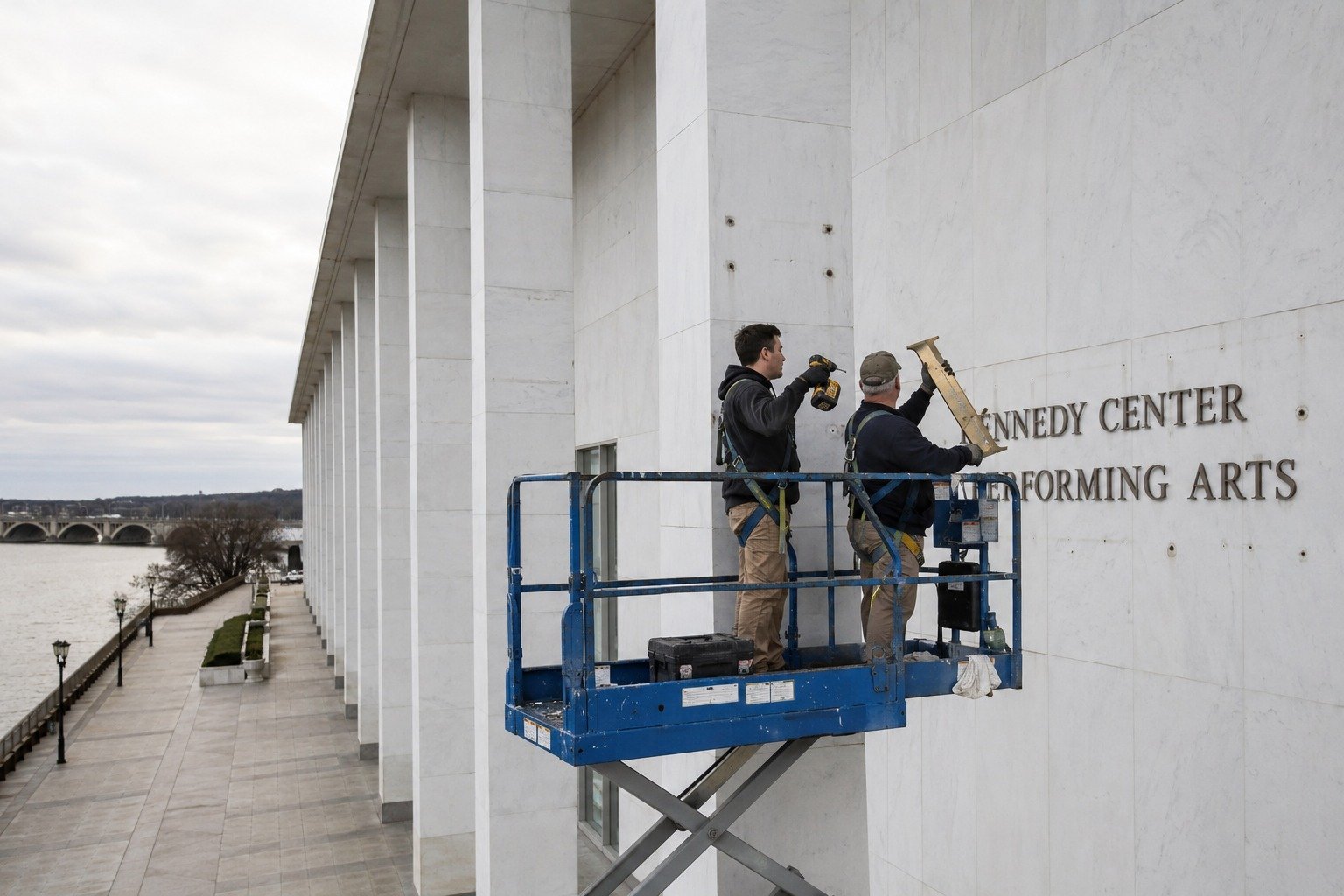
A federal judge has ruled that the Kennedy Center cannot legally carry President Donald Trump’s name, and the institution is already moving to comply. In an order handed down on Friday, U.S. District Judge Casey Cooper found that the Center’s board violated the law when it moved to attach Trump’s name to the historic Washington, D.C. performing arts venue. Within days, the Center’s general counsel sent a memo to staff directing them to begin stripping the President’s name from documents immediately, with a hard deadline of Friday, June 12, to finish the job.
What the Judge Ruled
Judge Cooper’s reasoning was direct: the Kennedy Center was created and named by Congress, and only Congress has the authority to change that name. The law establishing the venue, he wrote, makes clear that it is to be named for President John F. Kennedy and cannot bear any other formal name based on a board’s unilateral decision. A board, no matter how it is composed, simply does not have the power to rename a national landmark on its own.
The same ruling delivered a second blow. The judge also blocked a plan to temporarily close the Center’s doors for a major, yearslong renovation. For now, the building stays open, and the name on its walls and letterhead reverts to what Congress established decades ago.
The Memo to Staff
The fallout inside the institution was immediate. According to the memo from the Center’s general counsel, employees were told to immediately change email signatures, letterhead, and other documents to reflect the name as “The John F. Kennedy Center for the Performing Arts” or simply “Kennedy Center.”
Other changes are on a slightly longer leash, but not by much. Templates, forms, signage, brochures, and every page of the Center’s website must be updated no later than Friday, June 12. In practical terms, that means a frantic sweep across the institution to scrub the President’s name from anything that bears it before the deadline arrives.
How the Name Got There
The Kennedy Center has stood as one of the nation’s premier cultural institutions for generations, named in honor of the slain 35th president. The move to add Trump’s name marked a sharp departure from that tradition and triggered the legal challenge that ultimately reached Judge Cooper’s courtroom. The court found that the board overstepped its authority, setting up the rapid reversal now underway.
Reactions and Implications
The ruling has split opinion sharply. Supporters of the decision call it a clean win for the rule of law, arguing that no single board should be able to rename a federally chartered landmark without an act of Congress. To them, the judge simply enforced the plain text of the law that created the Center in the first place.
Critics see it differently, framing the outcome as a politically charged swipe at the President and questioning the timing and motives behind the legal push. The debate is unlikely to fade quickly, especially with the broader fight over control and direction of the institution still simmering in the background.
What This Means for Americans
Beyond the politics, the ruling is a reminder of a basic principle: the names on the country’s public landmarks are not casual decisions. They are set by law, and changing them is meant to require more than a board vote. For ordinary Americans who visit the Kennedy Center for concerts, theater, and national events, the building they know by name stays that way, and the legal guardrails around it have just been reinforced.
Stay informed on the stories that matter most. Follow Your Daily Updates on Facebook and bookmark yourdailyupdates.news for breaking news and analysis.