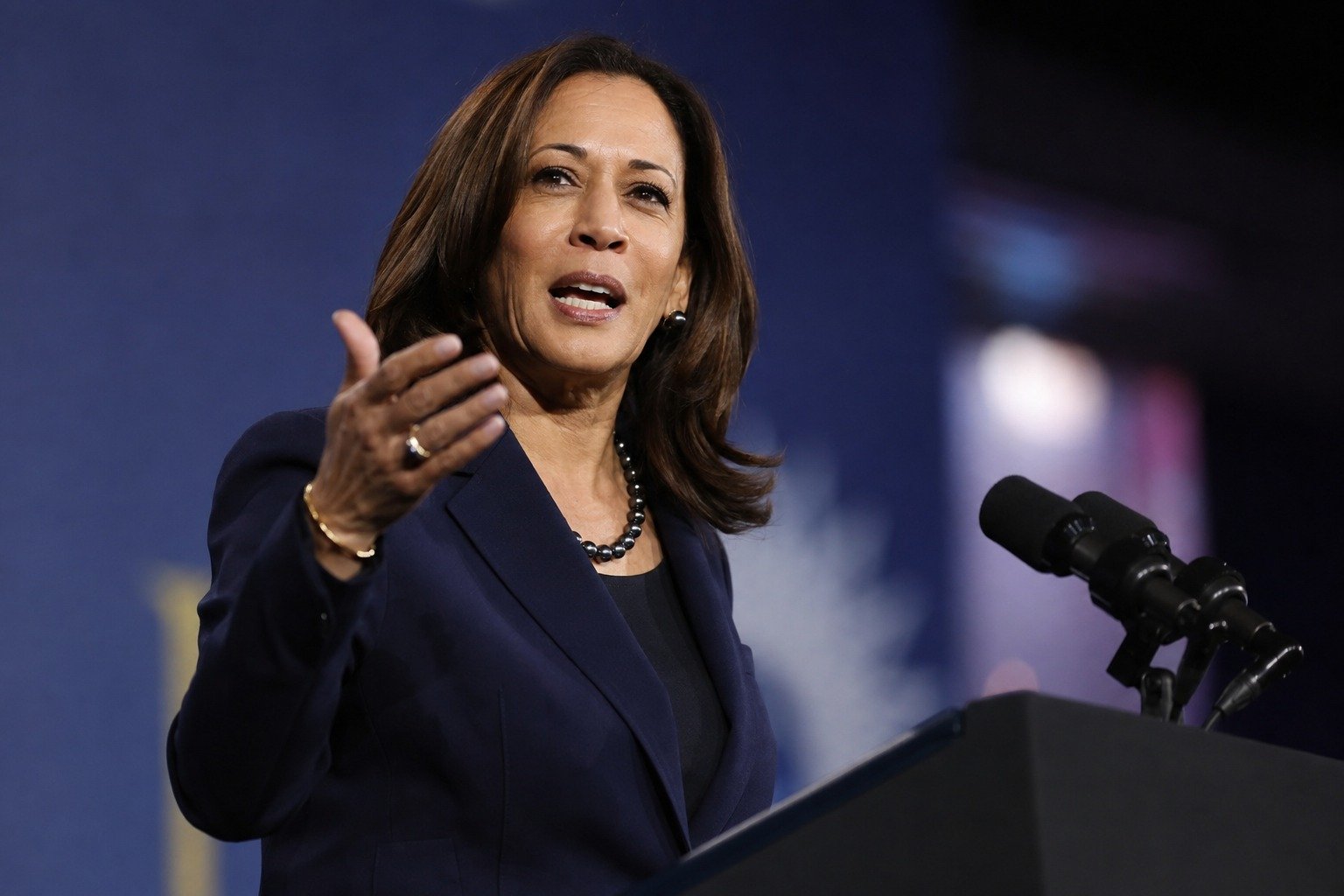
Kamala Harris has taken her most explicit stance yet on the future of the U.S. Supreme Court. Speaking at the National Urban League’s annual conference in Nashville in late July, the former vice president openly endorsed expanding the nation’s highest court from nine seats to 13 — a firmer position than she has ever staked out before.
“We need to revisit the point of expanding the court to 13 justices like we have 13 [circuit] courts,” Harris told the audience, tying the proposed number directly to the country’s 13 federal appeals circuits. It was a rare moment of specificity on an issue that has divided the Democratic Party for years.
A Shift From 2020
What makes the remarks notable is how far they go beyond where Harris stood five years ago. During the 2020 presidential campaign, when the idea of adding seats to the court surfaced, she would only say she was “open to that discussion.” There was no firm endorsement, no preferred number, and no clear rationale attached.
This time, the hedging was gone. By naming a specific figure — 13 — and grounding it in the structure of the federal judiciary, Harris framed court expansion not as a vague possibility but as an idea worth actively pursuing. For progressives who have pushed the issue for years, it was a signal that one of the party’s most prominent voices is now willing to go on the record.
What Harris Actually Said — And What She Didn’t
It is important to be precise about what happened. Harris was stating a personal position from a conference stage — not introducing legislation, and not announcing an official Democratic Party platform. There is no bill on the table, and no vote scheduled. Expanding the Supreme Court would require an act of Congress, a heavy lift that has never come close to passing.
The size of the Supreme Court is set by statute, not the Constitution, and it has changed several times in American history — ranging from as few as six justices to as many as ten before settling at nine in 1869. That means expansion is legally possible. Politically, it is another matter entirely, requiring majorities in both chambers and a president willing to sign it.
The Debate Behind the Number
Harris’s comments land in the middle of a years-long fight over a court that progressives argue has drifted sharply to the right. Critics on the left point to major rulings on abortion, voting rights, and the scope of presidential power as evidence that the bench is out of step with the public. Supporters of expansion say adding seats would rebalance a court they view as captured by one ideological faction.
Opponents see it very differently. They call the idea “court-packing” and warn that it would shatter long-standing judicial norms, inviting each future majority to reshape the court for partisan advantage. That tension — rebalancing versus escalation — is exactly the debate Harris has now stepped into with a firmer footing than before.
What This Means for Americans
The Supreme Court’s decisions reach into nearly every corner of daily life — from reproductive care and voting access to workplace protections and the limits of government power. When a figure of Harris’s stature calls for changing the size of that court, it is a signal that the structure of the judiciary itself, not just individual rulings, is back on the national agenda. Whether the idea gains traction will depend on voters, Congress, and the broader public appetite for reform.
For now, the significance is less about immediate policy and more about the conversation. By going further than she ever has, Harris has pushed Supreme Court expansion from the margins back toward the center of the political debate.
Stay informed on the stories that matter most. Follow Your Daily Updates on Facebook and bookmark yourdailyupdates.news for breaking news and analysis.