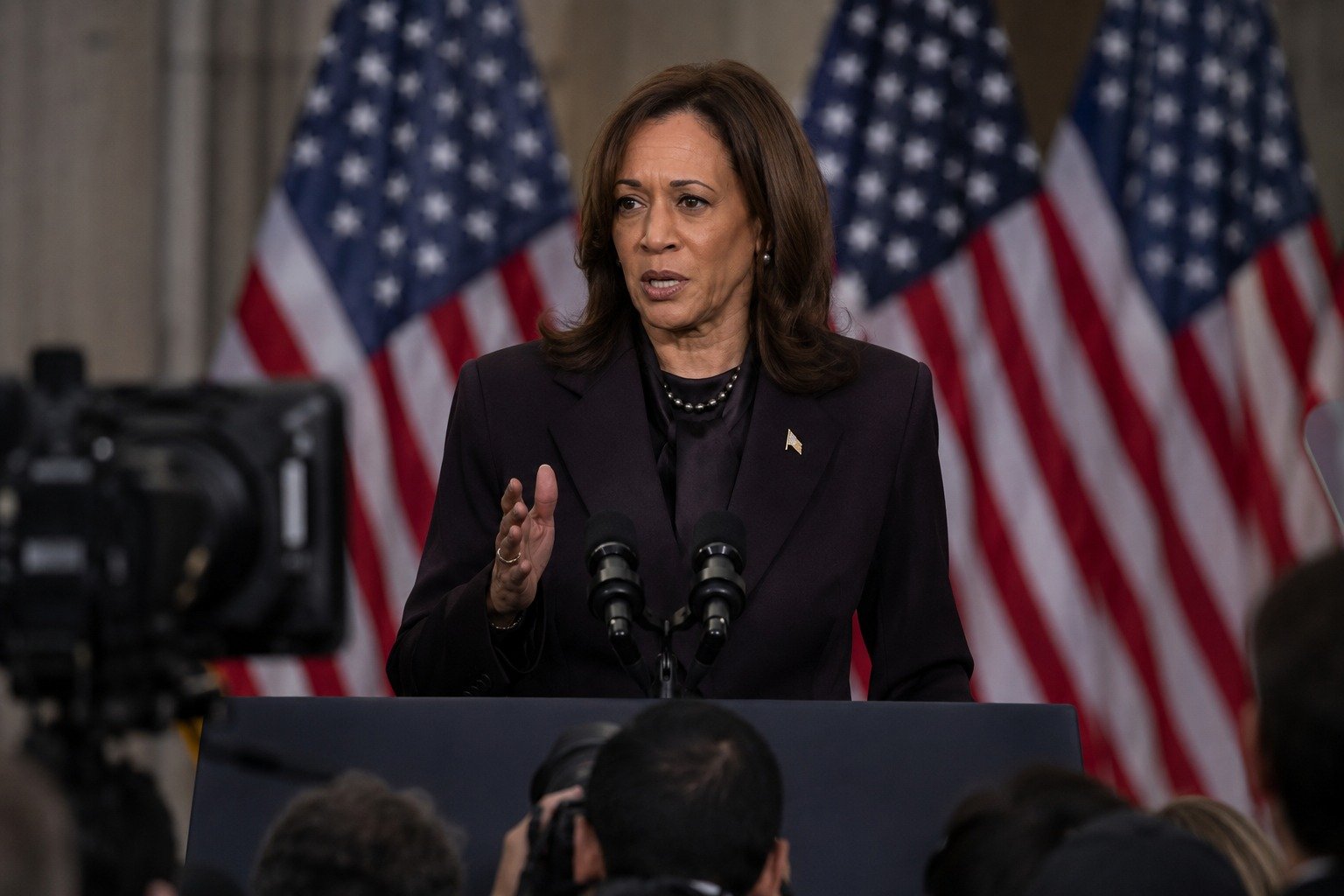
Former Vice President Kamala Harris has stepped back into the national spotlight in 2026, delivering a string of pointed public remarks about the current administration – and the White House and its allies are pushing back just as forcefully. The result is a high-profile back-and-forth that has supporters on both sides claiming the upper hand.
What Harris Said
In a series of appearances earlier this year, Harris characterized the administration as “corrupt, incompetent, and callous” and argued that the country “cannot normalize” the way it is currently being governed. The comments, reported by outlets including PBS, NBC News, and Variety, marked some of her sharpest language since leaving office.
On foreign policy, Harris was equally blunt. Pointing to recent U.S. military action abroad, she said the President had “dragged America into a war that we don’t want.” She framed her remarks as a warning against accepting the administration’s approach as routine, urging audiences to stay engaged rather than tune out.
It is important to note that these are Harris’s characterizations – her assessment of the administration’s record, not established findings. She has delivered the remarks at public events and in interviews, positioning herself as a leading voice for the opposition as the political calendar heats up.
How the White House and Republicans Responded
The administration and its Republican allies did not let the criticism stand unanswered. They defended the President’s record, arguing that he is cleaning up problems inherited from the previous administration and acting decisively on the world stage rather than hesitating in the face of difficult decisions.
Several Republicans went a step further, turning Harris’s criticism back on her. They contended that many of the very problems she is now describing took root during her own tenure as Vice President, and they cast her renewed public profile as an attempt to rewrite the story of an election she lost. In their telling, the President is confronting challenges head-on while his critics relitigate the past.
Two Very Different Readings
The exchange has produced two sharply different narratives. Supporters of Harris see a prominent national figure holding the administration accountable and refusing to stay silent at a moment they view as consequential. To them, her willingness to speak plainly is exactly the kind of opposition a healthy democracy needs.
Supporters of the President see something else entirely: a defeated candidate revisiting an election that voters already decided, attacking policies the public chose at the ballot box. From that vantage point, Harris’s commentary is less accountability than sour grapes, and the administration’s pushback is a justified defense of a mandate.
Both interpretations are circulating widely, and which one a given American finds persuasive tends to track closely with how they already view the administration. That is part of what makes the episode notable – it is less a single news event than a snapshot of a deeply divided electorate talking past itself.
Why It Matters
Beyond the war of words, the back-and-forth signals that Harris intends to remain an active force in national politics, and that the administration plans to answer her point for point rather than ignore her. For everyday Americans, the practical stakes lie underneath the rhetoric: the foreign policy decisions, economic choices, and governing priorities that both sides are arguing about will shape daily life regardless of who wins the messaging battle.
Whether Harris’s re-emergence helps her, helps the President by giving him a familiar foil, or simply deepens the existing divide is an open question. What is clear is that the conversation is not going away, and voters will ultimately be the judges of who is making the stronger case.
Stay informed on the stories that matter most. Follow Your Daily Updates on Facebook and bookmark yourdailyupdates.news for breaking news and analysis.