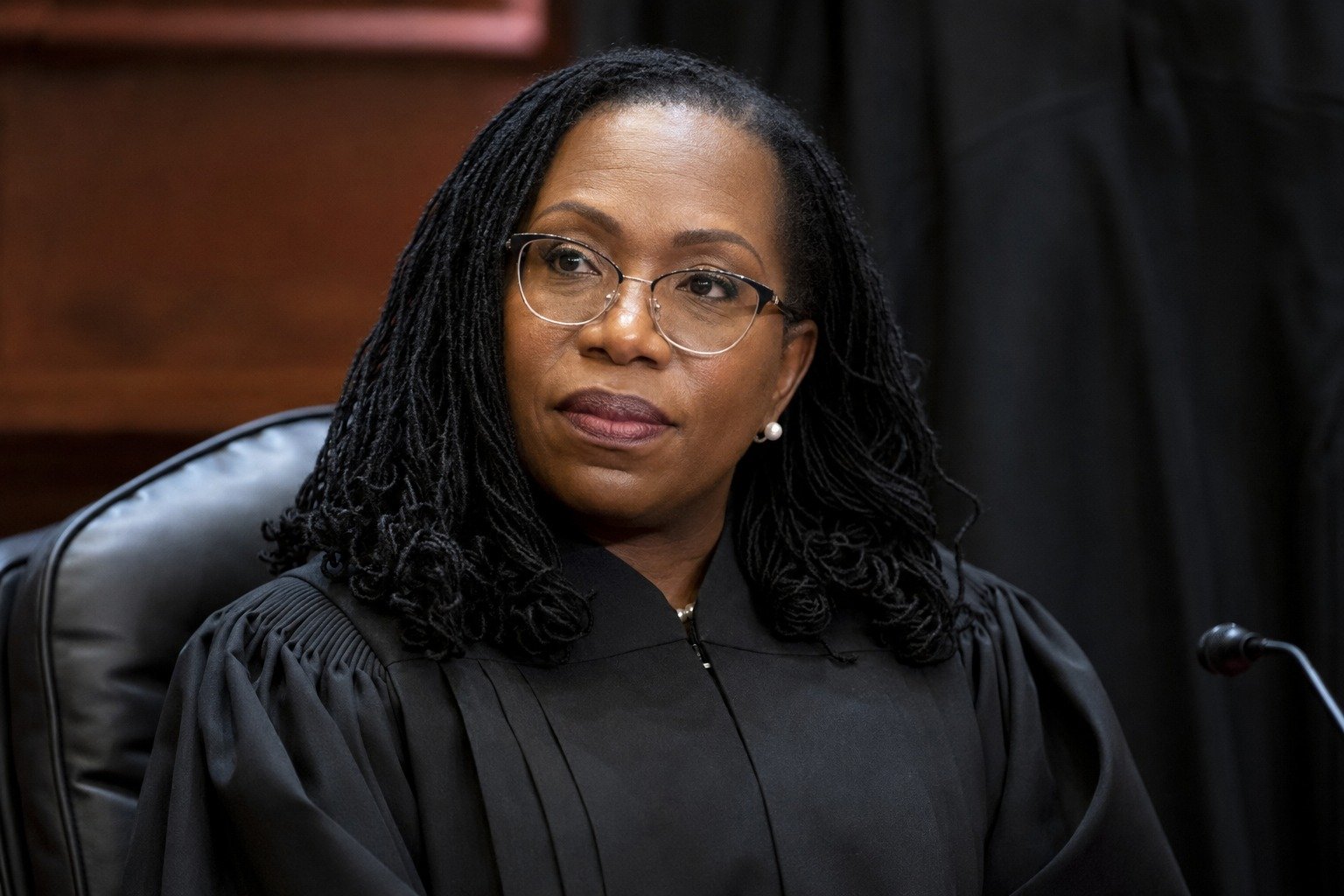
Supreme Court Justice Ketanji Brown Jackson publicly broke with her colleagues on Wednesday, accusing the court of acting with suspicious political urgency by fast-tracking a Louisiana redistricting order weeks before the 2026 midterm elections. Justice Samuel Alito fired back during the same proceedings, and the rare public clash exposed the deepening fractures inside America’s highest court.
A Court Divided — Publicly
The confrontation stemmed directly from a sweeping Supreme Court ruling in late April 2026 that significantly narrowed the enforcement scope of the Voting Rights Act of 1965 — one of the most consequential civil rights laws in American history. The ruling made it substantially harder for minority voters to challenge racially drawn congressional maps in federal court. Days later, on May 4, the court moved to immediately clear Louisiana’s new redistricting plan, allowing the state to eliminate one of its two majority-Black congressional districts before the November elections.
What made the Louisiana clearance particularly striking was not just the outcome — but how fast it happened. Courts typically observe a waiting period before allowing major rulings to take effect, giving lower courts and affected parties time to respond. The Supreme Court bypassed that standard process entirely. That’s what prompted Jackson to speak out.
Jackson’s Argument: The Court Looks Political
“Courts are apolitical, not supposed to be issuing rulings that are in the political realm,” Jackson said. She argued the court has a responsibility to be “scrupulous about sticking to the principles and the rules that we apply in every case and not look as though we’re doing something different in this kind of context.” Her point was blunt: when a court rushes a redistricting order months before an election, it invites the public to view the decision as politically motivated — regardless of the legal merits.
Jackson’s dissent wasn’t just about Louisiana. It was a broader warning about institutional credibility. She argued that procedural consistency is one of the few tools courts have to demonstrate impartiality. Skipping the standard waiting period — specifically on a voting rights case, specifically months before a consequential election — undermines the court’s ability to claim it operates above partisan politics.
Alito’s Counterargument
Justice Alito pushed back sharply. He argued that Jackson’s logic would effectively require the court to delay any decision that might appear politically controversial — which would itself be a form of political calculation. In Alito’s view, the court should apply the law correctly and consistently, without regard for how the timing might look to outside observers. Adjusting procedures based on election proximity, he suggested, would compromise judicial integrity just as much as rushing one.
The exchange was unusually candid. Supreme Court justices rarely air these kinds of methodological disagreements so directly in public-facing proceedings. The fact that both Jackson and Alito were willing to debate court procedure openly reflects how high the stakes feel — on both sides — for the future direction of voting rights law in America.
The Ripple Effects Are Already Spreading
Louisiana’s map change doesn’t exist in isolation. Following the April VRA ruling and the subsequent Louisiana clearance, Alabama, Georgia, and other Southern states have begun moving to redraw their own congressional maps under the new, narrowed legal standard. Civil rights organizations warn that the combined effect — fewer majority-minority districts across multiple states — could significantly reduce Black and Latino congressional representation heading into the 2026 elections and beyond. Some advocates say the rollback could rival the impact of the 1965 law’s original passage, just in reverse.
What This Means for Americans
For millions of voters — particularly Black and minority voters in Southern states — this fight is not abstract. It’s about whether their communities will have meaningful representation in Congress over the next decade. The question Jackson is raising goes deeper than Louisiana: it’s about whether the Supreme Court, as an institution, can be trusted to apply the same procedural rules regardless of who benefits politically. That’s a question with no easy answer — and one that will define the court’s legacy long after the 2026 midterms are decided.
Stay informed on the stories that matter most. Follow Your Daily Updates on Facebook and bookmark yourdailyupdates.news for breaking news and analysis.