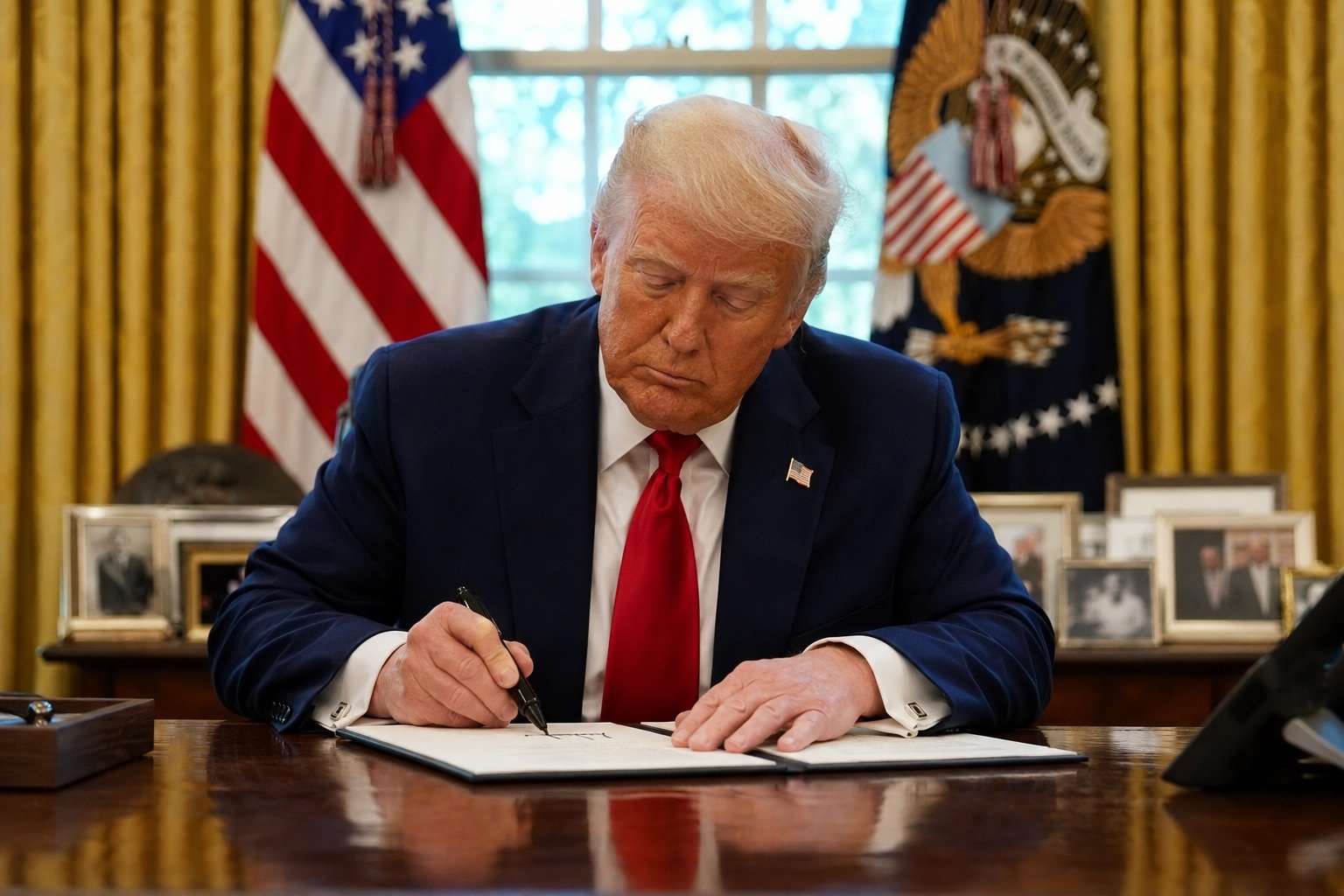
A federal judge has permanently blocked one of the Trump administration’s most aggressive attempts to reshape how Americans register and vote — a sweeping rebuke that draws a hard constitutional line around presidential power over elections.
On June 24, 2026, U.S. District Judge Denise Casper issued a 59-page ruling permanently striking down President Donald Trump’s executive order that would have required voters to provide documentary proof of citizenship simply to register to vote. The same order also imposed a deadline requiring mail-in ballots to be received by Election Day, regardless of when they were postmarked. Both provisions are now permanently barred from taking effect.
A Temporary Hold Becomes Permanent
The ruling converts a preliminary injunction Casper issued in June 2025 into a permanent one. What had been a temporary pause on the order is now a settled judicial finding that the policy cannot stand. For the millions of Americans who would have been affected, the decision removes a cloud of uncertainty that had hung over voter registration for the past year.
At the heart of Casper’s reasoning is a foundational principle of the U.S. Constitution: the president does not control how federal elections are run. That authority is divided between the states, which administer elections, and Congress, which sets the broad rules under the Elections Clause. The White House, the judge found, has no power to unilaterally rewrite voter registration requirements by executive order.
No Evidence of the Fraud It Claimed to Fight
Casper also delivered a pointed assessment of the administration’s justification for the order. The Justice Department had argued the citizenship requirement was necessary to combat widespread voter fraud. But the judge found that the government failed to demonstrate that the fraud it described actually existed at any meaningful scale. In other words, the sweeping restriction was a solution in search of a problem the administration could not prove.
Voting rights advocates had warned for months that the proof-of-citizenship rule would do far more to block eligible voters than to stop any illegal voting. The concern was concrete: naturalized citizens, voters whose names had changed after marriage, and people without easy access to a passport or birth certificate could all find themselves shut out of the registration process. Studies have repeatedly shown that millions of eligible Americans do not have ready access to documentary proof of citizenship.
What the Order Would Have Done
Under the blocked executive order, registering to vote would have meant producing documents many citizens simply do not keep on hand. The mail-ballot provision posed its own risks, potentially disqualifying ballots that were mailed on time but delayed in transit — a change that could have disenfranchised voters through no fault of their own, particularly in rural areas and among voters who rely on mail-in voting.
Together, the two provisions represented one of the most significant federal attempts in recent memory to tighten the mechanics of voting from the top down. Casper’s ruling makes clear that such changes, if they are to happen at all, must come through the constitutional channels — the states and Congress — not by executive fiat.
The Fight Is Not Over
The administration is widely expected to appeal the decision, meaning the legal battle over the order could continue for months. A higher court could weigh in, and the issue may ultimately test how far executive authority extends over the election process.
But for now, the message from the federal bench is unambiguous. A president cannot single-handedly decide who is allowed to vote. In a 59-page ruling grounded in the structure of the Constitution itself, Judge Denise Casper reaffirmed that the right to vote — and the rules that govern it — remain protected from unilateral executive control.