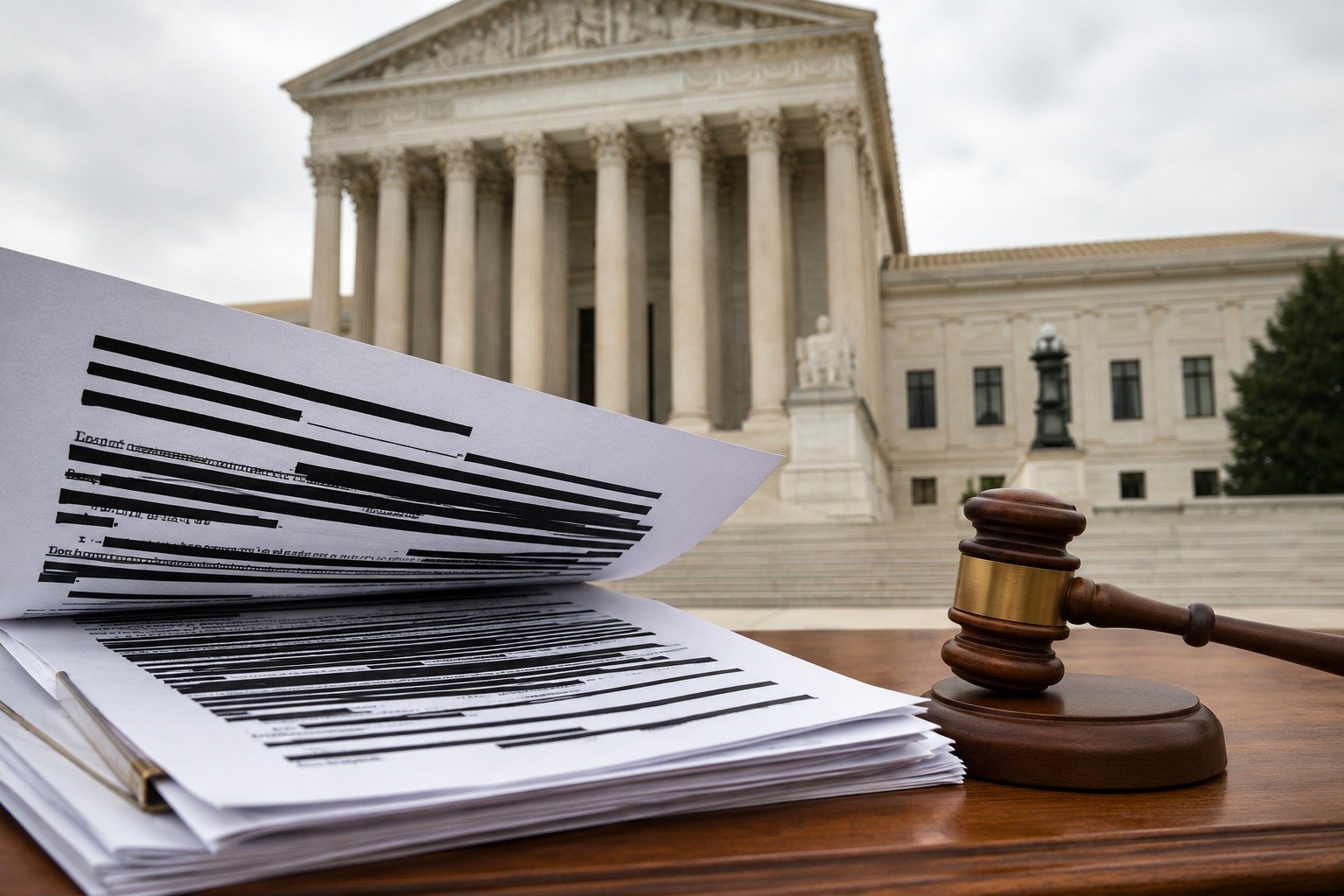
A federal judge has told the Justice Department it can no longer hide behind black bars on the Epstein files. U.S. District Judge Emmet Sullivan ordered the DOJ to either turn over the unredacted Epstein records or explain, in writing, exactly why each redaction must remain blacked out. The department now faces a deadline of July 2, 2026, to comply.
The order does more than set a date. Sullivan directed the Justice Department to publish a redaction log, a line-by-line accounting of what it concealed and the specific legal basis for every cut. For a body of records that has been handed to the public in heavily censored form for years, it is a sharp shift in who carries the burden of secrecy.
The ruling stems from a lawsuit filed by journalist Katie Phang under the Epstein Files Transparency Act, the law enacted to force these documents into public view. Phang’s suit argued that the department had leaned on broad, unexplained redactions that stripped the records of meaning while offering little justification for keeping the information hidden.
What the order requires
Under Sullivan’s directive, the DOJ has two paths. It can release the unredacted material, or it can keep specific redactions in place only by justifying each one to the court and putting that reasoning on the record. There is no third option that allows the department to black out information and answer to no one.
The redaction log is the mechanism that makes the order enforceable. Instead of a wall of black bars, the public and the court will see a structured account: which passages were withheld, and under what legal authority. If a name, a date, or a connection is hidden, the government must point to the rule that allows it.
Why it matters
For years, the documents related to Jeffrey Epstein have arrived in the public record so censored they were often nearly useless. Critics have argued that the redactions went well beyond what privacy or law enforcement sensitivities required, shielding details about who was connected to Epstein’s network and how.
Sullivan’s order flips the default. Until now, the public had to fight to pry information loose, document by document, with the government deciding unilaterally what stayed hidden. Going forward, the government must prove the secrecy is legal. That is a meaningful change in posture for records the public has long been told it cannot fully see.
The Epstein Files Transparency Act was passed precisely to push these documents into the open, and this ruling is one of the first real tests of how far that law reaches. By demanding a redaction log rather than accepting blanket censorship, the court has signaled that transparency statutes are meant to be enforced, not waved away.
What happens next
The July 2 deadline now sets the clock. If the Justice Department releases the unredacted files, the public could see information that has been withheld for years. If it instead defends the redactions, it will have to make its case in detail, giving the court and the plaintiff a concrete basis to challenge each one.
Either way, the fight over what is in these files, and who has been protected by the blackouts, is far from settled. But for the first time, the responsibility to justify the secrecy rests squarely with the government rather than with the people trying to see the truth.