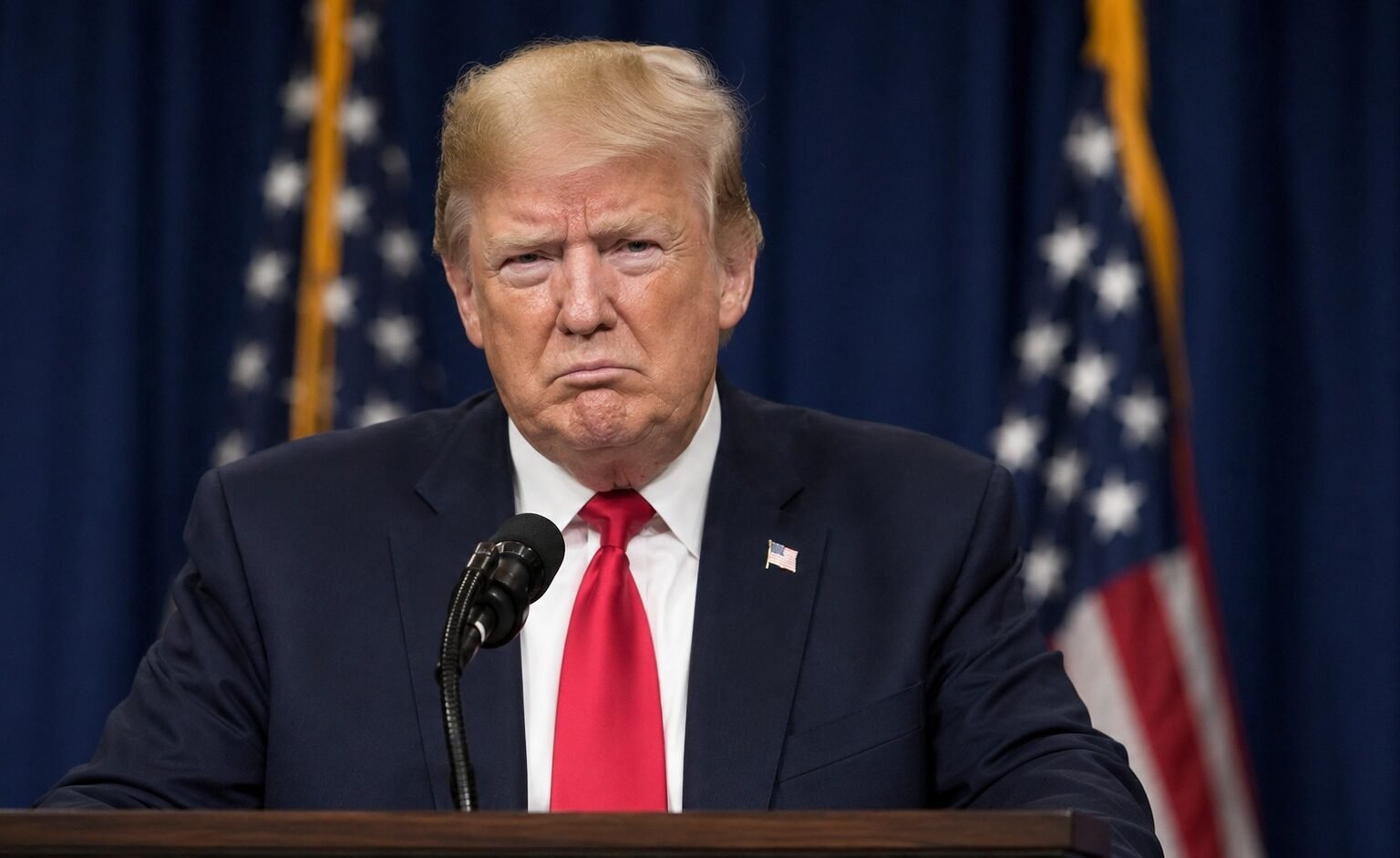
A federal judge has barred the U.S. Postal Service from enforcing the piece of President Donald Trump’s election order that would have allowed it to refuse to deliver mail-in ballots. U.S. District Judge Indira Talwani granted the preliminary injunction on Tuesday, August 11, in the District of Massachusetts. The order applies nationwide, and it covers the November 3 midterm elections and any federal election before them.
What the Executive Order Would Have Done
Trump signed Executive Order 14399, titled “Ensuring Citizenship Verification and Integrity in Federal Elections,” on March 31, 2026. Most of the order remains untouched by this ruling. The provision at issue here is Section 3, which dealt specifically with how mail ballots move through the postal system.
Under that section, states would send the Postal Service lists of voters who had requested mail ballots. USPS would then produce barcoded ballot envelopes tied to those specific voters. Ballots addressed to — or coming back from — anyone who did not appear on that pre-approved list could be declined for delivery. In practice, the mechanism turned a mail carrier into a checkpoint, and it made a voter’s ability to cast a ballot depend on whether a state list had been assembled correctly and on time.
What the Judge Actually Ordered
Talwani’s injunction bars the Postal Service from implementing or enforcing Section 3. It also bars USPS from conducting rulemaking to put the envelope, barcode and approved-voter-list scheme into effect. What it does not do is stop the federal government from issuing nonbinding guidance to states about ballot envelopes — advisory material is still permitted.
In her opinion, Talwani wrote that the order was “causing confusion and threatening both increasing chaos and an erosion of trust in our democracy.” She also wrote that the executive branch “has no authority to regulate elections,” pointing to the constitutional allocation of election administration to the states and to Congress rather than the White House.
It is worth being precise about what this ruling is. A preliminary injunction is not a final judgment. It freezes the challenged conduct while the underlying case proceeds, and it can be appealed. The case is not over, and the courts have not issued a last word on Executive Order 14399.
The Second Injunction in Two Months
This is Talwani’s second injunction against the same provision. The first came on June 25 and covered 23 states plus the District of Columbia — the plaintiffs in that case were the states themselves. The August 11 order arose from a separate lawsuit brought by voting-rights organizations, including the American Civil Liberties Union and the League of Women Voters, and its reach is national rather than limited to the states that sued.
The Appeals Are Still Live
The administration has been fighting the June injunction on appeal. On July 25, the First Circuit denied a stay pending appeal by a 2-1 vote, leaving that injunction in force. The administration then filed an emergency application at the Supreme Court on July 27. Solicitor General D. John Sauer pressed the justices again on Wednesday, August 12, urging the Court to act promptly. As of this writing the Supreme Court has not ruled.
There is also a parallel track running the other direction. In a separate case before Judge Emmet Sullivan in Washington, D.C., the D.C. Circuit paused his order in July, temporarily allowing the Postal Service to move ahead with its proposed mail-ballot rulemaking. That is a different case with a different posture, and it should not be confused with the Massachusetts litigation — but it is a reminder that the legal picture is split rather than settled.
What This Means for Americans
For now, the practical effect is straightforward: the Postal Service cannot refuse to deliver your mail ballot on the basis of Section 3, anywhere in the country. No stay of the August 11 nationwide injunction has been reported, which means it is currently in effect. If you vote by mail this fall, the pre-approved-list system that would have gated delivery is not operating.
What remains uncertain is how long that holds. The Supreme Court could lift the June injunction at any time, and an appeals court has already allowed a related rulemaking effort to continue. Voters, election clerks and postal workers are being asked to plan around a system whose rules are being decided in real time, weeks out from a midterm election. That uncertainty is itself a cost, and it falls hardest on the people who have the least slack — voters who are homebound, deployed, working multiple jobs, or living far from a polling place.
Stay informed on the stories that matter most. Follow Your Daily Updates on Facebook and bookmark yourdailyupdates.news for breaking news and analysis.