A federal judge has halted one of the Trump administration’s most aggressive voter-screening efforts, ruling that the government’s overhauled citizenship database was built on data officials knew to be unreliable and deployed in a way that violated multiple federal laws.
On Monday, June 22, 2026, U.S. District Judge Sparkle Sooknanan blocked the administration from using its revamped SAVE immigration database to check state voter rolls. In a sweeping decision, she found that the overhaul violated three separate federal statutes: the Privacy Act, the Social Security Act, and the Administrative Procedure Act.
What the SAVE database was supposed to do
SAVE, short for the Systematic Alien Verification for Entitlements program, is a federal system originally designed to help agencies confirm immigration status for benefits eligibility. Under the administration’s overhaul, the Department of Homeland Security reworked the system so that state and local election officials could more easily run their voter rolls against federal records, including citizenship status and Social Security numbers, to flag people they suspected were not eligible to vote.
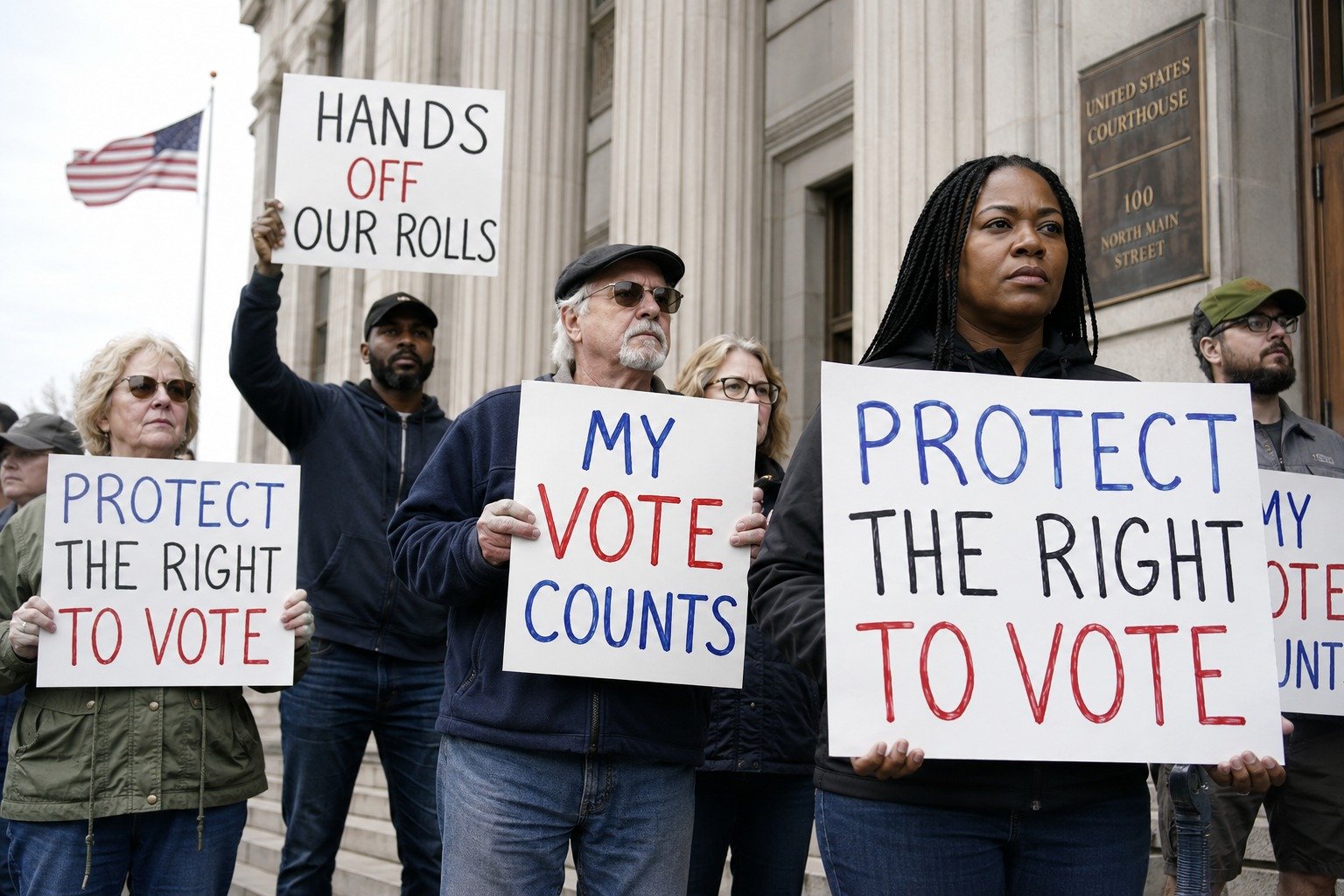
Supporters framed the changes as a tool to keep noncitizens off the rolls. But voting rights and privacy advocates argued that the rebuilt system was both legally improper and dangerously inaccurate, and that it put eligible Americans at risk of being wrongly purged.
The judge’s findings
Judge Sooknanan sided with those advocates. According to the ruling, officials combined and repurposed the private information of millions of Americans, including citizenship data they already knew was unreliable. That faulty data was then used to flag individuals on voter rolls, and some eligible voters had already been incorrectly flagged before the program was stopped.
The language in the decision was pointed. The judge wrote that the federal government “knowingly trampled on the privacy rights of American citizens in a manner that threatens the sacred right to vote.” She concluded that repurposing sensitive personal records this way, without the safeguards the law requires, crossed legal lines that protect how the government can collect, combine, and share Americans’ data.
What the ruling does and does not do
It is important to be precise about the scope of the decision. This is an injunction halting the program because of the risk that it could disenfranchise eligible voters. It is not a finding that large numbers of votes had already been erased. The court’s concern was forward-looking: running citizenship checks against data the government itself acknowledged was flawed created a real danger that lawful voters would be knocked off the rolls.
In practical terms, the ruling stops the administration from continuing to use the overhauled SAVE system for voter-roll checks while the legal questions are resolved. It also signals that courts will scrutinize how federal databases of personal information are repurposed, particularly when the stakes involve the right to vote.
A wider fight over the voter rolls
The decision lands in the middle of a broader national fight over who decides which voters stay on the rolls and what data is used to make that call. Privacy advocates have warned for years that combining federal records originally collected for unrelated purposes can produce error-prone matches, with ordinary citizens caught in the gap.
For now, the injunction is a significant check on the program. But the underlying dispute, over data accuracy, privacy law, and the security of the voter rolls, is far from settled, and further appeals and litigation are likely as the issue moves through the courts.